Monday, May 4, 2026
    The GeoStrategic Consensus
    No Result
    View All Result
    • Login
    • HOME
    • AMERICAS
      • Argentina
      • Brazil
      • Canada
      • Chile
      • Colombia
      • Costa Rica
      • Cuba
      • Dominican Republic
      • Ecuador
      • El Salvador
      • Greenland
      • Guatemala
      • Honduras
      • Mexico
      • Nicaragua
      • Panama
      • Paraguay
      • Peru
      • United States
      • Uruguay
      • Venezuela
    • ASIA-PACIFIC
      • Australia
      • Brunei Darussalam
      • Cambodia
      • China
      • Federated States of Micronesia
      • Fiji
      • Indonesia
      • Japan
      • Kiribati
      • Laos
      • Malaysia
      • Marshall Islands
      • Mongolia
      • Myanmar
      • Nauru
      • New Zealand
      • North Korea
      • Palau
      • Papua New Guinea
      • Philippines
      • Samoa
      • Singapore
      • Solomon Islands
      • South Korea
      • Taiwan
      • Thailand
      • Timor-Leste
      • Tonga
      • Tuvalu
      • Vanuatu
      • Vietnam
    • CARICOM
      • CARICOM – Non-English
        • Haiti
        • Suriname
      • CARICOM Associates
        • Anguilla
        • Bermuda
        • British-Virgin-Islands
        • Cayman-Islands
        • Curacao
        • Turks-and-Caicos
      • CARICOM English
        • Antigua and Barbuda
        • Barbados
        • Belize
        • Dominica
        • Grenada
        • Guyana
        • Jamaica
        • Montserrat
        • Saint Kitts and Nevis
        • Saint Lucia
        • Saint Vincent and the Grenadines
        • The Bahamas
        • Trinidad and Tobago
    • EURASIA
      • Armenia
      • Azerbaijan
      • Balarus
      • Georgia
      • Kazakhstan
      • Kyrgyzstan
      • Moldova
      • Russia
      • Tajikistan
      • Turkmenistan
      • Ukraine
      • Uzbekistan
    • EUROPE
      • Albania
      • Andorra
      • Austria
      • Bosnia and Herzegovina
      • Bulgaria
      • Croatia
      • Cyprus
      • Czech Republic
      • Denmark
      • Estonia
      • Finland
      • France
      • Germany
      • Greece
      • Holy See
      • Hungary
      • Iceland
      • Ireland
      • Italy
      • Kosovo
      • Latvia
      • Liechtenstein
      • Lithuania
      • Luxembourg
      • Malta
      • Monaco
      • Montenegro
      • Netherlands
      • North Macedonia
      • Norway
      • Poland
      • Portugal
      • Romania
      • San Marino
      • Serbia
      • Slovakia
      • Slovenia
      • Spain
      • Sweden
      • Switzerland
      • United Kingdom
    • MIDDLE EAST AND NORTH AFRICA
      • Algeria
      • Bahrain
      • Egypt
      • Iran
      • Iraq
      • Israel
      • Jordan
      • Kuwait
      • Lebanon
      • Lybia
      • Morocco
      • Oman
      • Palestinian Territories
      • Qatar
      • Saudi Arabia
      • Syria
      • Tunisia
      • Turkey
      • United Arab Emirates
      • Western Sahara
      • Yemen
    • SOUTH ASIA
      • Afghanistan
      • Bangladesh
      • Bhutan
      • India
      • Maldives
      • Nepal
      • Pakistan
      • Sri Lanka
    • SUB-SAHARAN AFRICA
      • Angola
      • Benin
      • Botswana
      • Burkina Faso
      • Burundi
      • Cabo Verde
      • Cameroon
      • Central African Republic
      • Chad
      • Comoros
      • Cote d’Ivoire
      • Democratic Republic of the Congo
      • Djibouti
      • Equatorial Guinea
      • Eritrea
      • Eswatini
      • Ethiopia
      • Gabon
      • Gambia
      • Ghana
      • Guinea
      • Guinea Bissau
      • Kenya
      • Lesotho
      • Liberia
      • Madagascar
      • Malawi
      • Mali
      • Mauritania
      • Mauritius
      • Mozambique
      • Namibia
      • Niger
      • Nigeria
      • Republic of the Congo
      • Rwanda
      • Sao Tome and Principe
      • Senegal
      • Seychelles
      • Sierra Leone
      • Somalia
      • South Africa
      • South Sudan
      • Sudan
      • Tanzania
      • Togo
      • Uganda
      • Zambia
      • Zimbabwe
    • HOME
    • AMERICAS
      • Argentina
      • Brazil
      • Canada
      • Chile
      • Colombia
      • Costa Rica
      • Cuba
      • Dominican Republic
      • Ecuador
      • El Salvador
      • Greenland
      • Guatemala
      • Honduras
      • Mexico
      • Nicaragua
      • Panama
      • Paraguay
      • Peru
      • United States
      • Uruguay
      • Venezuela
    • ASIA-PACIFIC
      • Australia
      • Brunei Darussalam
      • Cambodia
      • China
      • Federated States of Micronesia
      • Fiji
      • Indonesia
      • Japan
      • Kiribati
      • Laos
      • Malaysia
      • Marshall Islands
      • Mongolia
      • Myanmar
      • Nauru
      • New Zealand
      • North Korea
      • Palau
      • Papua New Guinea
      • Philippines
      • Samoa
      • Singapore
      • Solomon Islands
      • South Korea
      • Taiwan
      • Thailand
      • Timor-Leste
      • Tonga
      • Tuvalu
      • Vanuatu
      • Vietnam
    • CARICOM
      • CARICOM – Non-English
        • Haiti
        • Suriname
      • CARICOM Associates
        • Anguilla
        • Bermuda
        • British-Virgin-Islands
        • Cayman-Islands
        • Curacao
        • Turks-and-Caicos
      • CARICOM English
        • Antigua and Barbuda
        • Barbados
        • Belize
        • Dominica
        • Grenada
        • Guyana
        • Jamaica
        • Montserrat
        • Saint Kitts and Nevis
        • Saint Lucia
        • Saint Vincent and the Grenadines
        • The Bahamas
        • Trinidad and Tobago
    • EURASIA
      • Armenia
      • Azerbaijan
      • Balarus
      • Georgia
      • Kazakhstan
      • Kyrgyzstan
      • Moldova
      • Russia
      • Tajikistan
      • Turkmenistan
      • Ukraine
      • Uzbekistan
    • EUROPE
      • Albania
      • Andorra
      • Austria
      • Bosnia and Herzegovina
      • Bulgaria
      • Croatia
      • Cyprus
      • Czech Republic
      • Denmark
      • Estonia
      • Finland
      • France
      • Germany
      • Greece
      • Holy See
      • Hungary
      • Iceland
      • Ireland
      • Italy
      • Kosovo
      • Latvia
      • Liechtenstein
      • Lithuania
      • Luxembourg
      • Malta
      • Monaco
      • Montenegro
      • Netherlands
      • North Macedonia
      • Norway
      • Poland
      • Portugal
      • Romania
      • San Marino
      • Serbia
      • Slovakia
      • Slovenia
      • Spain
      • Sweden
      • Switzerland
      • United Kingdom
    • MIDDLE EAST AND NORTH AFRICA
      • Algeria
      • Bahrain
      • Egypt
      • Iran
      • Iraq
      • Israel
      • Jordan
      • Kuwait
      • Lebanon
      • Lybia
      • Morocco
      • Oman
      • Palestinian Territories
      • Qatar
      • Saudi Arabia
      • Syria
      • Tunisia
      • Turkey
      • United Arab Emirates
      • Western Sahara
      • Yemen
    • SOUTH ASIA
      • Afghanistan
      • Bangladesh
      • Bhutan
      • India
      • Maldives
      • Nepal
      • Pakistan
      • Sri Lanka
    • SUB-SAHARAN AFRICA
      • Angola
      • Benin
      • Botswana
      • Burkina Faso
      • Burundi
      • Cabo Verde
      • Cameroon
      • Central African Republic
      • Chad
      • Comoros
      • Cote d’Ivoire
      • Democratic Republic of the Congo
      • Djibouti
      • Equatorial Guinea
      • Eritrea
      • Eswatini
      • Ethiopia
      • Gabon
      • Gambia
      • Ghana
      • Guinea
      • Guinea Bissau
      • Kenya
      • Lesotho
      • Liberia
      • Madagascar
      • Malawi
      • Mali
      • Mauritania
      • Mauritius
      • Mozambique
      • Namibia
      • Niger
      • Nigeria
      • Republic of the Congo
      • Rwanda
      • Sao Tome and Principe
      • Senegal
      • Seychelles
      • Sierra Leone
      • Somalia
      • South Africa
      • South Sudan
      • Sudan
      • Tanzania
      • Togo
      • Uganda
      • Zambia
      • Zimbabwe
    No Result
    View All Result
    Agentially
    No Result
    View All Result
    Home MIDDLE EAST and NORTH AFRICA Morocco

    Conflict in the Middle East: no amending finance law in sight, but risks on purchasing power and energy (El Mehdi Fakir)

    The Analyst by The Analyst
    May 4, 2026
    in Morocco
    Conflict in the Middle East: no amending finance law in sight, but risks on purchasing power and energy (El Mehdi Fakir)


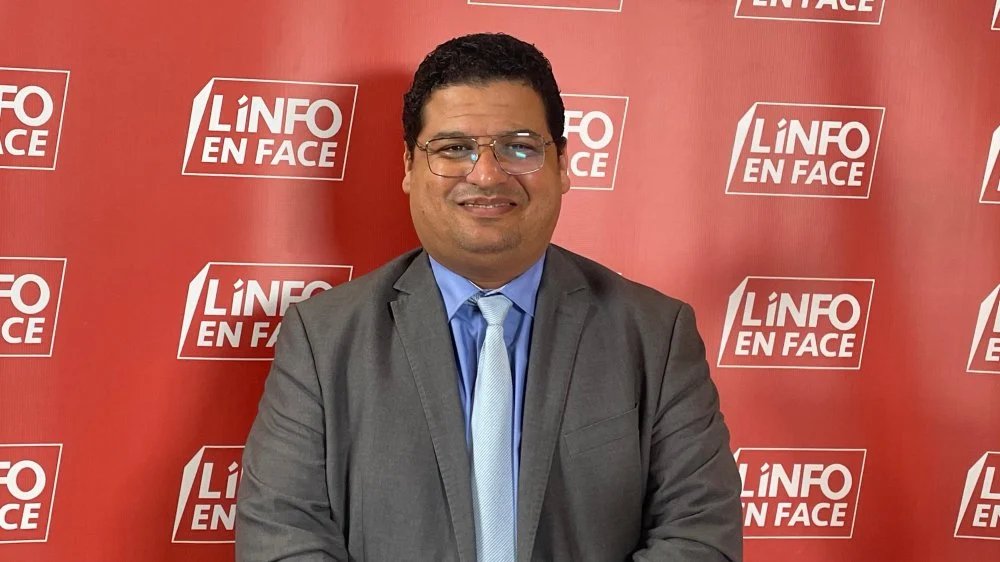
    Faced with persistent tensions in Middle East and their repercussions on energy markets, the economic debate in Morocco now focuses on a central question: should we activate a Finance law corrective to adapt budgetary assumptions to a situation that has become more uncertain? For El Mehdi Fakirguest of “L’Info en Face”, the answer is clearly negative, at least at this stage.
    READ ALSO

    Two American soldiers participating in African Lion 2026 missing

    Diagnosis: Barriers to access to sexual health services for young people under the microscope of the ALCS – Today Morocco

    Akhannouch reassures about the abundance of energy stocks in Morocco

    The economic and financial analyst considers that the government still has sufficient technical and budgetary margins to manage the situation through targeted adjustments, without calling into question the overall architecture of the Finance law 2026. “The mechanisms and safety cushions in budgetary matters still exist,” he believes, recalling that during the Russo-Ukrainian crisis, the Executive favored budgetary extensions rather than a amending finance law.

    For El Mehdi Fakir, the use of such an instrument is not only a matter of budgetary technique. It also carries a major political cost. In the context of the end of the government mandate, an amended finance law could be interpreted as an admission of failure in terms of forecasting and economic management. Even if the current shocks are exogenous, the opposition and public opinion could see them as proof of poor management.

    The expert emphasizes that the international context remains marked by great uncertainty, but he believes that the crisis in the Middle East does not present, at this stage, the same characteristics as the Russo-Ukrainian war. According to him, several diplomatic signals suggest a desire to contain the escalation, even to extend the truces or to achieve a form of stabilization. This reading leads him to consider that the peak of the crisis could already be passed, even if the risks remain high.

    This does not mean that the economic consequences are negligible. THE barrel of oilbudgeted at around 60 dollars in the assumptions of the 2026 Finance Law, is now at much higher levels. THE price of gas also experienced strong growth. These developments have a direct impact on the energy bill of Moroccoon transport costs, on consumer prices and, more broadly, on the balance of foreign trade.

    However, El Mehdi Fakir believes that the most appropriate response remains that already tested since 2022: maintenance of support systems, targeted subsidies, rationalization of public spending and progressive management of adjustments. Support for transporters, the cost of which is estimated at around one billion DH per month, remains, according to him, essential. Transport is a sensitive sector: any disruption in the mobility of people and goods would have serious consequences on economic and social activity.

    The expert also recalls a budgetary paradox that is often little highlighted: the rise in prices of fuels mechanically generates additional revenue for the State through VAT and the domestic consumption tax. In other words, the energy shock creates new charges, but also generates certain tax revenues. This reality is not enough to neutralize the risk, but it helps to explain why the government can still absorb part of the shock without switching to an amending finance law.

    Purchasing power, inflation and energy dependence: the real warnings

    On the inflation front, El Mehdi Fakir clearly distinguishes two levels of intervention. Subsidies are the responsibility of the State and make it possible to avoid a sudden interruption of activity. But the real treatment ofinflation is, according to him, a matter of monetary policy. If price tensions continue, Bank Al-Maghrib could be led to act, in particular by an increase in rates. The expert recalls, however, that the decisions of a Central bank are never mechanical: they must take into account all of the country’s economic, social and financial balances.

    Purchasing power constitutes, in his eyes, one of the main points of concern. Since the Russian-Ukrainian crisis, structural inflation has set in in several segments, notably hydrocarbons. The prices before 2022 are no longer those of today. This lasting increase ends up eroding household income, reducing their saving capacity and increasing their debt. For El Mehdi Fakir, this is where the main social risk lies: a high cost of living that has become permanent, capable of fueling frustrations and weakening social cohesion.

    The other big alert concerns the trade deficit. Morocco remains heavily dependent on its energy and food imports, often denominated in foreign currencies. This dependence weighs on the trade balance and can, in the long term, put pressure on the balance of payments. Even if foreign currency reserves remain comfortable, El Mehdi Fakir insists on the need to never consider this cushion as an ordinary adjustment variable. Foreign currency reserves are, according to him, a matter of economic sovereignty.

    The solution can therefore only be structural. The expert calls for an acceleration of the energy shift, a reduction in dependence on fossil fuels, a diversification of energy partners, a reflection on storage capacities and, possibly, a relaunch of the debate on refining. THE Nigeria-Morocco gas pipeline is cited as a project likely to radically change the situation, but its effects will take time. In the meantime, Morocco remains exposed to external shocks.

    El Mehdi Fakir regrets, more broadly, the absence of real global risk management. The country, he says in substance, has too often managed crises in a tactical manner, while the same vulnerabilities have been recurring for decades: droughtsocial tensions, energy crisesgeopolitical shocks, pressure on public finances. He recognizes that Moroccan public decision-makers have evolved and think more in the medium and long term than before, but considers that this change remains insufficient given the scale of the challenges.

    In this diagnosis, another paradox occupies an important place: the approximately 500 billion DH of cash which circulates outside the banking circuit. For the expert, this mass of undeposited money constitutes a considerable shortfall for the economy, the banks, the State and even the holders themselves. It reflects a problem of trust, economic structuring and financial integration. But El Mehdi Fakir warns against any brutal response, such as a change of tickets or a hunt for cash holders. He rather calls for a political, educational and incentive approach in order to gradually bring these resources back to the banking circuit.

    The social question runs through the entire exchange. Aging, isolation of the elderly, precariousness of certain categories, lack of social security coverage for workers who have spent their lives in the informal sector: for El Mehdi Fakir, these signals must be integrated into economic thinking. Structuring the economy, formalizing the activity and improving banking services are not only a matter of financial performance; these are also conditions to guarantee a social protection and a dignified end of life for citizens.

    On external debt, the expert defends a cautious, but pragmatic approach. Morocco may be required to go out to international markets if the situation requires it, but the timing must be chosen carefully. The cost of money has risen, rates are higher and debt service is already weighing heavily on public finances. Nevertheless, El Mehdi Fakir recalls that Morocco remains a credible borrower, capable of negotiating under good conditions thanks to its foreign currency reserves, its solvency and its financial reputation. Debt, according to him, is neither a taboo nor an automatic solution: it is a tool to be used with discernment.

    The expert also calls for vigilance regarding the structure of public revenues. A budget that is too dependent on tax revenues can become vulnerable if they stagnate or decline. Taxation must remain a lever for development, solidarity and economic incentive, and not be reduced to a simple budget filling mechanism. Otherwise, it risks increasing pressure on taxpayers and weakening support for the tax.

    Finally, El Mehdi Fakir insists on the need to reform value chains, particularly in food products. The surge in certain prices, such as those of tomatoesof the meats or commodities, is not always explained by scarcity or international economic factors. It also refers, according to him, to internal dysfunctions: speculation, abusive intermediaries, lack of effective control, imperfect organization of wholesale markets and weakness of direct circuits between producers and consumers. It calls for reactivating certain regulatory mechanisms and fighting against behavior that takes households hostage.

    The expert’s observation is clear: the Kingdom is not yet in a situation justifying an amending finance law. Current systems can still work, provided they are carefully managed. But this short-term conclusion should not mask the essential: the current crisis reveals, once again, the structural vulnerabilities of the Moroccan economy. Energy dependence, trade deficit, weakened purchasing power, massive informality, tax pressure, social risk and lack of overall risk management constitute the real issues to be addressed. The amended Finance Act is therefore not, according to him, the priority response. The priority lies elsewhere: building a more resilient economy, less dependent, better structured and capable of absorbing shocks without passing the bulk of the cost onto households.
    Source link

    Related Posts

    Two American soldiers participating in African Lion 2026 missing
    Morocco

    Two American soldiers participating in African Lion 2026 missing

    May 4, 2026
    Diagnosis: Barriers to access to sexual health services for young people under the microscope of the ALCS – Today Morocco
    Morocco

    Diagnosis: Barriers to access to sexual health services for young people under the microscope of the ALCS – Today Morocco

    May 4, 2026
    Casablanca: Arrest of two taxi drivers suspected of having fatally attacked a colleague – Today Morocco
    Morocco

    Casablanca: Arrest of two taxi drivers suspected of having fatally attacked a colleague – Today Morocco

    May 4, 2026
    Oil: OPEC+ increases its quotas
    Morocco

    Oil: OPEC+ increases its quotas

    May 4, 2026
    Mr. Akhannouch: the government’s record is the fruit of everyone’s work, and the majority, united, believes that the priority is the homeland
    Morocco

    Mr. Akhannouch: the government’s record is the fruit of everyone’s work, and the majority, united, believes that the priority is the homeland

    May 4, 2026
    Mathematics: girls are dropping out again, the gap with boys is widening
    Morocco

    Mathematics: girls are dropping out again, the gap with boys is widening

    May 4, 2026
    Next Post
    Libya launches 100-day plan to boost agriculture sector

    Libya launches 100-day plan to boost agriculture sector

    POPULAR NEWS

    Justin Bieber fans flood Coachella festival for headlining show – Entertainment

    Justin Bieber fans flood Coachella festival for headlining show – Entertainment

    April 20, 2026

    Over 600 flee homes as Army, NPA clash in Negros Occidental

    April 21, 2026

    Ex-DPWH exec recalls P800-M ‘delivery’ to Zaldy Co 

    April 20, 2026

    Former PM Paluckas suspends party membership, to waive immunity over criminal probe

    April 24, 2026
    Pres. Ali challenges CARICOM to transform into health research powerhouse

    Pres. Ali challenges CARICOM to transform into health research powerhouse

    April 23, 2026

    EDITOR'S PICK

    Martinique lauded for hosting successful Aquatic Championships

    Martinique lauded for hosting successful Aquatic Championships

    April 21, 2026
    Třinec reduced from offside, why didn’t Pešán take up the challenge? I didn’t want to take any chances, he said

    Třinec reduced from offside, why didn’t Pešán take up the challenge? I didn’t want to take any chances, he said

    April 22, 2026
    Emergency at Sea | Local News

    Emergency at Sea | Local News

    April 21, 2026
    The Gap Between What Heritage Claims about El Salvador and Its Own Data | The Lighthouse

    The Gap Between What Heritage Claims about El Salvador and Its Own Data | The Lighthouse

    April 20, 2026

    Recent Posts

    • The combo that sank River: the starters did not respond and the replacement passed on tiptoe
    • Full moons: What to know about May’s double feature
    • Trump Administration and Airlines Agree to Aid Plan for Spirit
    • Preeclampsia: What every pregnant woman needs to know

      © 2026 Agentially - Navigating shifting sovereignties and global risk .

      Welcome Back!

      Login to your account below

      Forgotten Password?

      Retrieve your password

      Please enter your username or email address to reset your password.

      Log In
      No Result
      View All Result

        © 2026 Agentially - Navigating shifting sovereignties and global risk .

        This website uses cookies. By continuing to use this website you are giving consent to cookies being used. Visit our Privacy and Cookie Policy.