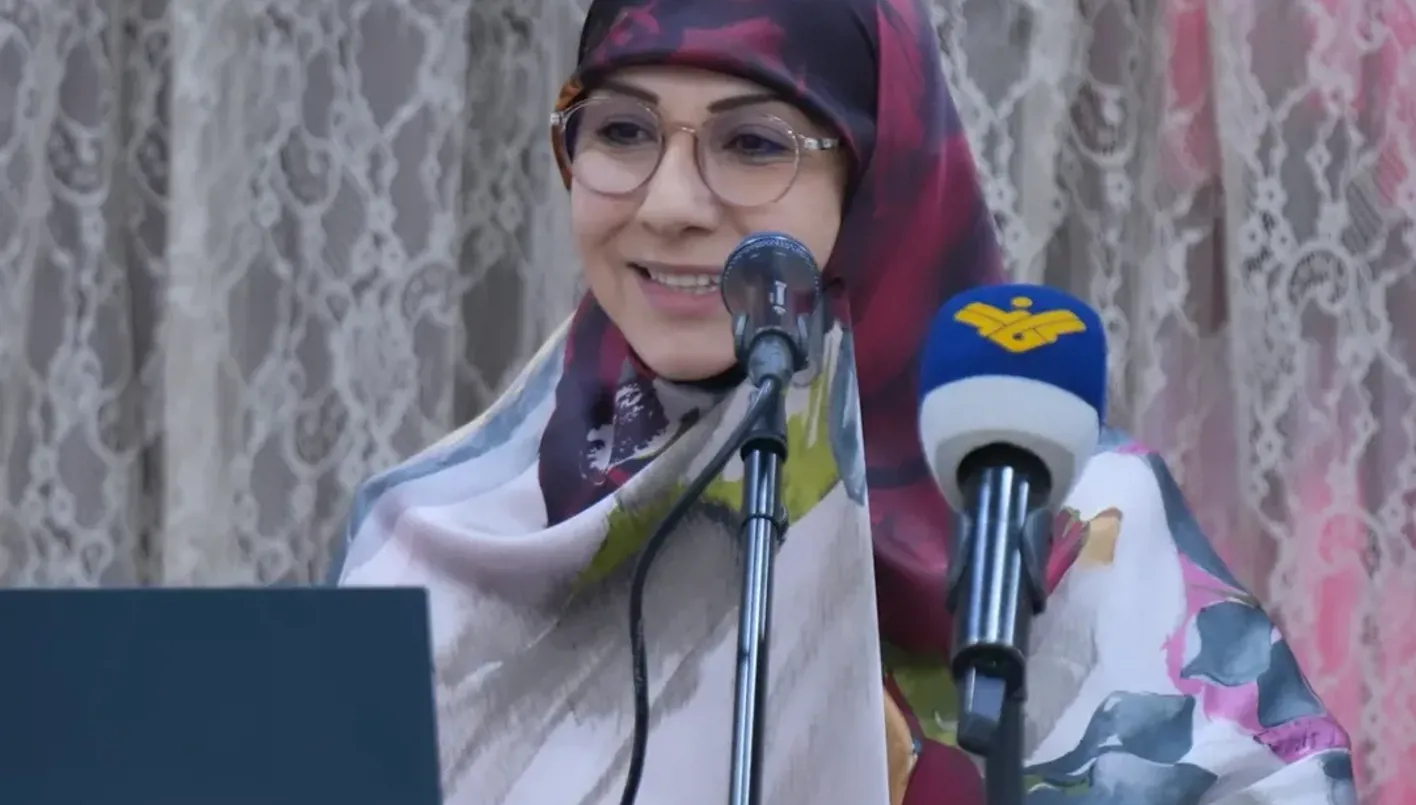
In the small garden that recalls the features of the village house in Baysour, the family of journalist Suzanne Al-Khalil sat in heavy silence, mixed with sadness and astonishment at the loss. Their faces are filled with unspeakable pain, and a blackness equivalent to the cruelty of death. There, the family received us to tell the story of their daughter who was killed in the Israeli raid on a town Kayvon – Aaliyah On the eighth of April.
On her sister’s chest, a brooch bearing a picture of Susan. She looks a lot like her, as if she were an extension of her. She invites us in, with a broken voice, to listen to Susan’s story… to her final moments before it all ends in a treacherous moment.
Inside, we hear the mother crying, drowning in her grief, repeating bitterly: “You left me alone.” A forced absence, unlike any separation. Amid her tears, she could only find one prayer that she repeated fervently: “May God burn their hearts just as they burned mine.”
On the opposite sofa sits her father, Hajj Fadlallah Hassan Al-Khalil (89 years old). He admitted in his interview with “An-Nahar” that “she loved doing good and helping people… and she was killed while doing what she loved.”
Anyone who knew Suzanne knows well how she devoted her life and time, since the outbreak of the last war, to serving the displaced and meeting their needs. She did not know rest, neither day nor night, and was always saying, “People need help.”
Since the 2024 war, Suzanne Al-Khalil and her friend Rana Sakiki Malaeb began a joint humanitarian path, during which they moved between Bchamoun, Qabrchamoun, Kaifun, and Baysour, to secure support for the displaced. Together they began this journey, and together their story ended Israeli raid She did not differentiate between young and old, and she did not have mercy on anyone.
As soon as they parked the car and got out, the attack occurred
Hajj Al-Khalil recalls the details of the last hours before his daughter’s departure. He confirms, “I left the house at ten in the morning with Rana to provide aid, then they went to the pharmacy to secure medicines for the displaced. They bought what they needed and left, but they returned after it became clear that they had forgotten part of the medicines. As soon as they parked the car and got out… when the raid occurred.”
A few moments were enough to end everything. Lives were extinguished under the rubble, and their pictures remained hanging on the walls of houses. He added, “If they had not gone back, they would be here today. But between fate and the cruelty of what happened,” the end was harsher than he could bear.
The family knew nothing about Susan in the early hours. They thought she was safe, before the features of the massacre gradually revealed. As evening approached, and after five o’clock, the search for her began in the…Hospitals…Until the news came that ended all hope: Susan and Rana were gone.
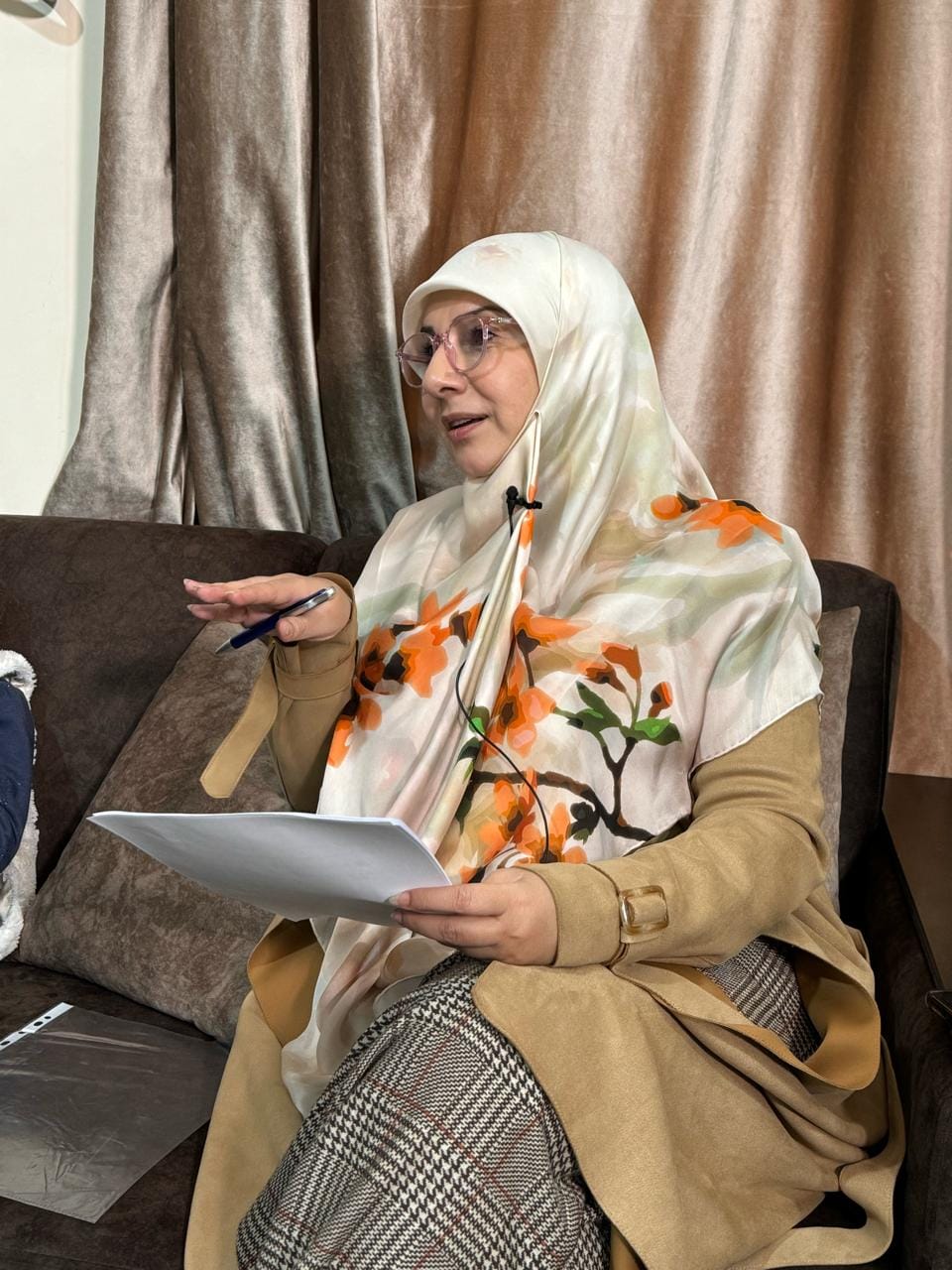
Suzan Al-Khalil spent more than 25 years in media work (photo from her Instagram account)
In a voice heavy with sadness, her father says: “She wanted to rest… and she rested.” His daughter, who spent more than 25 years in media work, did not carry a weapon, as he explained, “She was not a fighter and did not carry missiles… This is the fate of journalists and philanthropists.”
He who believes that “the body is on earth and the soul is in heaven,” prays for his daughter Susan with a silence burdened by faith and loss.
A man longs to return to his hometown of Chiyah, which is still outside the safety zone. He recalls the features of a bygone time, recalling, “Al-Chiyah and Ain Al-Rummaneh were one soul… before sectarianism was planted between them.” Then he adds with determination: “We will remain one soul… and they will not succeed in dividing people.”
Her mother cries whenever she thinks of Susan. She was her first support in life. Today, she stands helpless in the face of a void left by her daughter at home, a void that cannot be filled. She describes it in simple words that sum it all up: “Just be patient… and don’t give up on anything.”
She says that Susan was afraid for her and her father, but at the same time she was carrying the concern of everyone in need, everyone waiting for help. She recalls a situation that is not forgotten in her memory: “I was joking with her and telling her: We are here Displaced people Also, my mother… She replies to me: You are alive and comfortable, go and see how people are doing outside.”
This is how Susan was… driven to the point of forgetting herself, only seeing the needs of others. All she wanted was to provide them with the bare minimum of life.
Suzanne Al-Khalil passed away, Rana passed away, and more than 22 victims of the Kaifoun targeting passed away. Some stories came to light, while others remained buried under the rubble, waiting for someone to pull them out of this heavy silence. There, where only stones and rubble remain, the place stands as a living witness to… massacre Its chapters have not yet been told in full.