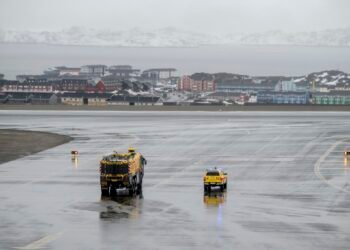
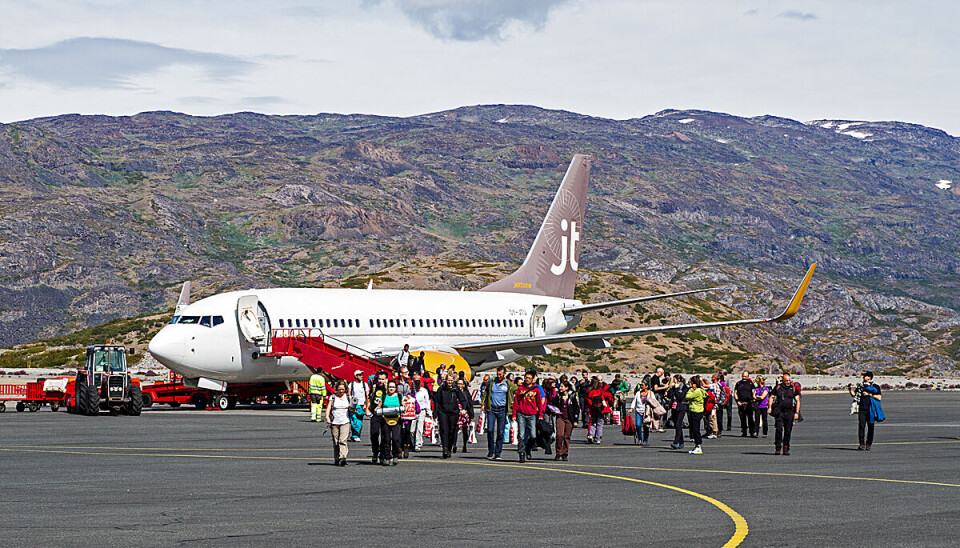
It was 85 years of Greenlandic aviation history that was covered when the airport in Narsarsuaq closed last week.
Perhaps a new chapter is lurking if the Americans are serious about establishing a military support point in Narsarsuaq – and that could complete the ring, because it was also the Americans who, in their time, put Narsarsuaq on the world map.
It was 85 years of Greenlandic aviation history that was covered when the airport in Narsarsuaq closed last week.
Perhaps a new chapter is lurking if the Americans are serious about establishing a military support point in Narsarsuaq – and that could complete the ring, because it was also the Americans who, in their time, put Narsarsuaq on the world map.
The construction of the American base in Narsarsuaq was started on 6 July 1941. The USA needed airfields in Greenland, where planes en route from the American continent to Europe could stop over.
The base was established as a result of the “lend and lease” agreement that the United States entered into with the allied states in Europe, where the Americans were to supply the belligerent countries with material for the fight against Nazi Germany – and therefore half a year before Pearl Harbor (December 7, 1941), when the United States itself became an active participant in the war.
The agreement required, among other things, that three support points be built in Greenland as an intermediate station between North America and Europe. The three bases were Kangerlussuq (BW8, Sondrestrom), Narsarsuaq (BW1) and Ikateq (BE2). It was so cunningly devised that, due to the special meteorological conditions around the ice sheet in Greenland, it could never be bad weather in all three places at the same time.
Huge time pressure
The construction work took place under enormous time pressure – and only half a year passed until the first plane landed at the beginning of 1942.
It is estimated that more than 10,000 planes made stopovers at Narsarsuaq during the war – and in the last days of the war, it was hundreds of planes every single day. When the world war ended after the atomic bombs on Hiroshima and Nagasaki, the Americans remained at Narsarsuaq.
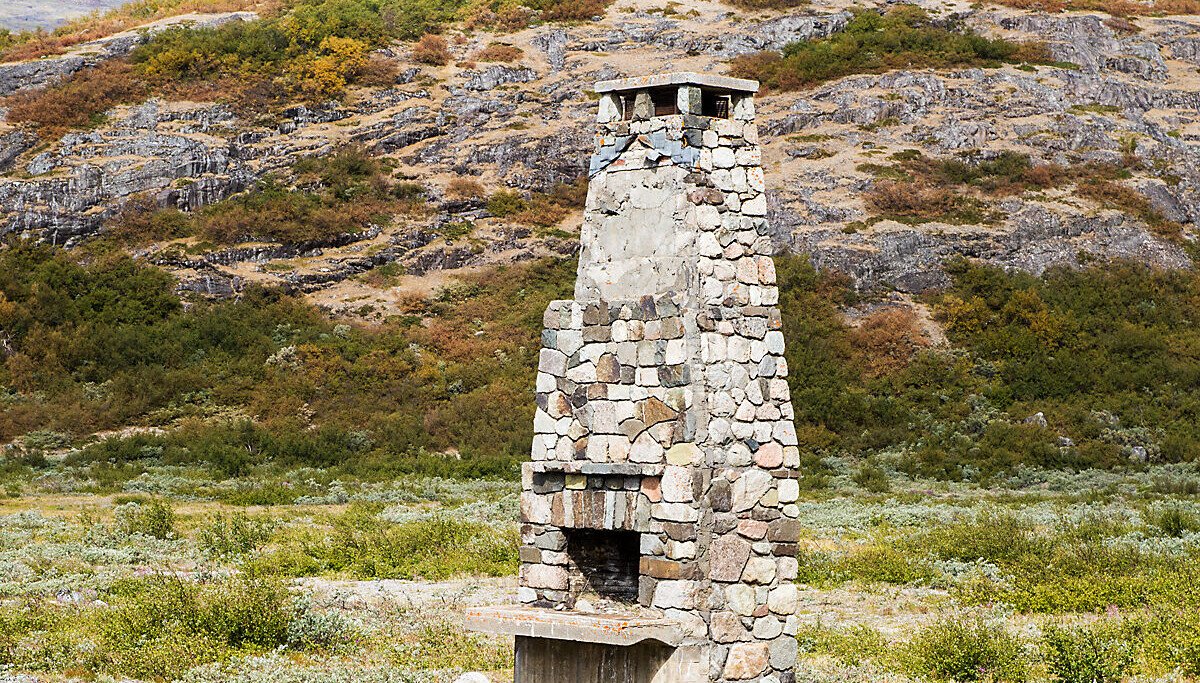
The base had its second period of greatness during the Korean War (1950 – 1953), when Narsarsuaq was an important support point with more than 5,000 men stationed. Among other things, the base was used when wounded soldiers had to be flown home – and a hospital with 250 beds was built in the valley behind the airfield. The foundation as well as a single fireplace chimney from the hospital can still be seen today at the site.
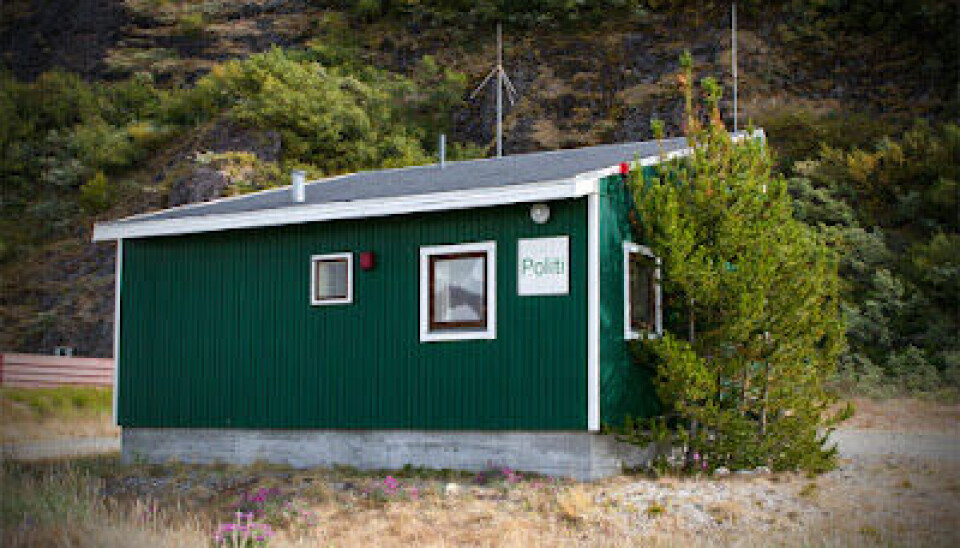
The Americans left Narsarsuaq on 11 November 1958, after which the base was given the status of “lonely radio/weather station” with Danish staff of 10 men.
When the Hans Hedtoft was shipwrecked in 1959, however, it was clear to the Danish authorities that there was a need for a civil airport in South Greenland – among other things to house the Ice Reporting Service. With the reopening, Narsarsuaq also became a traffic hub in Greenland – both from Denmark, Iceland and not least Nuuk, when the capital got its first airport in 1979.
Tourist destination
With the planes also came the tourists – and Narsarsuaq has been a very popular destination for not least hikers. So far, it is unknown what the closure will mean for tourism.
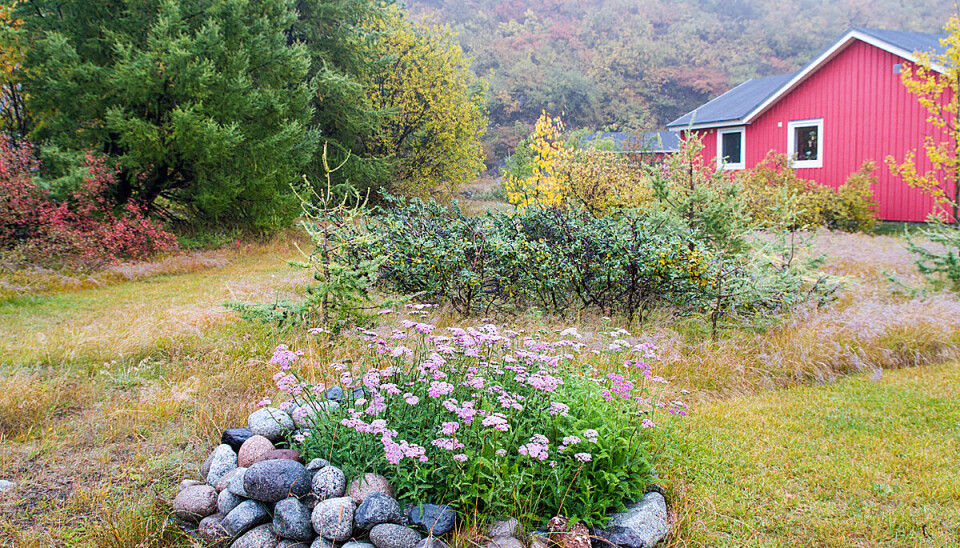
Narsarsuaq is also home to the Greenland Arboretum, which was officially inaugurated in 2004, but where the first trees were planted as early as 1966. The purpose of the arboretum is to investigate which tree species are best suited to the Greenlandic climate.
The arboretum covers an area of 150 ha (1.5 km2), where more than 130,000 plants have been planted, divided into over 200 species and 600 seed lots. How many of these species and seed batches are still alive is not known exactly, but the arboretum means that Narsarsuaq is surrounded by lush forest and tall trees – and living scientific proof that many tree species can thrive in Greenland.
Business history
Narsarsuaq has also made its mark in Greenlandic business history, because it was here that businessman and art collector Svend Junge, who died in 2007, earned his first million. He told about that in that interview to AG in 1999.
Junge, who ran a contracting business in Nuuk, had been given the contract for the demolition of one of the old American hangars. He became aware of a building over 100 meters long that the Americans had used as a potato warehouse, so he bought it for 10,000 kroner.
Svend Junge, who had come to Greenland as a floor-layer, had noticed that the building had an unusually hard floor, so that you could drive there with heavy trucks.
– The floor was a pure gold mine. At the bottom was a system of very high quality 16×16 inch beams. On top were 12×12 inches of the same quality, on top of that 8×8 and on top of that the floorboards themselves.
– It was actually my plan to move everything to Nuuk, but I didn’t get that far. Because it was quickly rumored that I had the best timber that was needed in all of Greenland. Some of it was sold to Nordafar, where half of the long quay is built from my timber.
– So without lifting a finger, I earned a million kroner – and that was a lot of money at the time, Svend Junge told AG in 1999.