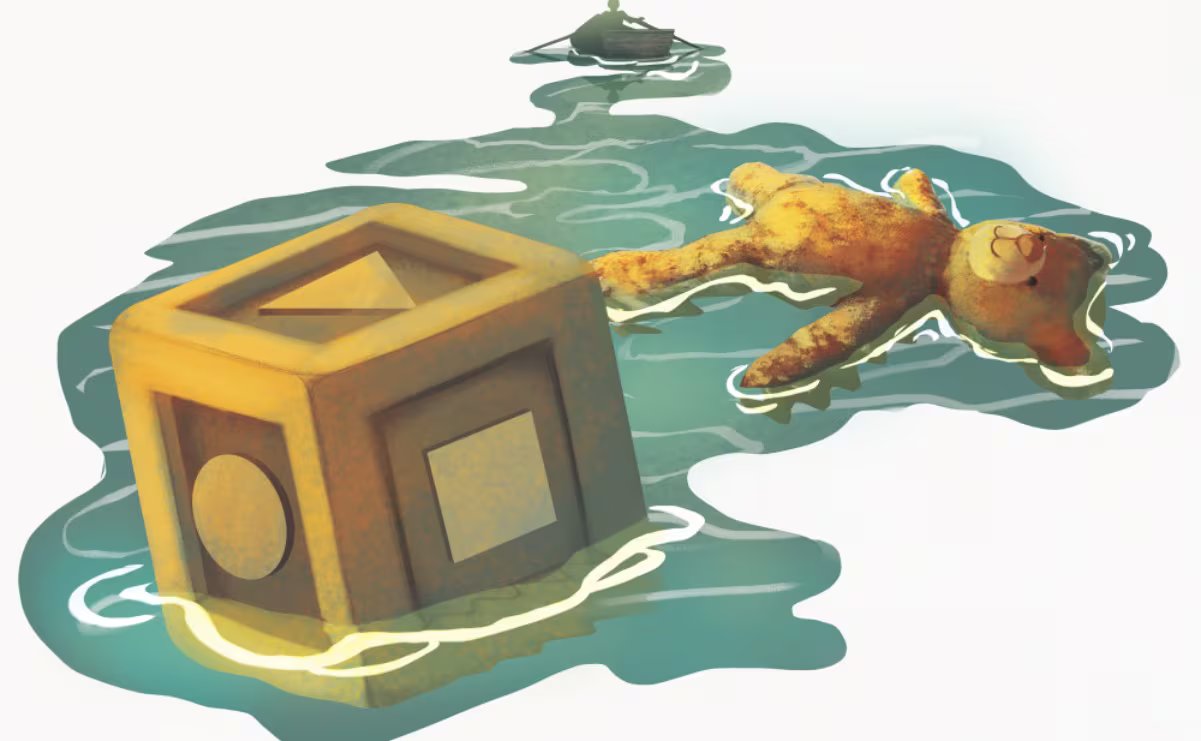
Naucalpan, Méx.— In the last three years, 14 babies were abandoned in the State of Mexico and ended up under the protection of the System for the Comprehensive Family Development state. Some were found wrapped in blankets, others inside plastic bags, in church planters, on sidewalks, under bridges or in vehicles, until local residents discovered them and notified the authorities.
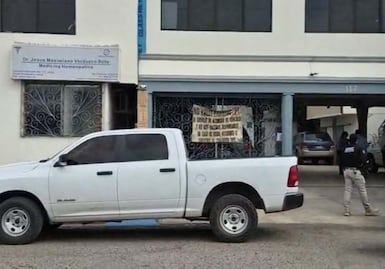
In February 2025, in the municipality of Tultitlanvideo surveillance cameras recorded the moment when a baby was abandoned by a young man in the streets of the colony Valley Fountains. The incident outraged the population and forced those involved to surrender to the authorities. They were two young people between 18 and 21 years old, who are in prison after being linked to proceedings for the crime of homicide in a tentative degree.
After investigations, it was discovered that the parents allegedly wanted to get rid of the newborn, at first with an abortion pill and then by abandoning him. The baby was delivered to DIFEMwhere it remains with the possibility of being adopted.
In August of that same year, a woman abandoned her baby in a pipe that was parked on Avenida Nacional, in the town of Santo Tomás Chiconautla, in Ecatepec.
On March 30, the woman who abandoned him, identified as María del Carmen “N”was arrested by the municipal police for disturbing the order after a road incident.
In his statement to the authorities, he acknowledged having abandoned the baby and stated that he did not know how it happened. “I abandoned the baby, but I didn’t know… in a pipe, it was there, I saw the paramedics arrive, I was watching when they took him away, my son was going to be four months old,” she said.
Read also Holy Week in Veracruz: 11-year-old girl drowns on the beaches of Boca del Río; man dies in Tecolutla
From 2023 to 2025, 14 newborns have been abandoned, in addition to 25 girls, boys and adolescents, who have been taken in by the DIFEM, according to a response to a request for information made by THE UNIVERSAL under folio 00006/DIFEM/IP/2026.
In total, there are 39 newborns, girls, boys and adolescents abandoned in the Mexican entity from 2023 to 2025.
In this regard, the general director of DIFEM, Karina Labastida, recognized that the problem of child abandonment persists despite the actions implemented.
“Preventing pregnancy in teenagers has been a public policy for years. The truth is that it has caught our attention that lately there has been this abandonment of children; even with all the efforts that are made, with everything and the contraceptive methods that are given away, we see that it has not had the impact as we would like,” he said in an interview.
Read also Car accident in Acapulco leaves 5 tourists dead and 8 injured; They came from Edomex
According to the information obtained via transparency, the municipalities where the cases of abandonment were registered are Toluca, Valle de Chalco, Amecameca, Zinacantepec, Chicoloapan, Valle de Bravo, La Paz, Naucalpan, Atlacomulco, Ecatepec, Tecámac and Cuautitlán Izcalli.
“Children have become socioculturally, and also emotionally, an object,” said Luis Guadarrama Rico, research professor at the Faculty of Political and Social Sciences of the Autonomous University of the State of Mexico (UAEMéx), doctor in Communication and specialist in family issues.
Given the abandonment of infants, the specialist indicated that currently “it is no coincidence that many couples, people without a partner, begin to think about what comes first: buy a car or have a child; invest in buying a house or an apartment, get engaged and then the children; or I study postgraduate and seek to improve my working conditions and then decide to have a child. So, we have objectified the offspring, since society is capitalist, nourished by consumption.”
He said that the economic factor weighs on the decision to have children. Many young people, he warned, “perceive motherhood or fatherhood as an expense with no return. A child is in the way, they do not feel able to care for it, to raise it.”
Added to this perception, according to the academic, are the deficiencies in the health and educational services that exist in the country, as well as the complications that exist in accessing quality services.
“To the process of reification is added that a father or mother wants to give better living conditions to their daughter or son and for this they are going to have to pay more money (…) I am going to have to pay because the healthcare system In Mexico, as well as the public education system, it is saturated,” he commented.
The specialist recalled that there is the School for Parents program, which provides information to parents of families “once you already have the child, you are already pregnant. They are programs that are once a week in which I tell you what children mean, I give you a little early stimulation, food, nutrition and that’s it. There are no anticipatory programs, nor is the issue of the value of the human being in itself addressed.”
Ángeles Bravo, president of the National Front for the Family in the State of Mexico, commented that the abandonment of babies is due to the fact that “human existence has been reified” and the idea was reinforced with the interruption of pregnancy.
The president of the National Front for the Family recalled the case of the abandoned baby in Tultitlán and pointed out that, according to investigations that were made public, in messages exchanged with her partner they referred to the newborn as “it.”
“‘It’ moves, ‘it’ sees me; so, when we can’t turn around and see that little one as a human being, as a person, that’s part of the problem,” he said.
Ángeles Bravo maintained that “there is also no public policy that informs children and adolescents about the family. What they are taught in schools is about sexuality, to use a condom and at an increasingly younger age, it is already in primary school, and now we wonder when they are going to want to apply it from preschool.”
“Attention has been focused on preventing pregnancy, but not on offering solutions to those who already face it,” he noted.
In the National Front for the Family State of Mexico, he specified, three pregnant women are cared for daily in the Toluca region.
“We have attended to 12-year-old girls and 40-year-old women. The reasons why they come are very varied. A 40-year-old woman usually has economic or health issues. 12-year-old girls come because they are victims of violence or sexual abuse. The majority of women who come to ask for support are between 23 and 35 years old,” he explained.
For Bravo, “the abandonment of children in the State of Mexico is linked to a perspective of abandonment of life and policies that promote abortion as the first health response to a difficult pregnancy. It is not foreseeable that it will end, but rather that it will increase.”
To avoid abandonment of you drinkin the State of Mexico the figure of voluntary delivery of newborns operates through the state DIF, a route used by families, fathers or mothers who cannot take care of minors.
According to data from the DIFEM obtained via transparency, during 2024 five voluntary deliveries were recorded. The cases came from municipalities such as Zinacantepec, Nezahualcóyotl, Chalco and Otzolotepec.
In 2025 there were seven voluntary deliveries, they were babies from Atizapán de Zaragoza, Nezahualcóyotl, Toluca, Cuautitlán Izcalli and Naucalpan.
Read also Beautiful! They open a call to choose a name for a newborn giraffe in the San Juan de Aragón zoo
So far in 2026, two cases have been reported from Villa Victoria and one more from Tepotzotlán.
Behind each delivery there is a decision marked by the conditions of origin. In some cases, families go directly to the institutions when they recognize that they do not have sufficient resources or face situations related to disabilities, said the director of DIFEM, Karina Labastida.
“Yes, we have received some girls and boys through voluntary surrender. Mainly due to disability issues, when family members report that they cannot take care of them due to lack of financial means. Then, the reception takes place,” he said.
The state official maintained that as a last option they seek to keep a baby under the protection of DIFEM.
“It is not optimal, the ideal is for the family to take responsibility, but when the situation is imminent, they are received,” he explained.