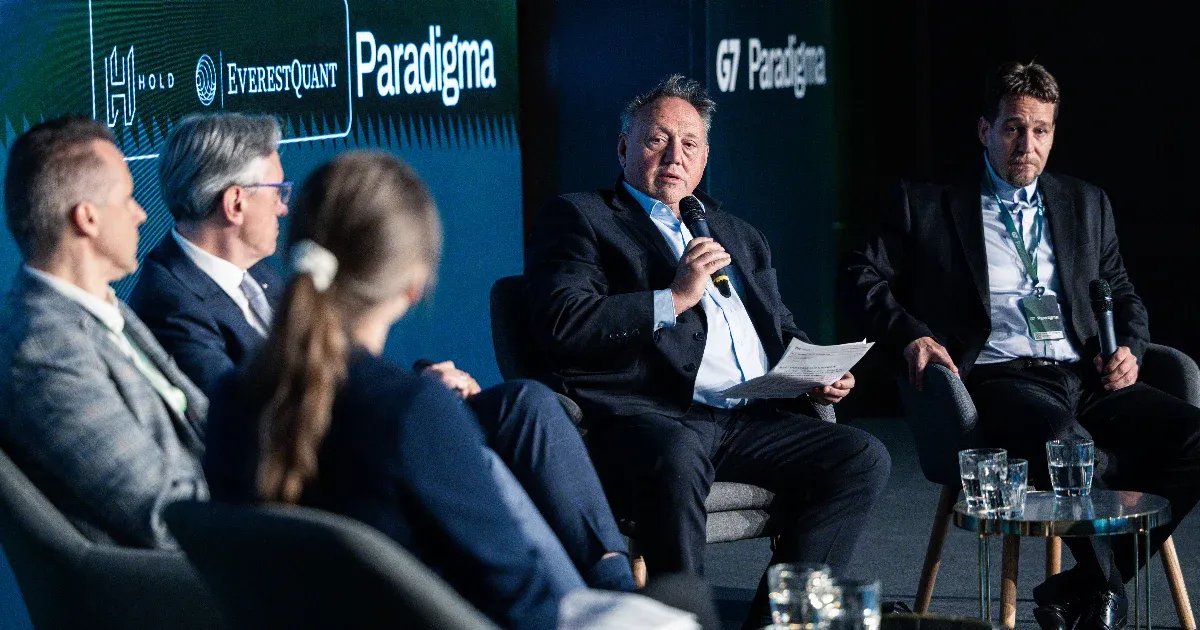
Among other things, the participants of the first round table discussion of the G7 Paradigm conference discussed the pressure on the German and European economies and the opportunities facing Hungarian companies.
According to Árpád Goszták, managing director of Siemens Energy Kft., the German economy is facing structural problems, and the previous growth model has run out of steam. Among the German companies, those that did not necessarily invest a lot at home, and a significant part of their sales revenue comes from the world market, were able to remain successful.
Zsolt Müllner, the chairman of the board of AutoWallis Nyrt., sees that Germany has difficulty coping with the burdens of the social system, which is a competitive advantage for China. Due to Chinese pressure, the operating framework in the German automotive industry must be changed. German innovation is fine, but how does it become a competitive product? he asked the question.
In this regard, István Szászi, the head of the Bosch Group’s Hungary and Adriatic region, mentioned that while a patent is issued every 15 minutes at the Bosch Group, it is every 10 minutes at BYD. In Europe, it takes 4-5 years to develop and introduce a new vehicle platform, but in China it can be done in just two years. The manager also drew attention to the fact that, due to the decline in production, there is currently significant excess capacity in the European automotive industry, which is also true for supply chains.
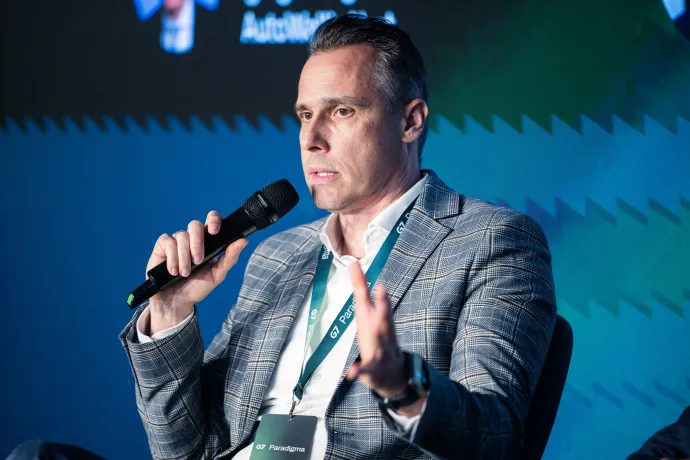
István Szászi – Photo: Ákos Stiller
Where would we be if there was no supplier role? asked Péter Lakatos, CEO of Videoton Holding Zrt. The big entrepreneur talked about how, for example, Electrolux used to be very important for Hungarian suppliers, which is now close it its last factory in Hungary, and Suzuki is producing well below its previous peak. If a Hungarian entrepreneur wants to be a supplier, then Hungarian factories are key, it is very rare for someone to be able to deliver directly to, say, France, he added.
In connection with this, Zsolt Müllner spoke about the fact that the situation should be used as much as possible, that in the last ten years a lot of capital has come into the country in the form of industrial investments. This situation should be accommodated as much as possible, five car factories already operate here, it would be good if as many Hungarian SMEs as possible could supply them. Factories such as CATL and Samsung SDI cannot be singled out from the Hungarian economy, it should be ensured that they do not remain inclusions.
According to István Szászi, the capital attraction strategy of the last 20-30 years was good, the domestic knowledge base and competence was created, for example, in the automotive industry. What we didn’t do was to build on this competence, for example with startups that can connect to sector value chains with high added value.
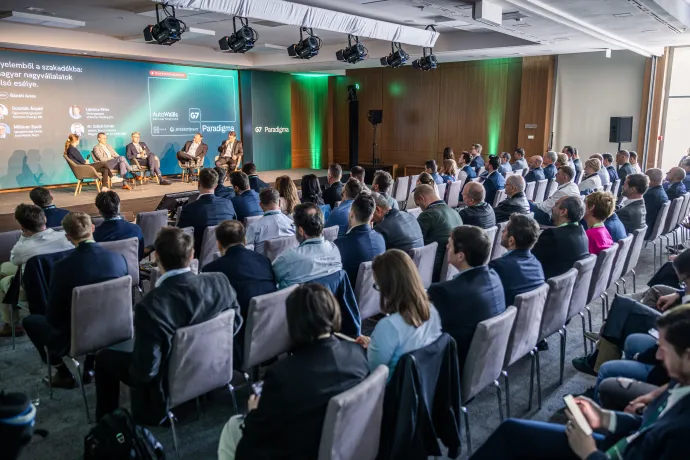
The middle income trap is a real danger, the conference pointed out for his opening performance Péter Lakatos – but it must be taken into account that Hungary is a small country with a small internal market, and moreover, it was left out of the mainstream of the international economy for nearly 50 years. Without an international context, significant things cannot be done in this country, he added.
Árpád Goszták sees that some of the changes taking place in the world can be favorable for European and Hungarian suppliers. EU companies were also leading investors globally, taking a significant part of the production chain to other continents. If part of this returns to Europe, it can also create new business opportunities for Hungarian suppliers.