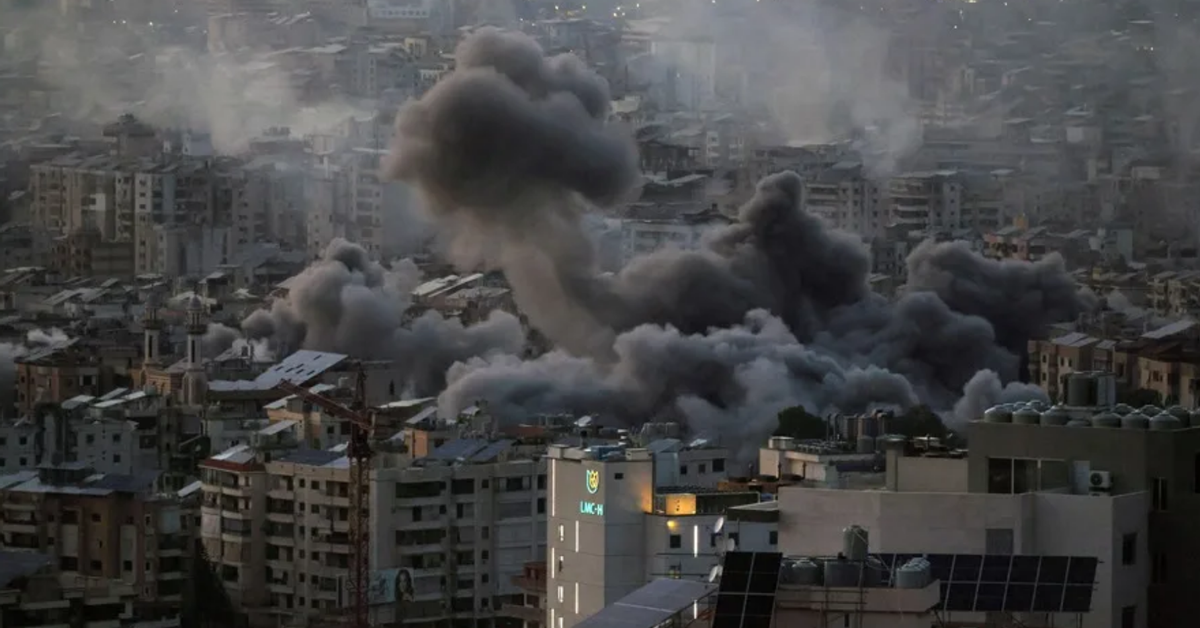
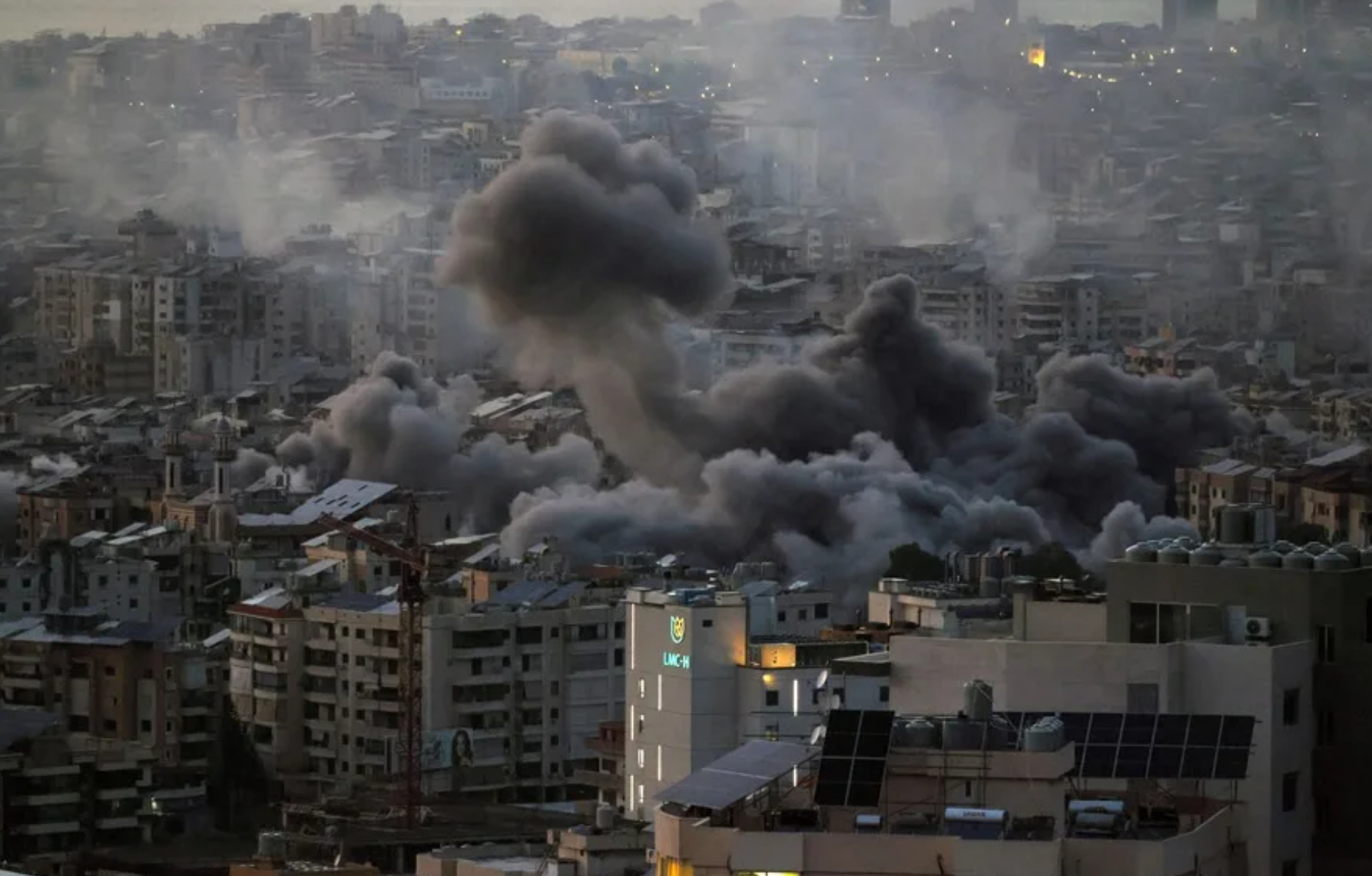
Beirut/Hours after the ceasefire in Iran on Wednesday, Israel launched an unprecedented wave of bombings against more than one hundred points in Lebanon, intensifying a front that Tehran considers key to stopping to continue with the two-week truce agreed with the United States.
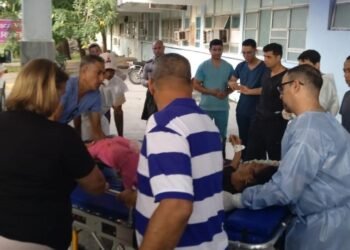
The Government of Lebanon, where an escalation was already feared once Israel stopped diversifying resources for the war in Iran, has so far counted 182 dead and 890 wounded in Wednesday’s attacks throughout the country, although the Civil Defense raises the figure to 254 and 1,165, respectively.
Israel’s offensive began on March 2, after the Shiite group Hezbollah launched a symbolic attack in favor of its ally Tehran, and later announced a ground operation to occupy the entire southern Lebanese strip, up to the Litani River.
The Pakistani mediation pointed out on Wednesday that the cessation of hostilities in Iran would also extend to Lebanese territory, but Israeli Prime Minister Benjamin Netanyahu contradicted these statements and chose to launch his worst attack in five weeks of conflict in Lebanon.
The president of the Iranian Parliament, Mohamad Baqer Qalibaf, considered that the continuation of violence in Lebanon, where Israel launched one hundred attacks in ten minutes, represents a violation of the peace plan and makes it “unreasonable” to continue negotiating.
The speaker of the Iranian Parliament, Mohamad Baqer Qalibaf, considered that the continuation of violence in Lebanon, where Israel launched one hundred attacks
Iranian Deputy Foreign Minister Saeed Khatibzadeh added this Thursday in an interview with the BBC that the attacks constitute a “serious violation” of the ceasefire.
“You cannot call for a ceasefire, accept terms and conditions, accept all areas where it applies, specifically mention Lebanon, and then have your ally start a massacre,” Khatibzabeh told BBC Radio 4’s Today programme.
“The United States must choose between war and peace because “they cannot have both at the same time, they are mutually exclusive, that is very clear,” added the deputy minister, who described the Israeli attacks against Lebanon as a “kind of genocide.”
The deputy minister stressed that Iran asks “everyone in the Middle East to respect this agreement, and we hope that the Americans will do the same with their allies.”
The British Foreign Minister, Yvette Cooper, asked this Thursday that Lebanon be included in the ceasefire agreed between the United States and Iran, warning that otherwise it could destabilize the entire Middle East region.
“The escalation we saw yesterday by Israel was, in my opinion, deeply damaging, and we want hostilities in Lebanon to cease,” Cooper added in statements to Radio Times.
While waiting for Pakistan to host potential peace talks between Washington and Tehran this weekend, Lebanon is maintaining intense diplomatic contacts to try to be included in the ceasefire, as various members of the international community have demanded.
As announced last night by the Lebanese Presidency, the head of state, Joseph Aoun, received a call from his French counterpart, Emmanuel Macron, in which he offered to pull strings to extend the truce to his former protectorate.
The wave of attacks on Wednesday included various properties in Beirut that were hit without warning in predominantly Sunni neighborhoods, as well as other mixed areas or areas populated mainly by non-Shiite communities on the outskirts of the city.
And, in parallel, the Israeli Army accused Hezbollah of having retreated from the Shiite “bastions” in the Dahye suburbs of the capital to areas north of Beirut or mixed areas, alleging that the “destruction” of the outskirts will extend to the areas to which the formation moves.
The rhetoric of division, just three days after killing a leader of the Christian party and enemy of Hezbollah Lebanese Forces in a Maronite housing estate, seeks to ignite an outbreak of internal violence between the different communities of the polarized Lebanese religious spectrum.
The rhetoric of division seeks to ignite an outbreak of internal violence between the different communities of the polarized Lebanese religious spectrum
However, many have clung to unity in the face of what happened on Wednesday, such as Druze leader Teymour Jumblatt, who considered it a brutal aggression “against all Lebanese” and called for a “unified national” stance against the Israeli attacks.
Along these lines, Gebran Bassil, head of the Christian formation Free Patriotic Front, a former political ally of Hezbollah, also warned in his X account that “signs of internal disputes are growing” and that “Sunni areas are being attacked to incite the Sunnis against the Shiites.”
The different actors in the country have seen the duster of Israel, but at the same time they agree on the need to disarm Hezbollah and for the State to assume national responsibilities, something that the Lebanese Forces have already been calling for since Sunday’s Israeli attack against its local leader.
In parallel to all this, Israel continues with its land offensive in southern Lebanon, where it had already confirmed its intentions to control an entire region equivalent to 8% of Lebanese territory, implying that this front would continue beyond the war in Iran.
As part of its escalation on Wednesday, Israeli aircraft bombed the southern Qasmiye bridge, which gives access to the important coastal city of Tire and which joins several destroyed crossings over the Litani River in recent weeks.
Although Lebanese authorities are working to reopen the bridge, the bombing has left Lebanon’s southernmost region, the same region where Israel intends to establish its long-term occupation, virtually cut off.
This Thursday, Hezbollah claimed new attacks against Israeli troops in the Lebanese town of Taybeh, one of more than twenty that these forces have managed to enter while the Shiite formation tries to stop their advance.
According to infographics from local media, Israel would have expanded mainly along the border areas, drawing a kind of ‘L’ that it would now be trying to expand flush with the Litani to try to lay siege to the entire strip before taking care of the central areas.