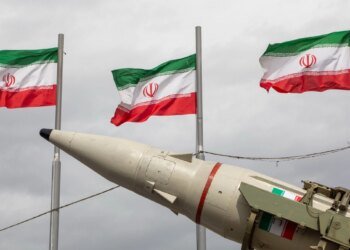
According to American law, the president can conduct a military operation for a maximum of 60 days without the consent of Congress. For Trump’s war on Iran, that deadline expires on May 1.
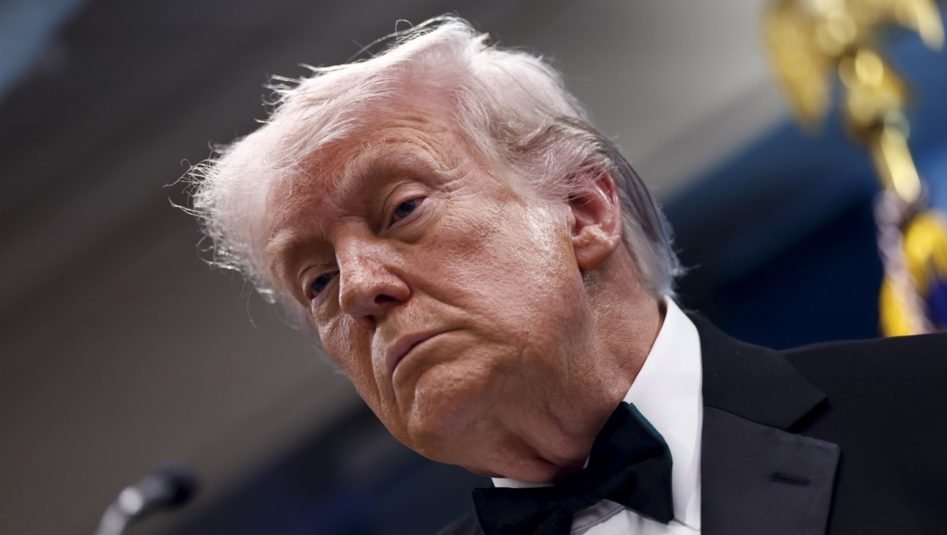
Donald Trump likes to present himself as a strong president who uses his powers defined by the Constitution to the limit. In principle, as commander-in-chief of the US armed forces, he can initiate a military operation, but must formally notify Congress within 48 hours. In the war with Iran, he did it in a timely manner on March 2. However, now the second deadline is approaching: such an operation without the consent of deputies and senators can last only 60 days. That deadline expires on May 1.
If there is no negotiated solution between Washington and Tehran by then, the president must take new steps to further legitimize the military operation against Iran. Trump, who in his second term often administers decrees bypassing parliament, has few options left.
What about the War Powers Resolution?
The manner in which powers are distributed between Congress and the President in the event of war is prescribed by the so-called War Powers Resolution. President Richard Nixon did not like this law when it was passed in 1973. His veto, however, was overridden by Congress with a two-thirds majority, putting the law into effect.
The resolution is considered a lesson from the Vietnam War, in which the US participated since the 1950s, and which was only formally approved by Congress in 1964. Almost 240 years ago, the founders of the USA clearly defined powers in the event of war in the Constitution: the president is the supreme commander of the armed forces, but only Congress can declare war.
Today, formal declarations of war have fallen out of use – the last one was passed by Congress on June 4, 1942, against Bulgaria, Hungary and Romania, which were allies of Nazi Germany in World War II.
The War Powers Resolution guarantees Congress the right to co-decision even in modern conflicts without a formal declaration of war, leaving the president some room for action in sensitive situations. How the situation will develop further depends, apart from the decisions in Washington, and the uncertain situation in the Near and Middle East.
Extension possible, but only for 30 days
The President of the USA can, in accordance with the law, once extend the 60-day period by an additional 30 days – primarily to enable the orderly withdrawal of troops. Stormi-Annika Mildner, director of the German branch of the Aspen Institute, considers this the most likely scenario.
“I assume that Trump will use the additional 30 days, with the explanation that progress has already been made in the conflict, that there is a truce and that the end of the war is in sight, so that time is needed to end the process,” says Mildner in an interview with DW.
Such argumentation, however, could weaken if the situation, for example in the Strait of Hormuz, were to further intensify and if the existing cease-fire, which has no time limit, would be massively and permanently violated. “If the conflict escalates now, then calling for those 30 days is, of course, even more controversial than it already is,” says Mildner.
The New York Times mentions another possibility. Trump could argue that the 60-day rule does not apply in this particular case.
Thus, his predecessor Barack Obama, whom Trump often criticizes, in 2011 in connection with the airstrikes in Libya – which were approved by the UN – claimed that it was not about permanent combat operations, and especially not about operations in which ground forces participate.
Five resolutions against the military operation – and five times no
As a rule, before major military actions, presidents sought the support of the public, and especially Congress – as, for example, George W. Bush before the war in Iraq in 2003.
The fact that Trump did not do so during the American-Israeli attack on Iran represents an open weakness that opposition Democratic MPs and senators have tried to exploit several times.
Since the beginning of March, both houses of Congress have held a total of five votes on resolutions that were supposed to limit Trump’s moves. The resolutions, as expected, failed due to Republican majorities in both chambers – albeit in part by a relatively narrow margin.
“Other than passing resolutions, Congress has only limited options to actively end the war,” says Stormi-Annika Mildner of the Aspen Institute. “An effective instrument would be the suspension of funding. However, this is difficult to do politically.”
The US military is deeply embedded in society, and defunding soldiers would likely be met with little understanding across party lines.
Congress is already thinking about mid-term elections
Five votes in Congress so far do not necessarily mean that a sixth – after the 60-day deadline – will be routine. Several Republicans, according to the New York Times, have already announced that they will reconsider their future vote.
John Curtis, the Republican senator from Utah, has already published an essay in which he clearly states in the first sentence: “I will not support sustained military action beyond the 60-day time frame without congressional authorization
Such an approval, however, Mildner considers “not particularly likely”. “For many Republicans, it is politically much easier to vote against resolutions to end the war than to actively approve its continuation. The latter means a clear co-responsibility for the duration, costs and risks of the operation, and thus significant exposure to attacks – especially in the run-up to congressional elections,” she states.
Mid-term elections for Congress, which regularly elect all 435 seats in the House of Representatives and 35 out of 100 seats in the Senate, are being held on November 3. These elections are often an opportunity for voters to punish the president’s policies, and this year polls suggest that Trump’s Republicans could lose their majority in both chambers.
American political advisor Jonathan Katz from the Brookings Institute told DW that candidates, especially in federal states and constituencies where close races are expected, are watching the polls very closely.
“At the same time, in the run-up to the congressional elections, it would be politically risky to vote against Trump’s military operation. Republican members of Congress will rather stay on the sidelines than engage in conflict with the president, who is known for publicly attacking Republicans who he deems not loyal enough to him,” says Katz.
One of the reasons for the low approval rating of the president is the high cost of living, further exacerbated by the sharp rise in fuel prices as a result of the war with Iran. Even within Trump’s otherwise tight-knit MAGA base, criticism of the war is getting louder.
The pressure on the president is therefore enormous to find, before the congressional elections, a solution that would allow him to save political face – regardless of how Congress will ultimately be involved.
Follow us on our Facebook and Instagram page, but also on X account. Subscribe to PDF edition of Danas newspaper.