
Play at Gangdong Arts Center blends inclusive storytelling with accessible staging
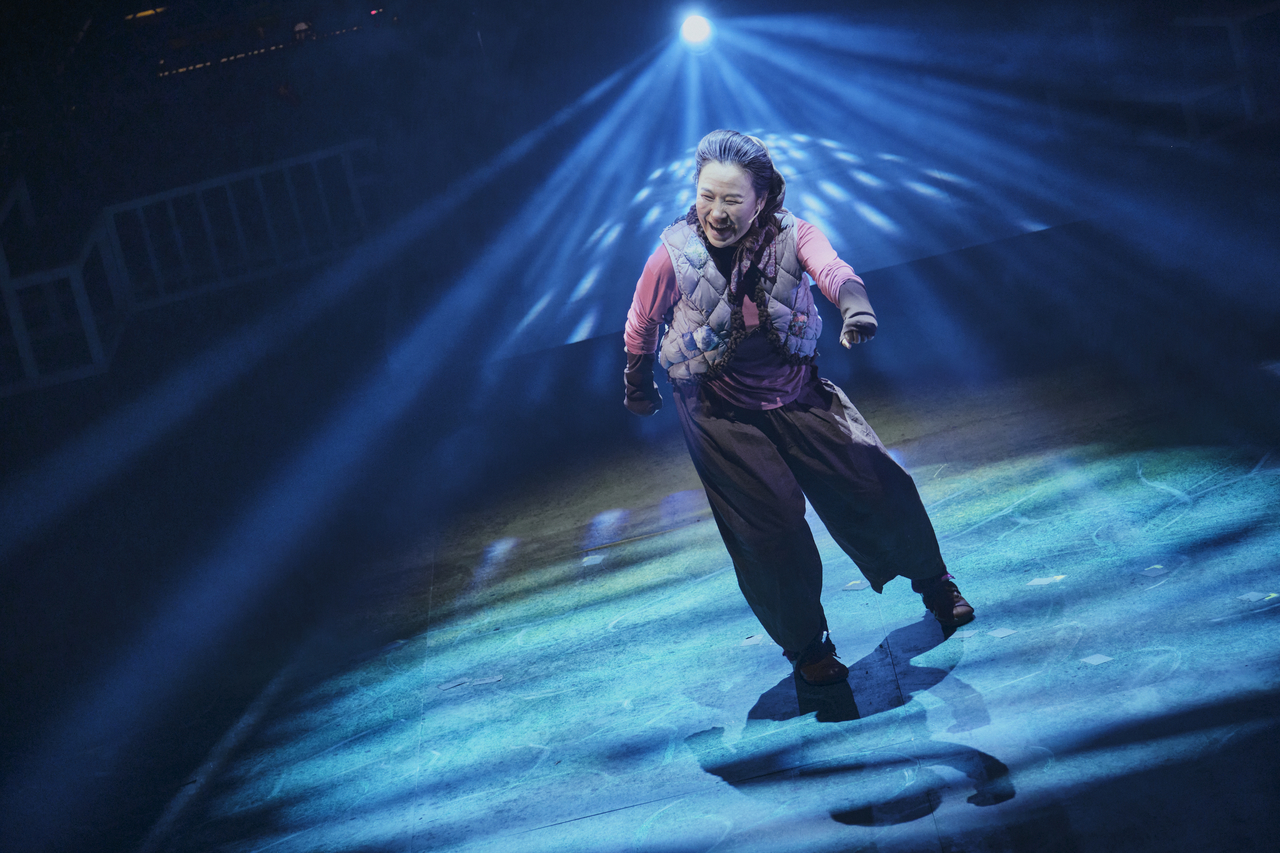
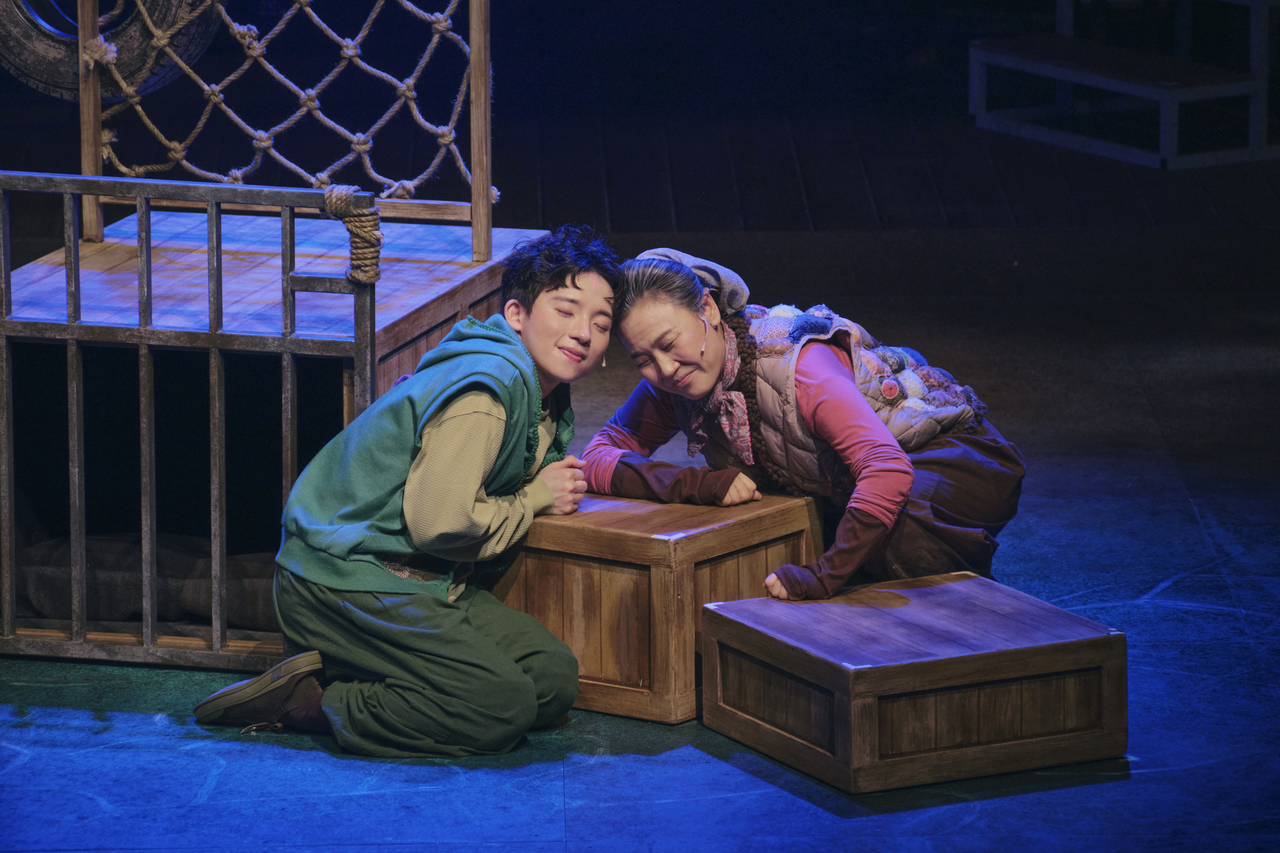
A 175-year-old Galapagos tortoise slowly approaches a baby monkey. The monkey has just arrived at the zoo, separated from its mother, and is frightened by the baboons in an adjacent cage.
“Don’t worry. You are not alone here,” the tortoise says gently. Reassured, the baby monkey finally falls asleep.
The scene is from “Harriet,” a stage adaptation of a children’s story by Han Yun-seop. The play centers on the friendship between Harriet, a 175-year-old Galapagos tortoise, and Charlie, a baby East Javan langur monkey who arrives at a zoo alone. It follows Charlie’s arrival at the zoo after being captured, and Harriet’s final days there, exploring the value of existence through the relationship between humans and animals.
Harriet was collected from the Galapagos Islands in 1835 by Charles Darwin, when she was reportedly about the size of a dinner plate. She likely hatched around 1830. She lived in England for a brief period before Darwin’s friend John Wickham brought her to Australia, where she lived out the rest of her life, according to the Australia Zoo. Harriet died in June 2006.
The stage adaptation, which premiered last year, is currently running at the Gangdong Arts Center in Seoul through Sunday.
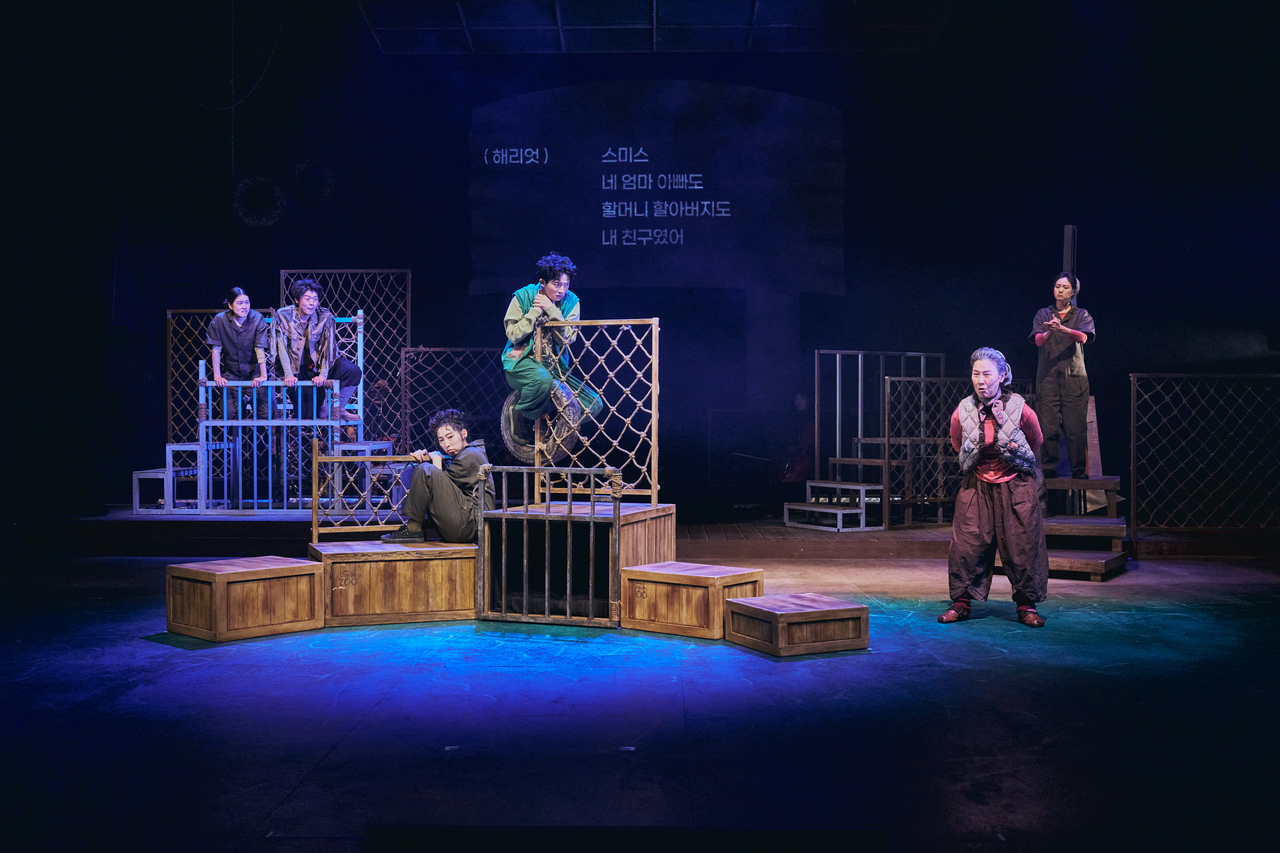
Billed as an “accessible theater” production, the show weaves sign language interpretation, Korean subtitles and audio description into the staging itself, treating them as part of the direction rather than just add-on accessibility features, enhancing accessibility for audiences regardless of disability.
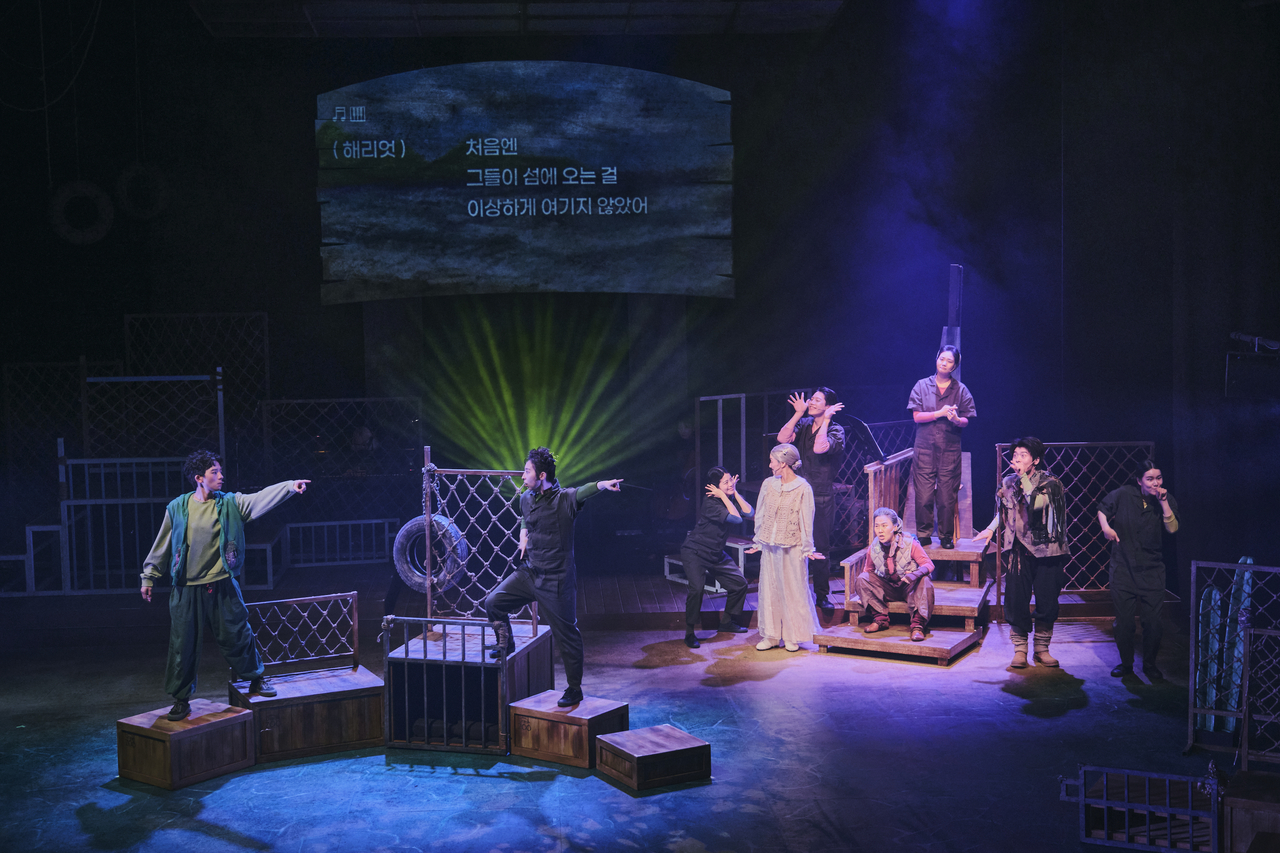
One of its key devices is a role known as “shadow voices.” These sign language interpreters move closely behind the actors on stage, translating spoken dialogue into sign language in real time.
At moments when they mirror the actors’ expressions and physical movements, the effect is of two performers sharing a single role, creating a layered, tightly synchronized performance that deepens the visual storytelling.
Director Kim Ji-won said “Harriet” reflects the idea of theater “for everyone,” both in form and content.
“I wanted accessibility not to remain something like accommodation, but to come onto the stage itself,” Kim explained ahead of the play’s opening on April 17.
“We thought about how people might experience the performance in different ways, yet still share the same story in the same space.”

hwangdh@heraldcorp.com