Belarus’ National Olympic Committee celebrated an anniversary in 2026. Sport in sovereign Belarus has come a long way in a relatively short period of time by historical standards. An important date in the NOC’s history was 15 May 1997. On that day the Belarusian leader Aleksandr Lukashenko was elected president of the National Olympic Committee. Three years before that, in 1994, at his first press conference as the head of state, when asked by a reporter about the future of sport in Belarus, he promised: “I will support sport.” In a new episode of the How It Was project, we present facts confirming that the president kept his word.
What tasks did the president set for sport?
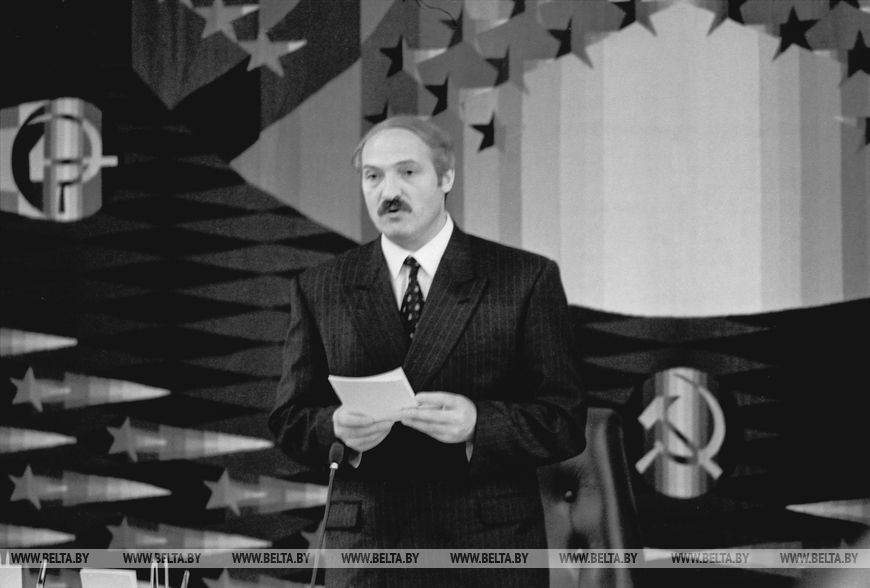
Speaking at the NOC meeting held on 15 May 1997 to hear reports and elect new officials, Aleksandr Lukashenko noted: “The Olympic movement has become the most widespread and popular movement of our time, and no government, no serious statesman can ignore this fact. Sport is kind of a layer of national culture, and Olympic champions are our national treasure. We consider and will consider sport as a most important social phenomenon, as part of the state policy, and the Olympic movement as the most important element of this policy.”
The president immediately outlined specific tasks that had to be addressed for the effective implementation of the sport policy. The first one was to preserve the Belarusian school of gymnastics, wrestling, rowing, athletics, and shooting created by previous generations of coaches and administrators, and to restore the glory of fencing and team sports. “We have to take care of top‑level sport personnel. At the same time, we have to train a new generation of specialists with the latest knowledge in sport organization and methodology. We have to employ leading athletes in this work. Those whose careers are about to end,” Aleksandr Lukashenko said.
The second task, the head of state said, was to involve children and young people in the sport movement and to create a system for their health improvement and Olympic education.
The president also drew attention to expanding international cooperation and strengthening Belarus’ authority on the international stage. “Athletes, sport administrators, and coaches are also diplomats. Sometimes they do even more to promote the republic’s achievements than diplomats,” he emphasized.
The head of state and of the Olympic movement in Belarus took a direct and extremely active part in accomplishing these tasks. But let us take a look at things in order.
Health should be “bought” here
Effective development of sport and the achievement of high results require proper conditions. Construction and reconstruction began at numerous sport facilities across the country.
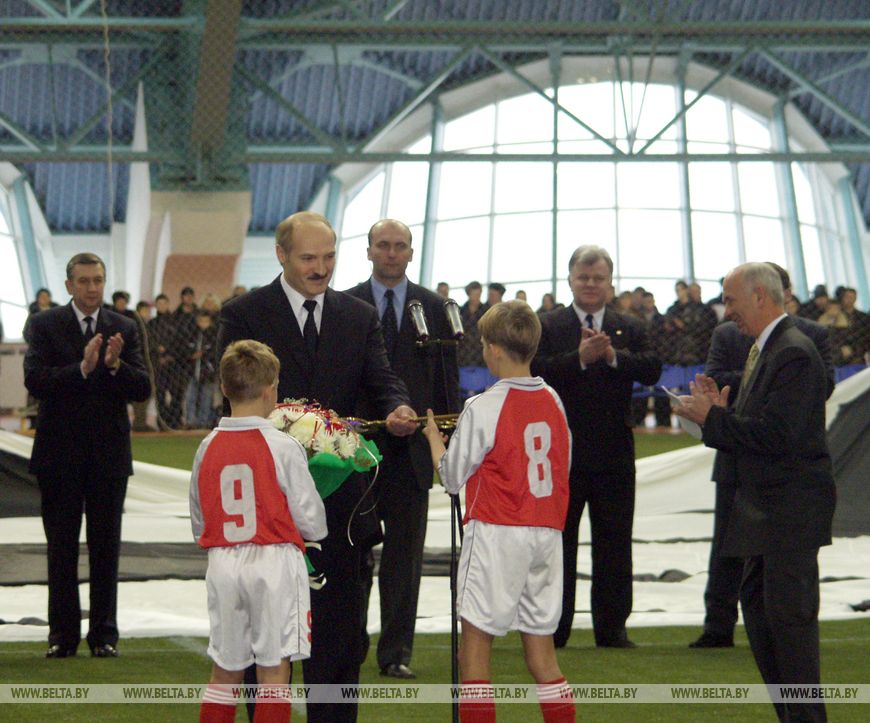
In December 2002 an indoor football center was opened in Minsk. The president was present at the opening of such a landmark facility for the Belarusian capital city. Back then he emphasized that the construction of sport complexes was only gaining momentum: “Although it is not cheap, the state will continue building sport facilities. We will do everything so that young people go to the football field to gain health and beauty instead of the pharmacy for medications.”
Belarusian young people could gain health and beauty not only on the football field but also on ski trails, of which many have been built in the country. And which the president visited many times. “When I first visited Logoisk District, I was struck by the beauty of these places. And we started working on this, we started thinking about how to use these wonderful natural conditions for the benefit of our people. The idea was truly ambitious: to develop a unique project for Belarus and create a sport and recreation center,” Aleksandr Lukashenko said at the opening of the Silichi ski resort in January 2005. And the plans only became more ambitious. “Next on the list is what I am afraid of saying out loud… We need to build a large ice arena for about 13,000-15,000 people because people are ready to come and hold competitions. It will pay back well. It is good for the economy. And we need to build several ice rinks for children and adults in regionally governed cities such as Orsha, Zhlobin, Mozyr, Lida, Bobruisk, and Polotsk. We also need a speed skating rink for training speed skaters,” the head of state shared his plans.
At the end of 2006 an ice arena was built in Zhlobin. In 2010 Lida acquired a similar facility. In May 2008 Aleksandr Lukashenko handed over a symbolic key to the new Bobruisk Arena to the residents of Bobruisk. In 2013 the cityscape of Orsha was adorned with an ice arena, the largest one in Vitebsk Oblast. Thus, ice arenas ceased to be a rarity in district capitals.
The large ice arena and the speed skating rink were also built. The construction of the multifunctional cultural and sport complex Minsk Arena became an important sport and image‑boosting project. The complex was destined to become the largest and most iconic sport facility in the country. The decree on the construction of the multifunctional cultural and sport complex Minsk Arena was signed by the president at the end of 2005. Aleksandr Lukashenko personally took part in its construction, working there on community clean‑up days. For example, on a clean‑up day held in 2009, the president said that sport facilities in Belarus would continue to be built not only because it is a long‑term investment in people’s health but also because it is an investment of money in the country’s economy. “In this way, we stimulate our construction sector, our economy, and our production. This is what saves the economy: the more we build, the more enterprises work for these construction projects. And practically all of our enterprises can produce what is needed for such facilities. Therefore, we will continue building. Of course, wisely,” the head of state said in a conversation with journalists.
On 30 January 2010, the head of state took part in the ceremony to open Minsk Arena, which has since become one of the country’s landmarks.
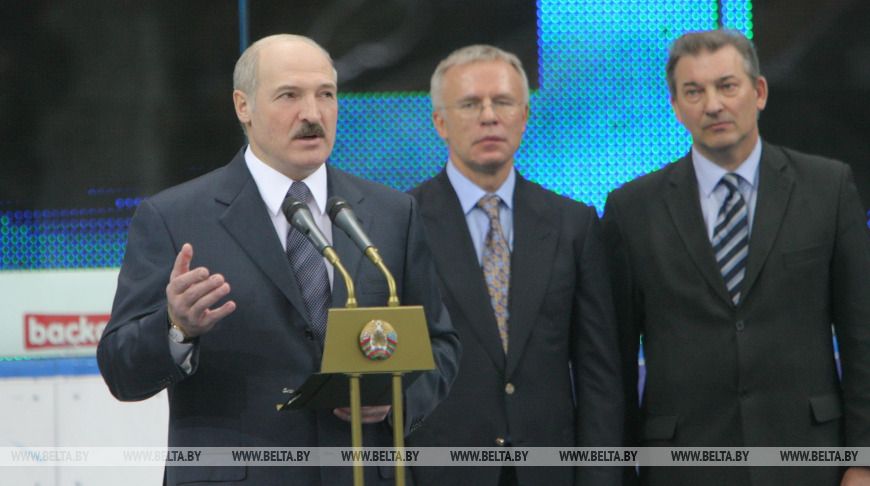
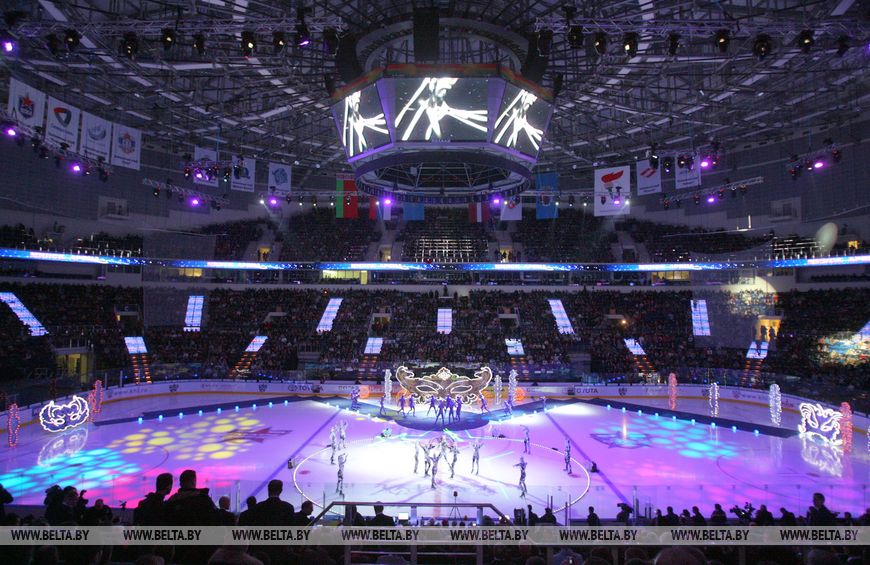
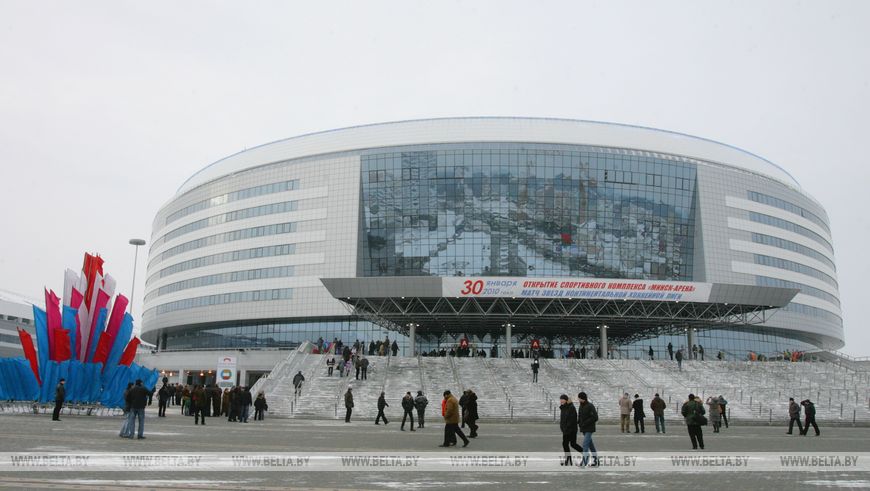
By 2010, Belarus had reached leading positions in the scale of sports facility construction. Over ten years, 20 major complexes were built, and their geography covered the entire country.
“I have already told Belarusians, especially those who criticize us for building such facilities while at the same time wanting to be sovereign and independent, that any sovereign and independent state must create symbols of its independence and sovereignty, and that has always been expensive. But it is not about the money. Health is more valuable, and you cannot buy it. Health must be ‘earned’ here through persistent and determined effort,” the president said at the ceremony to open Minsk Arena. “I am confident that this facility will instill pride in our nation, and we, Belarusians, will be able to say that we know how to create such facilities with our own hands.” Let us recall the promise to build a speed skating rink: the speed skating stadium is part of the Minsk Arena complex.
The president continued working in this direction. During the nationwide clean-up day in April 2011, Aleksandr Lukashenko worked at the construction site of the cultural, entertainment, and sports complex in the Chizhovka residential district, now known as Chizhovka Arena.
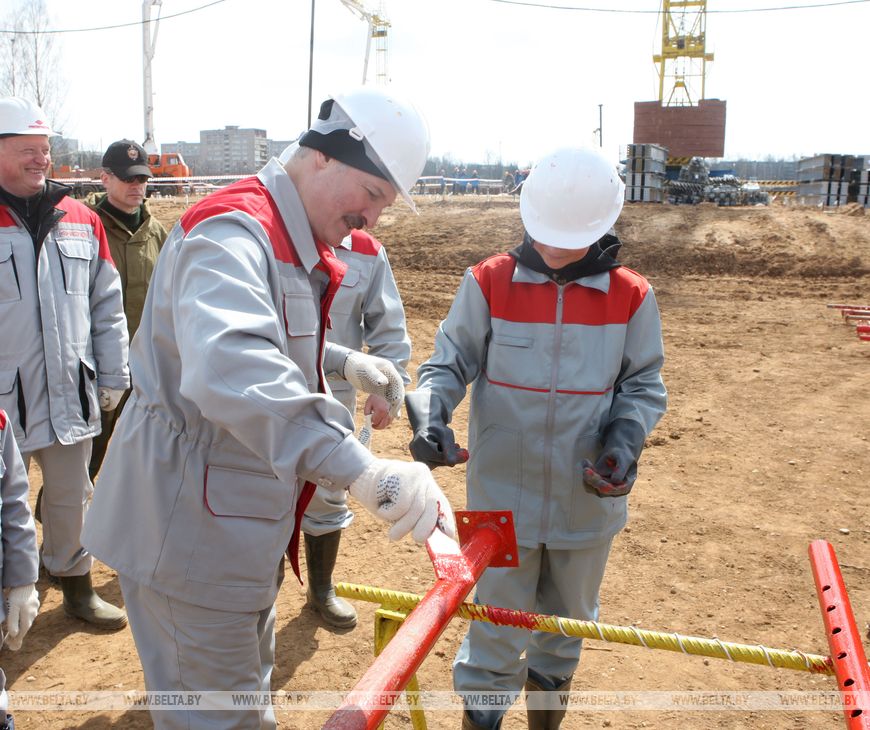
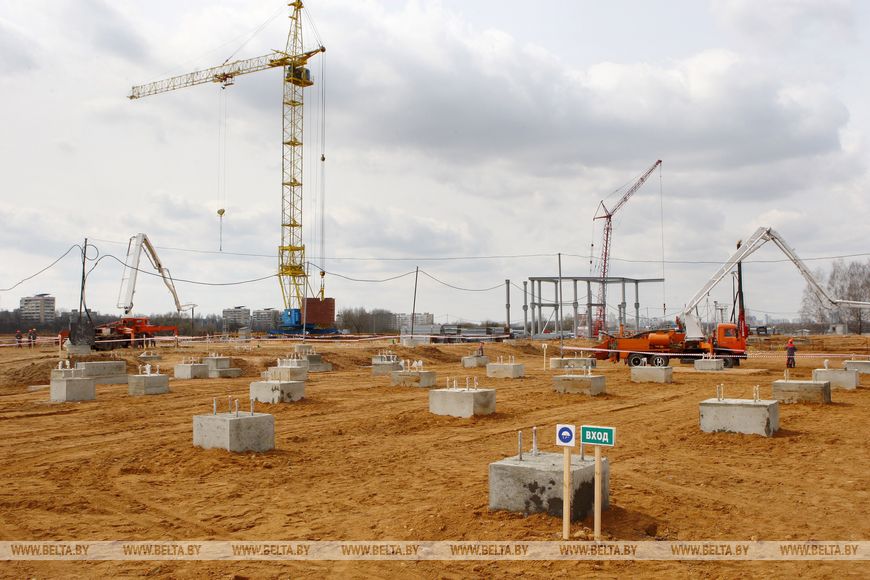
However, not only ice arenas were actively built in Belarus at that time. Other sports disciplines also received attention. In 2007, a rowing canal was opened in Brest, and an Olympic training center for rowing sports was established there. At the end of 2008, a velodrome was opened in the capital. At that time, it had no analogues in the post-Soviet space in terms of architectural design and functionality. The best global experience in constructing and operating such facilities was taken into account during its design. Aleksandr Lukashenko was among the first to ride a bicycle on the new track. In February 2016, the Uruchye Sports Palace opened its doors, becoming an excellent base for the development of team sports.
In 2018, a new chapter began for the legendary Dinamo Stadium. The arena was reopened after reconstruction. Every Belarusian has a personal story connected with this stadium. The president was no exception, as he said at the opening ceremony: “Once, I was fortunate enough to play in this stadium, and I remember it well. Fortunately, many living legends of this stadium are still with us. When making the decision to revive it, in fact, to create a new sports, cultural, and fitness center on this site, I thought about those who played here, who tied their lives to this stadium, who lived for it, who came to matches, competitions, and concerts. And there are millions of them, thank God, from our commentators and journalists to the greatest athletes. I am sure that when they come here today, tomorrow, and in the future, they will remember their youth with pride, and some – their childhood.”
The regions were not overlooked too. New sports and recreation centers opened in Berezino, Brest, Borisov, Volozhin, Kostyukovichi, Stolbtsy, Stolin, Cherven, Ushachi, Raubichi, Krasnopolye, and in regional centers.
‘Let the competition be beautiful, and the victory honest.’
Sports facilities were built to high standards, in line with global requirements, which made it possible for Belarus to host major international competitions across various sports. Hosting major tournaments is not only part of sports history: it is also a significant contribution to the national economy and an important diplomatic step. Most importantly, nothing inspires young people to take up sports more than a large-scale celebration and spectacular competitions. Athletes and organizers prepared thoroughly for every event.
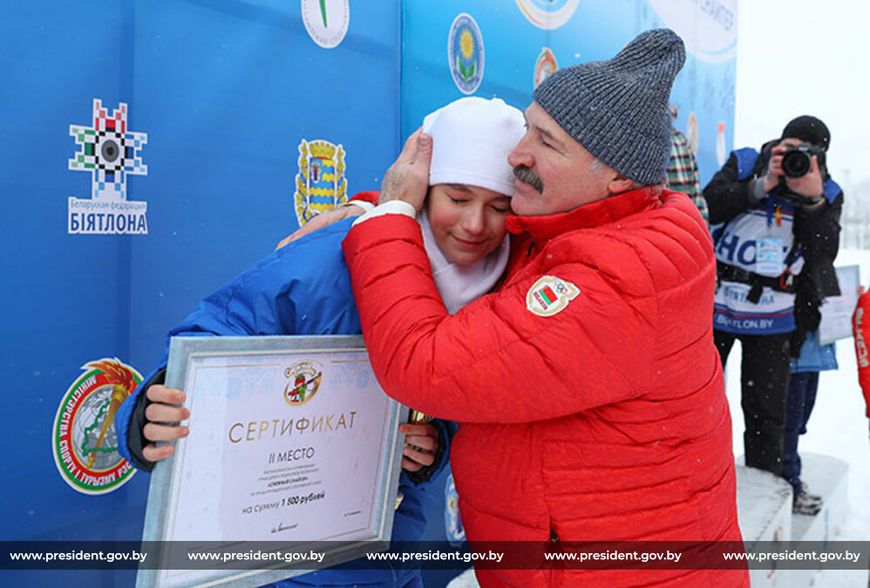
For a young athlete, receiving a cherished medal from the head of state, hearing his congratulations and words of encouragement, is perhaps the strongest motivation. This is why Aleksandr Lukashenko is often seen at children’s competitions. “The value of these competitions is that the best children, the seeds of our country, are taken under the coaches’ supervision. We will do everything to ensure that they grow into future great athletes like Domracheva, Bjørndalen, Aidarov, Popov,” the president said at the 2018 award ceremony for the national Snow Sniper competition.
The head of state encouraged not only young athletes. A meeting with Aleksandr Lukashenko became a pleasant surprise for participants of the gala show at the 2019 European Figure Skating Championships. The president thanked the International Skating Union for entrusting Belarus, for the first time in its sovereign history, with hosting the European Championships, and assured that the country was ready to host a World Championship as well.
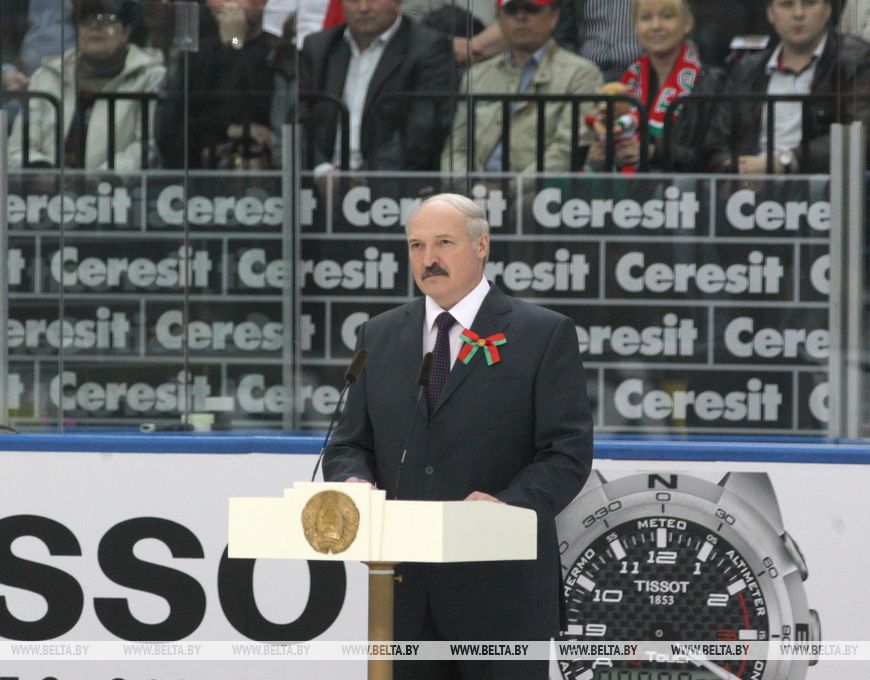
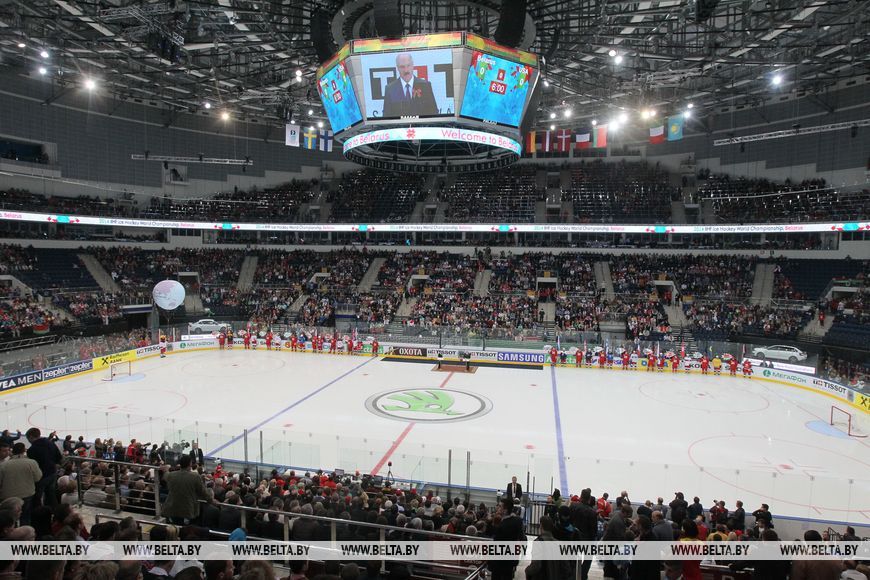
The world had already seen that Belarus could host world-class events five years earlier, in 2014, when Minsk hosted the Ice Hockey World Championship. “I won’t deny that we had to overcome considerable difficulties: blackmail and political pressure from certain forces that are prejudiced against Belarus. Fortunately, common sense and respect for sporting values prevailed. The members of the world’s strongest hockey teams who are legends and global stars came to us,” the Belarusian leader said at the opening ceremony of the championship, which, incidentally, took place on a significant day for Belarusians – 9 May.
The Belarusian national team began its performance at the home championship with words of encouragement from the president, who stopped by the players’ changing room. “Play the way you know. Perhaps a little better, because this is a world championship. And none of you will likely ever have another home championship like this again. Your relatives and friends have come to watch you, and you must show them your game,” the head of state said. In 2014, the Belarusian team finished seventh at the World Championship, delighting fans with good hockey. The championship was also remembered for a touching moment. On the final day, Belarusian national team captain Ruslan Salei, who had died in a plane crash in 2011, was inducted into the International Ice Hockey Federation Hall of Fame. The legendary defenseman became the first Belarusian to be given this honor.
Belarus has proven its reputation as a country capable of hosting major sporting events at a high level on numerous occasions. It did this most spectacularly in 2019 when it hosted the 2nd European Games. The preparation for the multi-sport forum was personally overseen by the president. “We need to make sure that athletes feel great and deliver – or at least try to deliver – their best possible results, that fans and spectators feel like it’s a real celebration, and that these competitions unite everyone – not just in the host country, but all around the world,” Aleksandr Lukashenko outlined the approach of the Belarusian organizers at the 45th General Assembly of the European Olympic Committees in Minsk in 2016.
A major sports celebration took place in Minsk on 21-30 June 2019. More than 3,500 athletes from 50 countries competed in 15 sports, with 200 medal events on the line. Aleksandr Lukashenko also watched the performances of the best Belarusian athletes. In particular, the president supported rowers and track and field athletes, who won the most medals. The 2nd European Games left behind not only good memories but also a rich legacy. Thanks to the Games, the construction of a new residential building in the Student Village, which served as the Athletes’ Village, was accelerated. A new polyclinic with modern equipment and a stadium became a pleasant bonus for Belarusian students. The sports equipment purchased for the Games is now at the disposal of sports schools and clubs. Incidentally, only one facility was built specifically for the European Games – the national beach soccer stadium. All other venues and arenas were renovated if necessary. The multi-sport forum became yet another event that impressed the international sports community. “Excellent work by the organizing committee. Without a doubt, the Games were held at a high level and have left a rich legacy,” European Olympic Committees President Janez Kocijančič said.
Just two months after the European Games, Minsk hosted another unique sporting event – the first-ever Europe vs USA match in athletics history. The heart of the tournament was the legendary and by then renovated Dinamo Stadium. Aleksandr Lukashenko opened the historic tournament. In his speech, he outlined the core values of sport: “Of course, we will be cheering passionately for all the athletes. That’s just the nature of tolerant and open-hearted Belarusians. We know one thing for certain: no matter who wins, we – millions of fans from across the globe – will witness the birth of new athletics legends. And may willpower, determination and nobility triumph at the Dinamo Stadium. May the competition be beautiful, and may victory be fair.”
It was planned that such match meetings would be held every two years, alternately on U.S. and European territory. But the COVID-19 pandemic, and later artificially created turbulence in global sports, extinguished that idea. Thus, the 2019 match in Minsk became the first – and for seven years now – the only such event in history.
The greatest ideology and diplomacy
Aleksandr Lukashenko has never limited himself to simply watching and opening competitions. Belarusians are accustomed to seeing their president on skis or skates. A long-standing sports tradition is the Christmas International Hockey Tournament for the Belarusian President’s Cup. “This tournament has a truly noble goal: to popularize and develop hockey, and to bring more and more people of all ages into the fold of this courageous and magnificent sport,” the president said at the opening of the first-ever tournament in 2005.
In 2007, the Republican Hockey League, the country’s main amateur tournament, was established. Teams from all regions and the president’s hockey team compete in the League. So, at the initiative of the Belarusian leader, hockey became the number one sport in the country. And it is not only about sport.
“Ice hockey is a great ideology. Sport in general is an ideology. It’s hard to imagine any ideological event higher than sport. Because billions of people around the world watch sports competitions. If a team wins and puts on a decent performance, there’s no need to agitate people for anything. Their spirits rise on their own. Back in Soviet times, they calculated that labor productivity increased significantly after Soviet athletes won. That is the essence of sport,” Aleksandr Lukashenko said during a meeting with players and coaches of HC Dinamo Minsk in 2017. No matter what has happened over all these years, the president has not reduced the intensity of his attention to ice hockey.
Through his own example, the president has shown more than once that any kind of sport can bring enjoyment. In September 2018, Aleksandr Lukashenko attended a sports event marking Minsk City Day, during which he took part in a relay race on roller skis among teams from law enforcement agencies and government bodies. It’s worth asking: can you find a president anywhere else in the world zipping down the capital’s main streets on roller skis?
Sport is rightly called a messenger of peace and the best form of diplomacy. Because it unites people from different countries and continents, strengthens friendship among nations, and expands opportunities for closer cooperation between states,” Aleksandr Lukashenko said at the opening of Minsk Arena. This high regard for sport as an effective language of diplomacy is one of the hallmarks of Belarus’ foreign policy. Aleksandr Lukashenko has shown a personal example of using this diplomatic approach. Proof of this is his meeting with IOC President Juan Antonio Samaranch in Minsk in 1997.
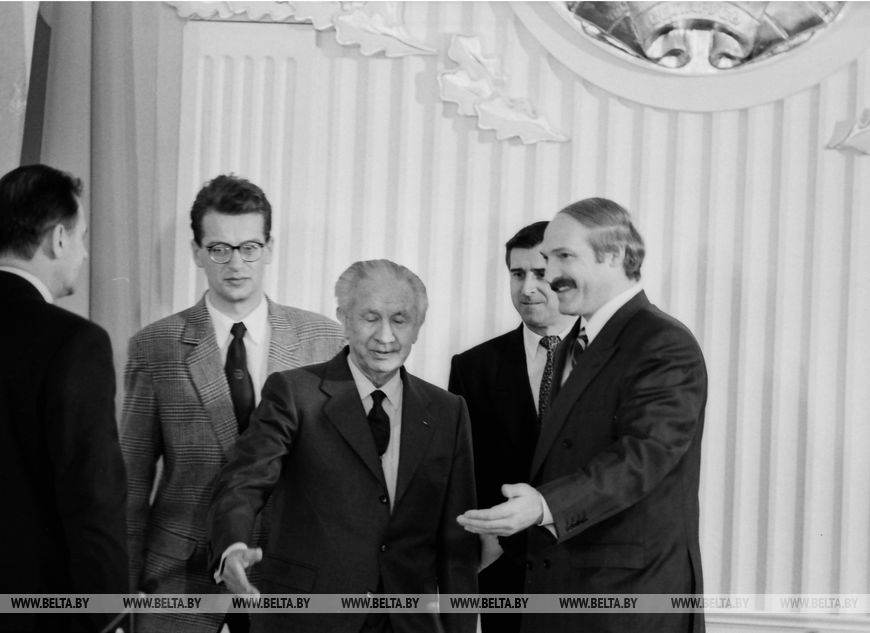
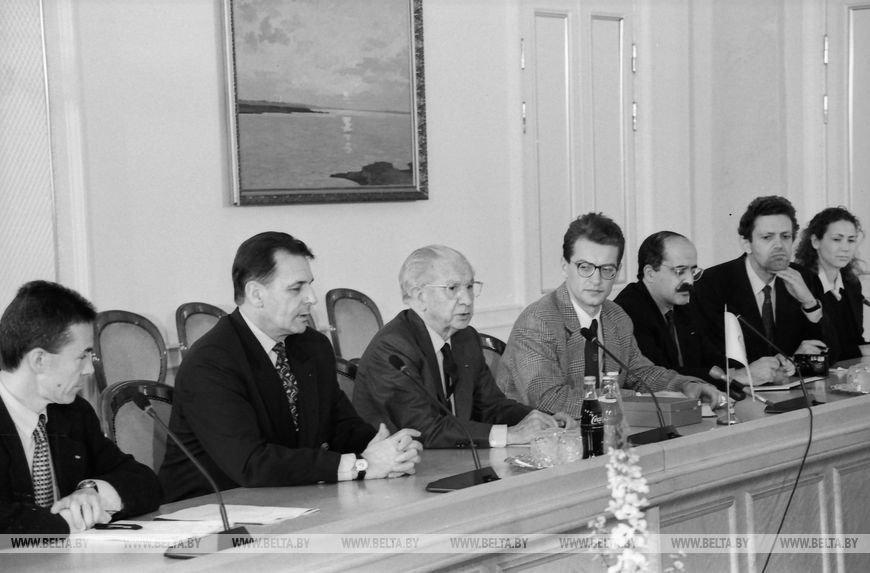
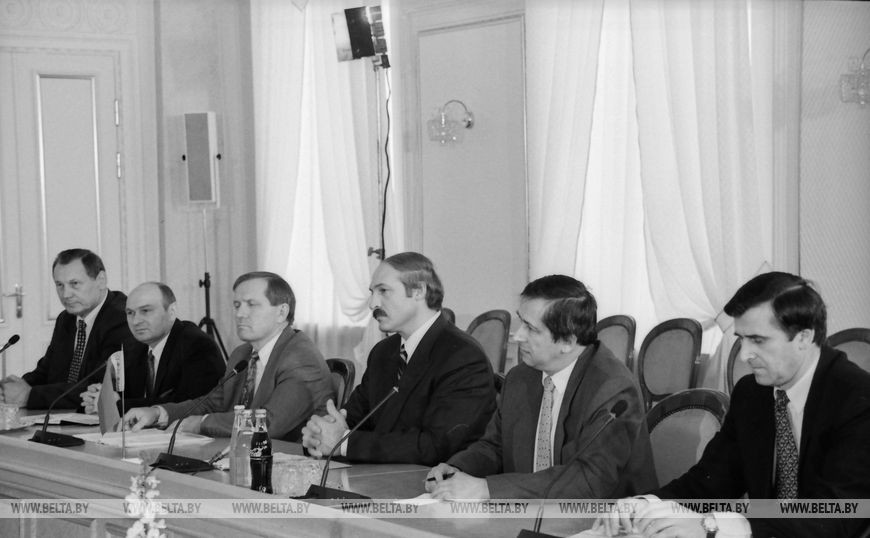
Various issues of the Olympic movement were discussed at the meeting. During a press conference, the guest emphasized that our country is very strong in sport and can count on all kinds of support.
Aleksandr Lukashenko has met with Samaranch’s successors on numerous occasions, setting an example of sports diplomacy. Often these meetings were included in the packed schedule of the president’s official visits to other countries. For example, in 2015, the Belarusian leader held talks with IOC President Thomas Bach during his working visit to Azerbaijan. At the time, Aleksandr Lukashenko suggested that the International Olympic Committee pay more attention to developing sport in countries that are making progress in this area. “Yes, there are universally recognized leaders in world sport, but we need to support developing countries. I know that such ideas exist within the IOC. We are ready to work with you in practice to give this idea greater momentum,” said Aleksandr Lukashenko. Thomas Bach has visited the Independence Palace many times, where he and Aleksandr Lukashenko discussed the problems and prospects of the Olympic movement.
Heads of international sports federations also came to meet with the Belarusian leader. In 2016, Sebastian Coe, President of the International Association of Athletics Federations, arrived at the Independence Palace. During his meeting with the Belarusian leader, he noted that politicians generally fall into two camps – those who understand sport and those who do not. “So it is all the more pleasant for me to speak with a person in such a high leadership position who not only understands sport well, but also understands athletics very well. It pleases me even more that we share an understanding of how valuable sport truly is,” the head of world athletics said. Apparently, today, by barring Belarusian athletes from international competitions, Coe is thinking less about the values of sport.
Aleksandr Lukashenko has discussed the development of their respective sports with Tamás Aján, head of the International Weightlifting Federation; FIBA Secretary General Patrick Baumann; UEFA President Aleksander Čeferin; and his predecessor, Michel Platini. Sports diplomacy – pure and simple. And Aleksandr Lukashenko has set its trends more than once. And, as always, he did so openly.
“Above all, the state must take care of the health of its citizens and create all the conditions for elite sport. Because no matter how much we might wish otherwise, sport today cannot be separated from politics. But we must strive to ensure that it is part of an honest and sincere politics,” the president said at the 45th General Assembly of the European Olympic Committees, which Minsk hosted in 2016. He has never once wavered from this position.
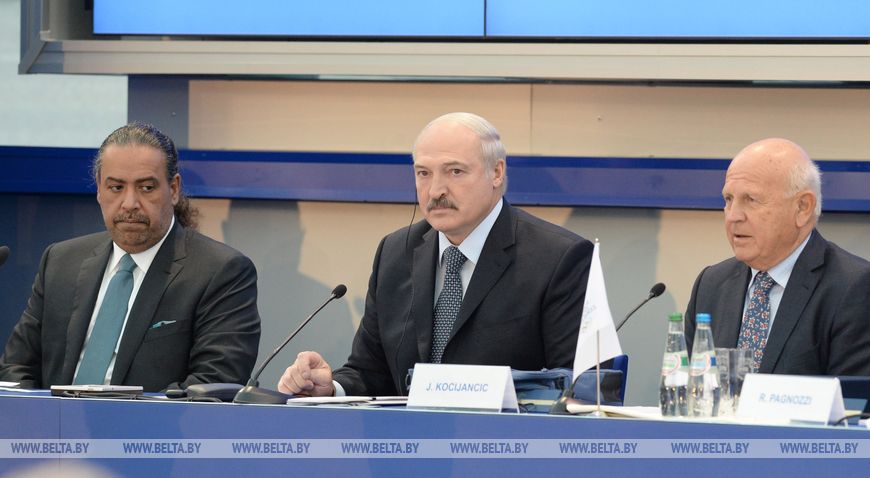
Aleksandr Lukashenko stepped down as president of the National Olympic Committee in February 2021. “I tried to do everything to make sure you had something. I knew the heartbeat of sport. This is my love, this is my commitment to sport,” the head of state remarked at the Olympic gathering in 2021. At the same time, he admitted that he loves sport more than anyone else. Love, devotion to sport, and its immense social role are the reasons why, even over the last five years, sports issues have never been lost in the Belarusian leader’s packed schedule. The fact that the head of state constantly engages in sport goes without saying, as he himself has noted, it is essential. Essential for everyone: from the president down to a school student.
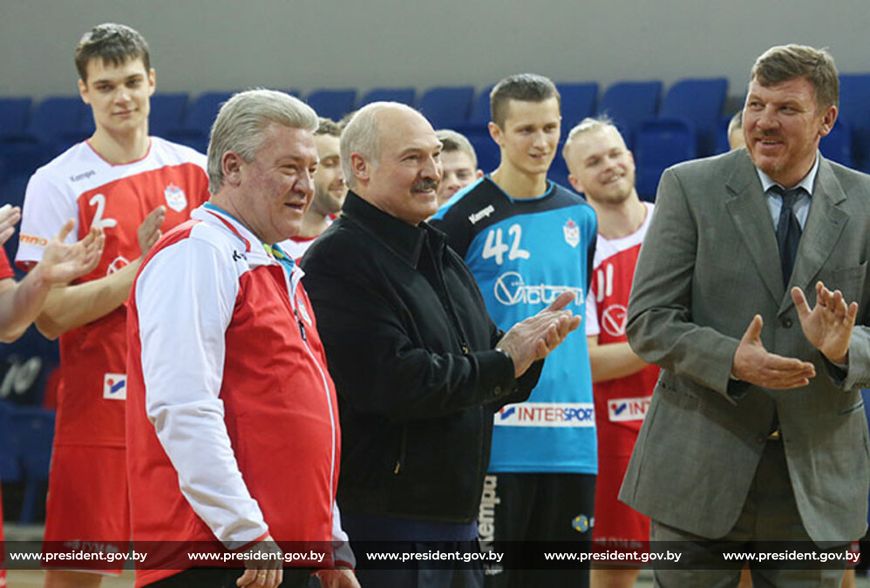
The opening ceremony of the Uruchye Sports Palace and the International Children’s Handball Tournament, 2016. An archive photo