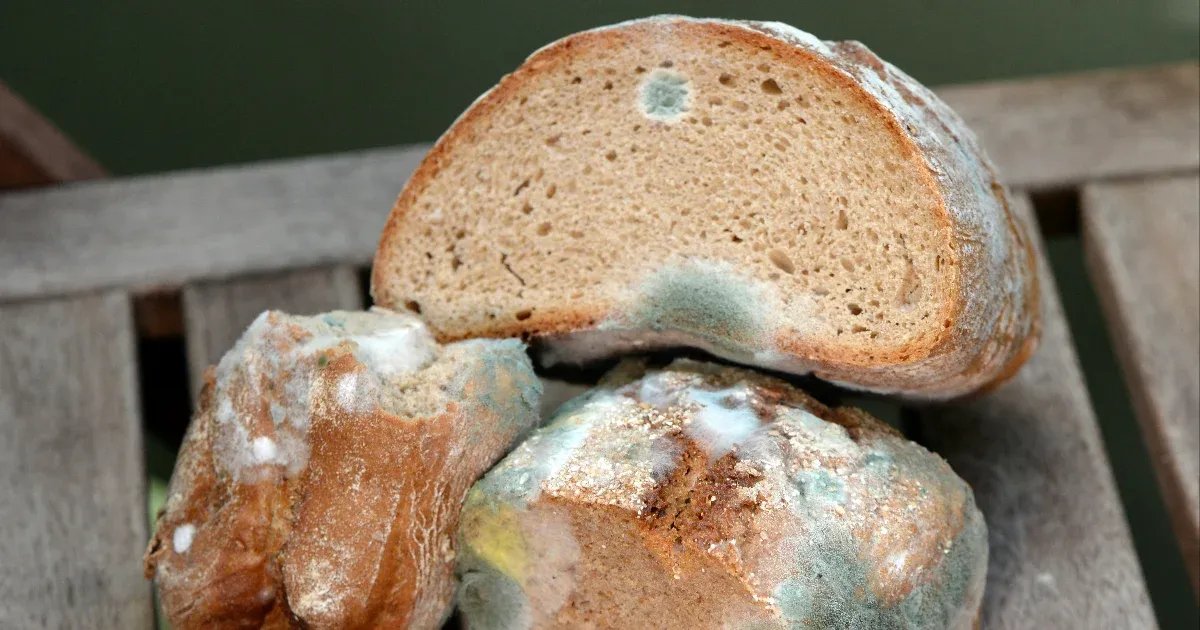
When I throw up food, I feel physical pain. This is useful in many ways, since you can save a lot by processing the rest, and if I produce less waste, I also protect the environment. The fear of waste, on the other hand, is only useful to the extent that the food does not become dangerous. Everyone must have been in a situation where small bluish-green spots appeared on bread and baked goods that were a few days old, but otherwise seemed still edible. In this case, it seems obvious to simply cut off the moldy part and eat the cleaned bread, thinking that although it is not very appetizing, what could be wrong with us. Although in many cases we have clues, for example the date marked on the food, which we previously wrote about there is often no need to be afraid even if it has expiredbut mold is a separate issue.
If someone is unsure whether it is safe to eat a slice of bread with mold on the other side, two questions arise. One is whether there can be mold in those parts of the bread where there are no visible signs of its presence yet. And the other: how dangerous is moldy bread?
The first question was answered recently with an illustrative video Rita Gyuris is a herbalist. In this video, he placed the moldy area pinched out of the bread on a separate medium, and also pinched a few pieces from the parts far away from it, which looked healthy to the eye, on a separate medium. After two days, he saw that mold had grown in both Petri dishes, including the one in which there were visibly intact breadcrumbs. He explained the phenomenon by the fact that when the mold spot appeared, the mycelium of the fungus, i.e. the fungal threads, had already woven through the entire bread.
There are plenty of experiments like this on the internet that have proven that when the spots appear, mold may actually be present in the whole bread – or other food. The lesson: it is better to throw away mold-stained bread, as mold can produce so-called mycotoxins, which can be dangerous. They are researching exactly who and what dangers these substances can pose, a According to public health they can damage the liver and kidneys, they may include carcinogenic compounds, cell and nerve poisons, and compounds that disturb hormone balance.
One 2024 study however, the spread of mold depends on the type of fungus: while one can only be found in the immediate vicinity of the spots, other types of fungi can reach several parts of the bread, similar to the phenomenon shown in the video. Some species can reproduce in the air, while others only spread locally. The study also assumes that the fungi, which sometimes cause mold stains, may have been present in the bread in the bakery, and only multiplied over time to the extent that they became visible. This phenomenon is explained by the fact that more and more large bakeries use preservatives for their breads.
Here comes the more difficult question: exactly which mold species produce dangerous substances and in which foods? You might think that mold might even be a good thing, after all, there are the cheeses matured with noble mold, such as roquefort or gorgonzola, and misos, which are one of the basic seasonings of Asian cuisine with mold-inoculated cerealsthey are matured with koji. These molds, on the other hand, are species that certainly do not produce mycotoxins, and on the other hand, they are cultivated under controlled conditions so that they do not associate with other mushroom species.
According to the previously cited study, much more thorough and extensive investigations would be needed, because the dangers caused by mold depend on the type of fungus, the moisture content of the food, the place of appearance, the storage conditions, and of course also on how much of the moldy food we eat.
For an ordinary kitchen, the lesson from all of this is that in domestic conditions there is no possibility to examine with a microscope whether the adjacent slice of bread next to the mold stain is also moldy, or to identify the type of fungus that caused the stain. That way there is nothing left but to throw it away whole bread, even if sliced. The same applies to all other food: the higher the moisture content, the more likely it is that the mold stain is not just a local infection. The American food safety office is more lenient, and in the case of harder cheeses, salami, matured hams and hard-textured vegetables, he recommends cutting around the moldy area so that the knife does not touch the mold spot, so that the remaining, intact raw material can be used.
By the way, mold can appear on any kind of bread, yet the experience is that with natural sourdough, slow-ripened breads they are less likely to mold, especially if they are stored in paper or cloth instead of plastic bags. Freezing bread in small portions is also a great solution against the risk of mold.