Tegucigalpa, Honduras
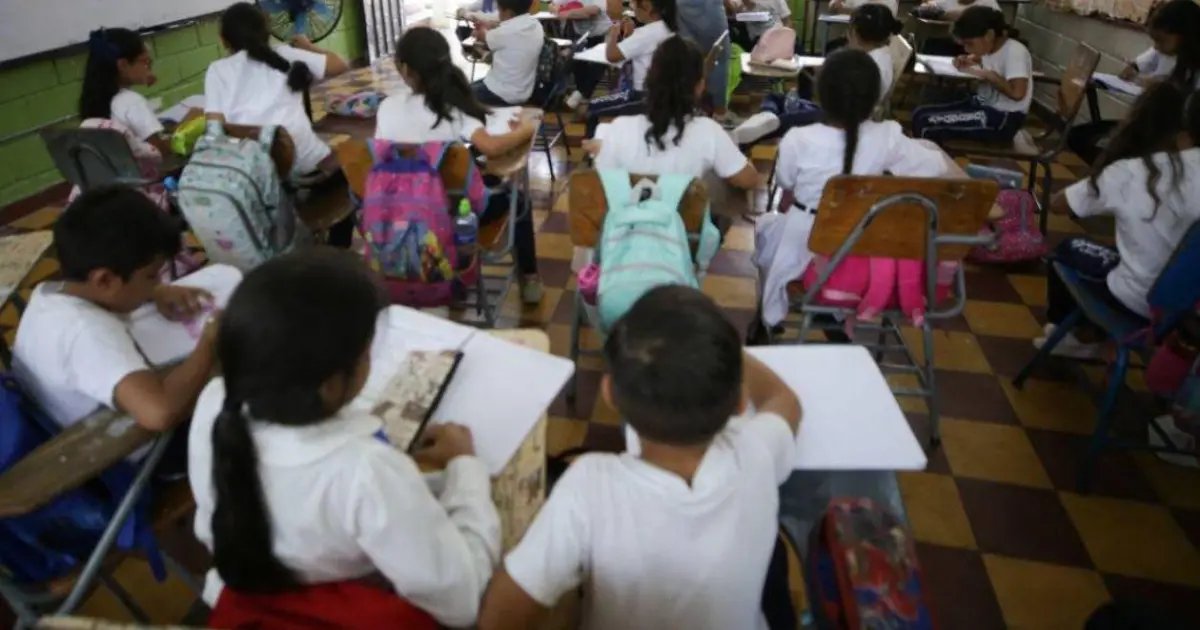
The goal of the Ministry of Education of Honduras The goal of enrolling two million students in 2026 is getting further and further away, after confirming a significant drop in the number of students registered in the national education system.
According to the most recent report of the Educational Center Administration System (Sace), At the close of the first part of the school year, enrollment reflects a deficit of 99,151 students compared to 2025.
Official figures indicate that while last year 1,841,292 students were counted, as of April 27, 2026, only 1,742,141 were registered, which represents a drop of 5.38% at the national level.
Despite this scenario, educational authorities maintain an optimistic vision. They argue that there are still around 3,000 educational centers that have not uploaded their information to the platform, so the figure could increase in the coming weeks.
However, analysts warn that, even with this pending update, reaching the two million students seems unlikely. In the best case scenario, they estimate that the 2025 enrollment could be equaled or slightly exceeded.
Educational analyst and former teacher leader Joel Navarrete considers that the challenge is high, especially after the close of the first quarter. “Incorporating close to 100,000 students at this point of the year is quite complicated. Unfortunately, instead of moving forward, we continue to lose enrollment,” he said.
At the territorial level, no department has yet managed to reach the levels of the previous year. Nevertheless, Atlantis, Choluteca, Intibucá, La Paz, Lempira, Ocotepeque, Santa Bárbara and Yoro have coverage greater than 96%.
In contrast, the rest of the country remains below 94%, with the most critical case in Gracias a Dios, where the deficit is around 13% of the student body.
The greatest delays are concentrated in Cortés and Francisco Morazán, which together accumulate more than 36,000 students outside the system (18,536 and 18,370, respectively).
In departments such as Colón, El Paraíso and Olancho, the gap exceeds 19,000 students.
Experts attribute this situation to factors such as land conflicts, cross-border migration and the use of child labor in agricultural activities.
There is also concern from the teaching profession. They point out that, despite recent efforts such as the early delivery of textbooks and enrollment incentive programs, the educational system has not yet managed to recover pre-pandemic levels.
Structural factors such as migration, the economic crisis of households and the growing distrust of parents and students in the educational system continue to slow the return of thousands of children and young people to the classrooms.