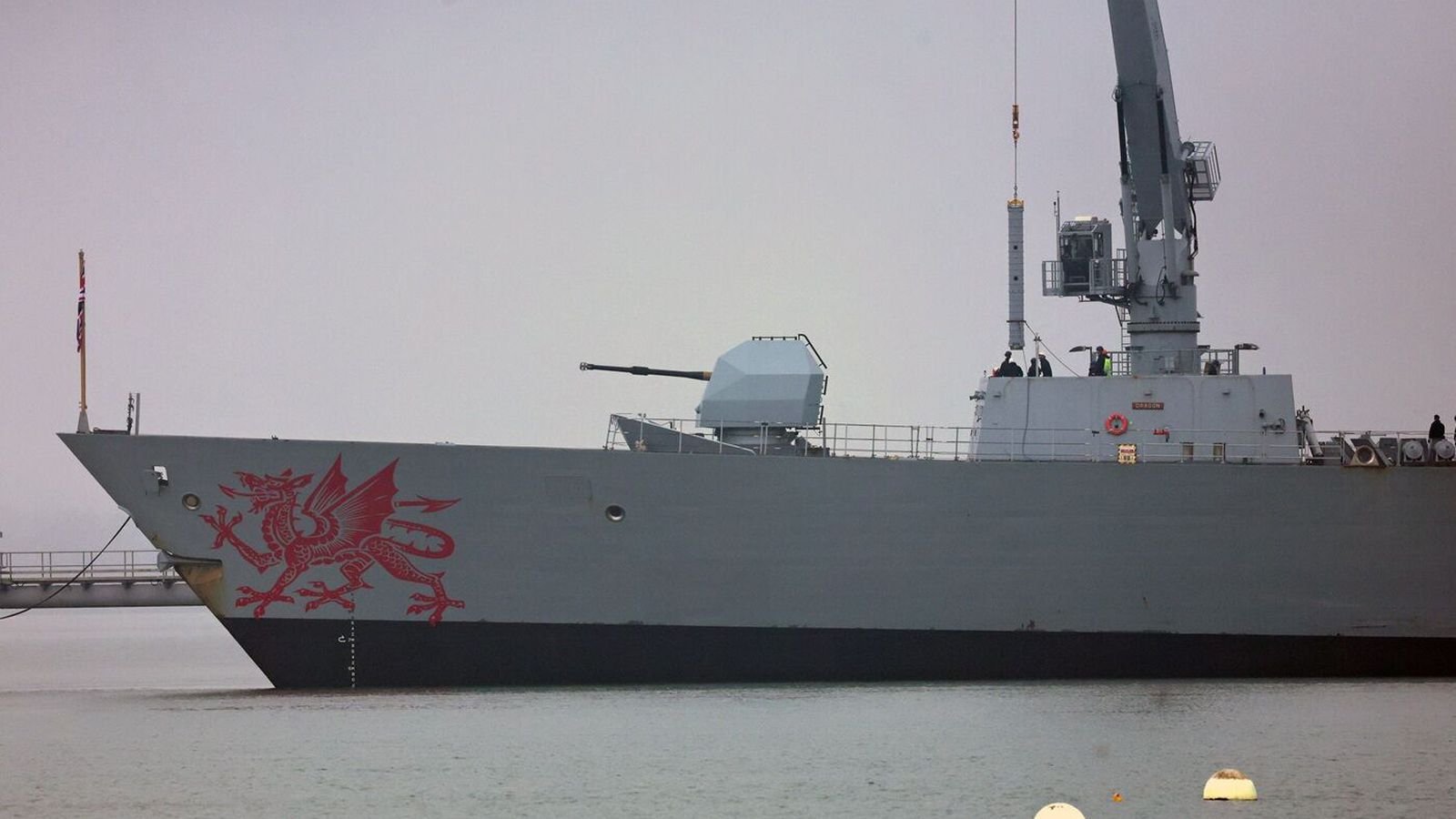
Gwyn Jenkins, Commander of the British Navy, said on Wednesday at the conference of the British think tank Royal United Service Institute, the world’s oldest think tank in the field of defense, that a new cooperation platform should be based on another similar platform called the Joint Expeditionary Forces (JEF).
Jenkins said in the speech that all ten member countries of the JEF had recently signed a declaration of intent to assemble into a “multinational naval force” that would be a kind of “addition to NATO” (ie the Atlantic Alliance).
JEF is from the authorities in Iceland described as a platform similar to the thinking of Northern European countries on security and defense issues with a focus on the Arctic, the North Atlantic and the Baltic Sea. The partnership is also intended to strengthen cooperation between countries in Northern Europe on the basis of regional interests and thus support the defense preparedness of the Atlantic Alliance. Member States of the JEF are Denmark, Estonia, Finland, Iceland, Latvia, Lithuania, the Netherlands, Norway, Sweden and the United Kingdom. Iceland has been a member of the JEF Joint Response Force since 2019.
The Ministry of Foreign Affairs: This is not a new group
In the response of the Ministry of Foreign Affairs of Iceland to Vísi’s question about the cooperation, it is said that a representative of the Defense Division of the Coast Guard participated in a meeting of representatives from the states’ fleets on April 22, where the states were strengthening cooperation on surveillance at sea. This letter is part of it.
“This is not a new group, but the focus was on looking at opportunities for further cooperation between the JEF states in terms of monitoring and joint response at sea, especially the North Atlantic and the Arctic,” says the response of Iceland’s Ministry of Foreign Affairs.
See also: Northern European allies will meet in Iceland next year
It is noted in the response of the Ministry of Foreign Affairs that the JEF has initiated such joint surveillance operations, including NORDIC WARDEN in 2023, where surveillance of underwater infrastructure was increased.
“The operations of the JEF will continue to be under the control of the operational command in Northwood in the United Kingdom, where Iceland has a civilian representative. On Iceland’s part, it is particularly important that the cooperation strengthens the surveillance of underwater infrastructure, the navigation of ships belonging to the so-called shadow fleet and improves the exchange of information about security challenges at sea.”
“Let’s lose no time”
The British Jenkins said that the main goal of this new partnership was to counter the growing threat from Russia.
“We know we can’t lose any time, which is why by the end of this year, I hope we will all have signed a formal declaration that lays the foundation for what will be an indispensable and long-lasting alliance,” Jenkins said on Wednesday, adding that this alliance would be aimed at protecting northwestern Europe and the Arctic.
Cooperation between the navies of the nations involved in this cooperation would be increased and fleets would train more together, send personnel to each other and try to use the same ammunition, to name a few. The goal would be to be able to work as a whole. Thus, the navies should be able to respond to all threats in the region with great speed and capability.
Sky reporter said Jenkins on Wednesday that he had described the partnership as “a family of allied navies”. Together they would be much more powerful than otherwise.
According to the Guardian the United States is not expected to enter into this partnership, but Canada may be able to. There is at least speculation about joining the JEF, but Canadian Prime Minister Mark Carney attended the JEF summit via teleconference last month. Then cooperation with Canada was increased for discussion.
Increased tension in the Arctic
The tension has increased somewhat in the Arctic in recent years. The importance of the Arctic has increased considerably with the receding sea ice and the opening of new shipping routes between Asia and Europe, as well as increased interest in the use of resources in the region.
See also: Put almost two trillion in frigates from Britain
Jenkins said that Russian shipping into British-controlled waters had increased by a third in two years. The British also reported earlier this month that Russian submarines had recently been used to map submarine cables and other underwater infrastructure of the British Isles.
See also: Followed by Russian submarines at submarine cables in the North Sea
Britain has discussed a lot about security in the Arctic, but it was announced earlier this year that the aircraft carrier HMS Prince of Wales and its accompanying fleet will be sent to the Arctic later in the year. This fleet usually consists of an aircraft carrier, two escort ships (a frigate and a destroyer), one submarine and an oil tanker.
HMS Prince of Wales is one of two British aircraft carriers and the flagship of the British Navy. The ship is designed to carry 48 F-35B Lightning II fighter jets. There are jets that can take off almost vertically and don’t need long runways.
The ship can also carry helicopters and accommodate 250 marines. The ship’s crew is from 700 to sixteen hundred, depending on how many planes are on board and what tasks the crew is on.
Russian President Vladimir Putin announced last year that he planned to increase the number of troops in the Arctic, while accusing NATO members of militarizing the region.
See also: Protect their nuclear weapons in the Arctic with a secret surveillance system
Putin said that Russia, the largest power in the Arctic, would never accept a violation of its sovereignty. He said that Russia has never threatened anyone in the Arctic, but that there is a need to increase the response capacity there and start military development and modernization. In addition, infrastructure in the area, such as airports and ports, should be improved.
See also: Test another nuclear weapon
Last year, Russia launched the nuclear powered cruiser Admiral Nakhimov. It had previously been decommissioned for over twenty-five years, but is to become the new flagship of Russia’s Northern Fleet.