The outbreak of the Iran War destroyed the two percent target. The unions have already announced that they no longer want to show wage restraint for the KV wage rounds.
According to a flash estimate from Statistics Austria, inflation in April was 3.3 percent in Austria. In March the value was 3.2 percent. “The geopolitical situation continues to have a noticeable impact on inflation. This is particularly evident in fuels and heating oil,” says Manuela Lenk, general director of statistics at Statistics Austria.
Overall, energy prices were 10.7 percent above the April 2025 level; in March they had increased by 6.2 percent compared to the previous year. The fuel price brake introduced in April 2026 had a dampening effect on prices. It reduced the price of petrol and diesel by up to 10 cents per liter. “As a result, inflation was up to 0.2 percentage points lower. The Easter date, which was two weeks earlier than in the previous year, had a similar effect on package tour prices,” says Lenk.
For this reason, service prices, the most important driver of inflation, rose significantly less at 3.9 percent than in March, when an increase of 4.5 percent was recorded. Prices for food, tobacco and alcohol were raised by 2.7 percent, slightly more than in March with an increase of 2.4 percent, it is said.
Inflation had returned to the two percent target at the beginning of the year. However, the Iran war destroyed this two percent target and raises the question: How much will inflation rise? After the outbreak of war, the IHS expects an increase to 2.9 percent this year, the Wifo 2.7 percent. In a more pessimistic scenario, inflation could increase again by up to 4.1 percent.
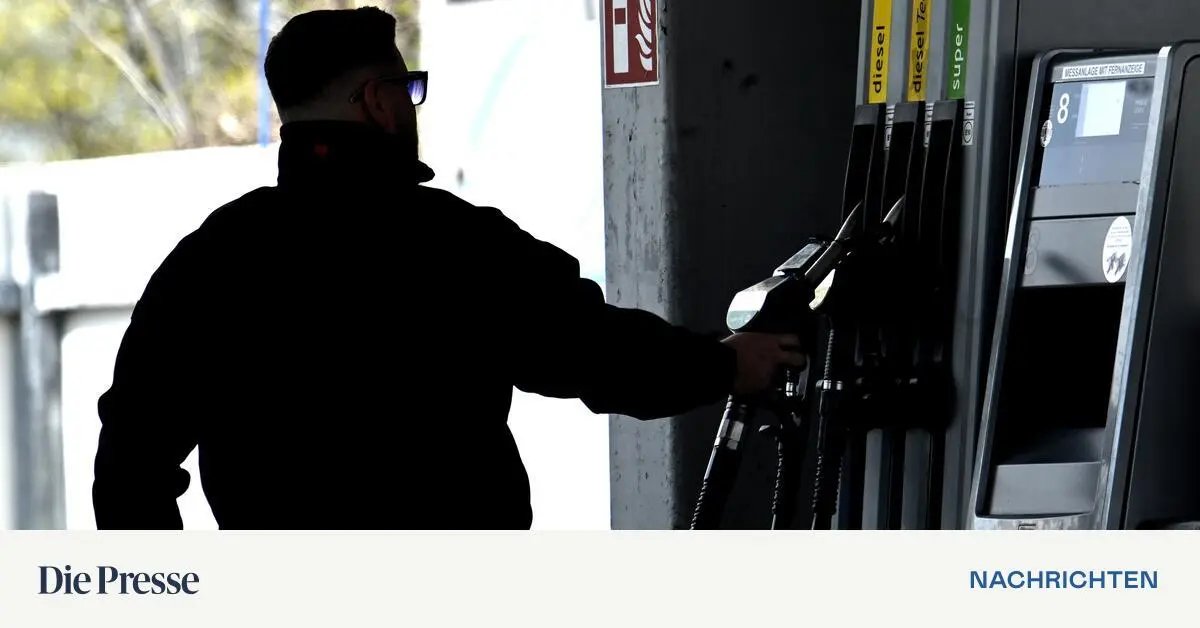
A few days after the conflict broke out, fuel prices in Austria and the rest of Europe skyrocketed. According to figures from E-Control, diesel and petrol reached their current peak at the beginning of April. At the beginning of the month the price for a liter of petrol was 1,787 euros and for a liter of diesel it was 2,084 euros. According to the IHS price monitor, the price has fallen again in recent days, but is still 20 to 40 cents above the level before the outbreak of war.
In January and February, energy prices had a dampening effect on overall inflation. That changed in March.
The economic researchers emphasize that not only fuel prices have an impact on inflation, but that prices are also reflected in goods downstream in the production chain. “This means that fertilizers (and therefore also food), chemicals and pharmaceuticals, for example, will become more expensive,” it says.
So what to do? Wifo boss Gabriel Felbermayr believes it is important to rethink the system of indexing with the consumer price index. Instead, the GDP deflator (which is susceptible to revision) or core inflation (excluding volatile components such as energy and food) could also be used as a basis. However, this must affect all areas that are indexed – in addition to wages, pensions and social benefits, also rents, insurance contracts or public fees.
According to Wifo, the higher inflation also means that real net wages will again fall by 0.5 percent, after having already fallen by 0.4 percent in 2025.
This will have an effect on the upcoming wage rounds. The unions have already announced that they no longer want to practice wage restraint. At the same time, the strong wage increases in 2022 and 2023 are an important reason why the inflation in energy prices has become so permanent in Austria as a result of the Ukraine war and is still noticeable today.
The sharp rise in oil prices as a result of the Iran war drove German inflation further up in April. Goods and services cost an average of 2.9 percent more than a year earlier, after the inflation rate was 2.7 percent in March and 1.9 percent in February, the Federal Statistical Office announced on Wednesday in an initial estimate. This is the highest value since the beginning of 2024. Prices rose by 0.6 percent on a monthly basis.
“The Iran war and the associated energy prices are causing inflation to rise in Germany,” said economist Felix Schmidt from Berenberg Bank. In North Rhine-Westphalia, for example, diesel rose by 36.1 percent compared to the same month last year, and gasoline by 18.8 percent. 27.3 percent more had to be paid for heating oil and 2.0 percent more for district heating. “So far the price pressure seems to have hardly spread beyond energy prices,” said Schmidt. (smart/ag.)