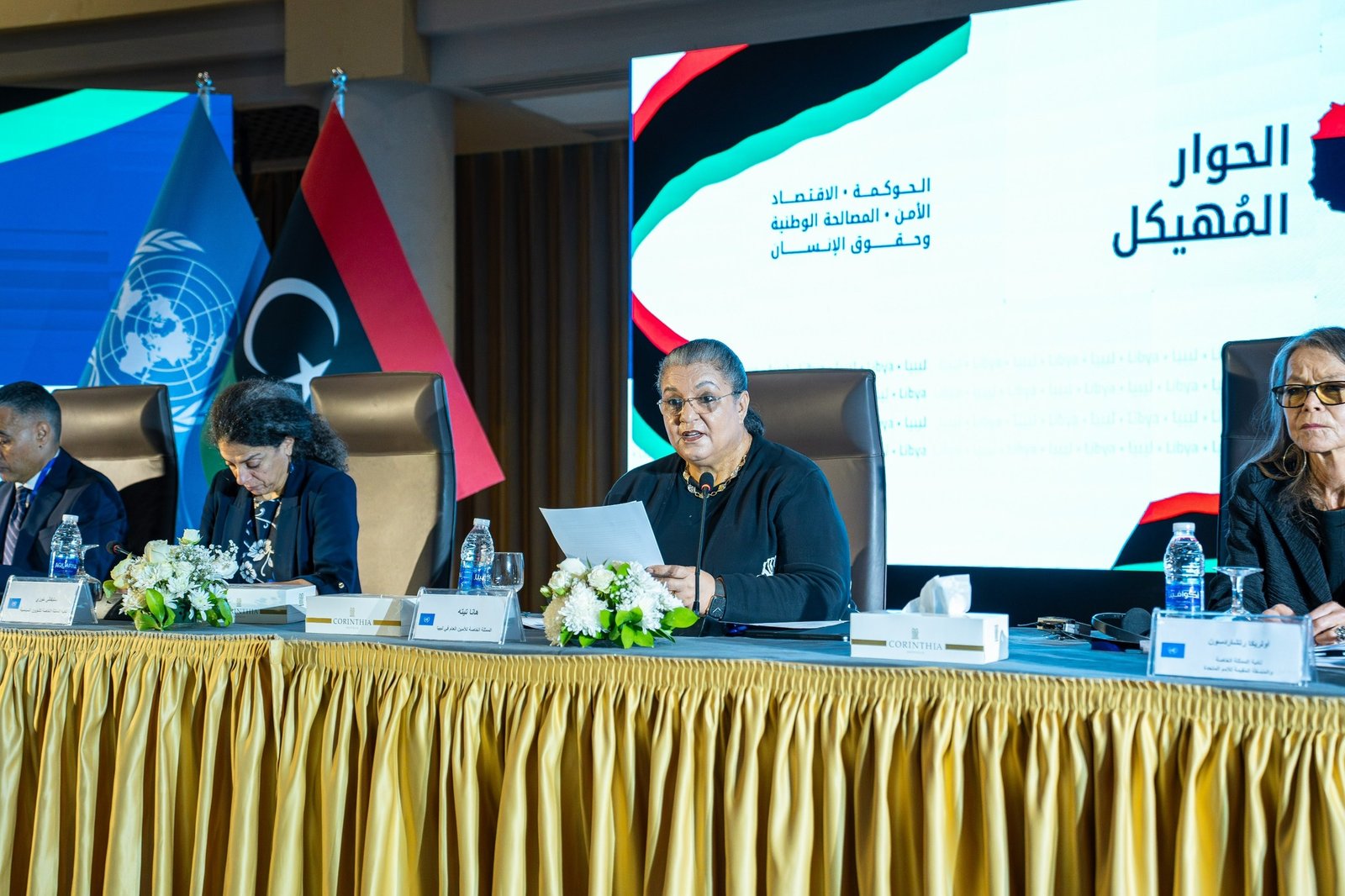
UN Special Representative Hanna Tetteh said that any credible transition in Libya must be grounded in truth, justice, and dignity for victims, stressing that national reconciliation cannot be sustained without a rights-based approach under Libyan leadership and ownership.
Her remarks came during the closing session of the National Reconciliation and Human Rights track emerging from the structured dialogue, as participants concluded their third round of in-person meetings in Tripoli. The discussions addressed issues of transitional justice, accountability for past violations, and ways to strengthen trust in state institutions.
Participants explored ways to support a rights-based process, tackle the legacy of conflict and abuses, protect civic space, end arbitrary detention, and safeguard judicial independence.
They also called for the adoption of a nationally agreed transitional justice law, noting that the draft law proposed since 2025 requires substantial revision to address previous shortcomings caused by division and politicization.
Key recommendations included ensuring the independence of a future truth-seeking and reconciliation body, adopting a transparent and practical framework for reparations, prioritizing the return of internally displaced persons, safeguarding fundamental rights and freedoms, and enhancing inclusive representation; particularly for women, cultural and linguistic groups, and persons with disabilities, alongside measures to strengthen electoral integrity and accountability.
During discussions with ambassadors and representatives of the International Humanitarian Law and Human Rights Working Group under the Berlin Process, participants emphasized the need for Libyan ownership of any approach, preserving the unity and independence of the judiciary, and addressing issues such as impunity, arbitrary detention, and restrictions on freedoms.
Participants also reviewed the results of the “Express Your Opinion” survey, which gathered nearly 6,000 responses. The findings showed that 82% support excluding those involved in political division from power, 73% demand accountability through fair trials, and 74% stress the importance of immediate judicial review for detainees.
According to the UN mission, these recommendations will be incorporated into the track’s final document ahead of its concluding meeting next month, as part of efforts to facilitate an inclusive, Libyan-led political process leading to national elections and unified institutions.