Working on the legendary horror music video for the title track from the best selling album of all time “Thriller”, Michael Jackson (1958 – 2009) suggests to the director’s assistant that the camera captures the legs during the dance, rather than filming him and the dancers from the bottom up.
The assistant comes to the director of the video, otherwise known John Landis (“The Blues Brothers”, “An American Werewolf in London”, “Wheel of Fortune”), conveys to him Michael’s words and he accepted the suggestion without much hesitation. Was it really like that on the set of “Thriller”, the video that terrified kids in the mid-eighties when they saw it on TV, the scene from the biographical drama “Michael” about the king of pop seems to reflect the shooting of the film itself.
It’s in Landis’s place Antoine Fuquathe famous director of action-oriented productions (the series “The Righteous”, “Tears of the Sun God”, “The Fall of Olympus”…), celebrated as “Training Day”. The late Michael, on the other hand, is replaced by the entire Jackson family, except for his sister Janet. It is felt that “Michael” was created under the production guidance of the Jacksons. Fuqua directed the film the way Michael’s family suggested he should – safe, polished and somewhat sterile, no rippling, wearing the kind of glittery gloves that Jackson himself liked to wear.
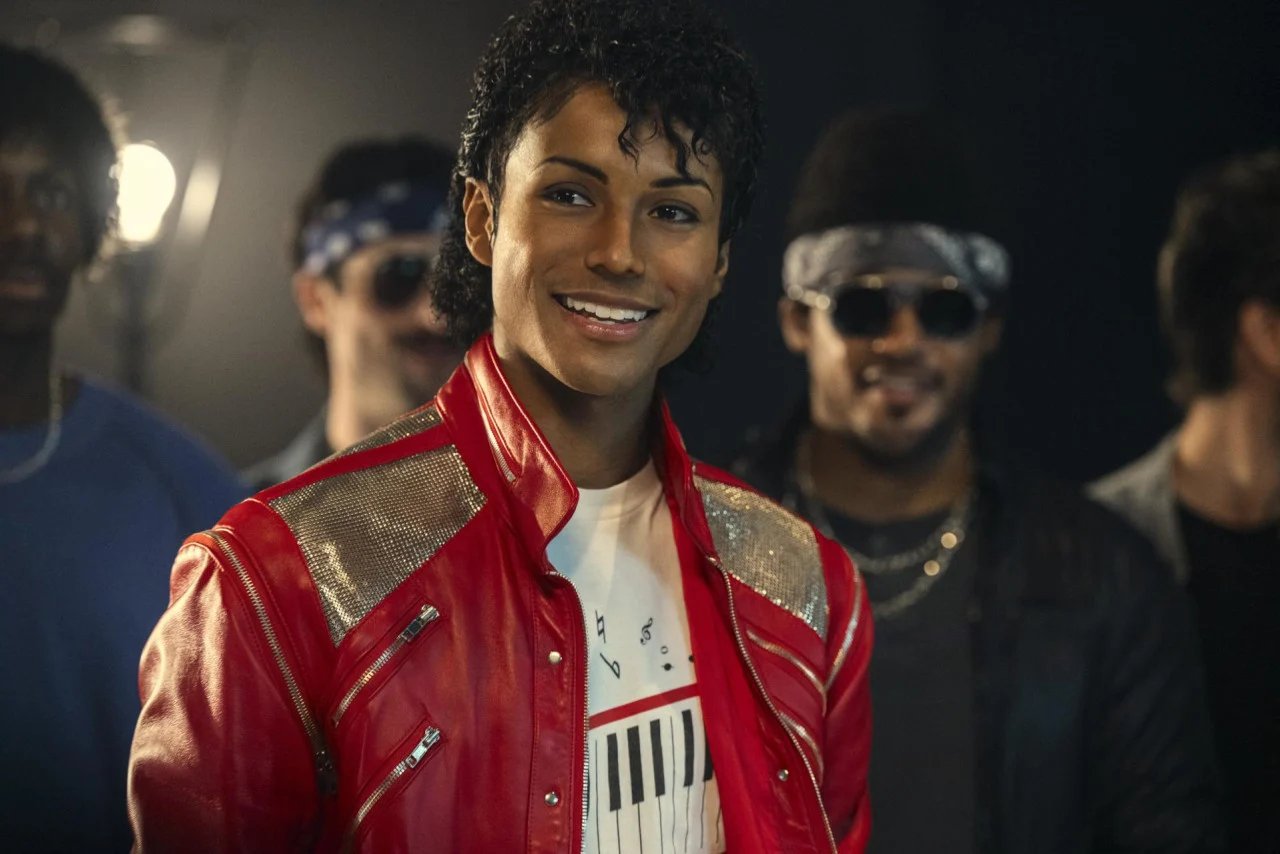
The director manages to break free only in the concert scenes that can lead to movement in the cinema seat thanks to the inexhaustible energy of Michael’s nephew. Jafaar Jackson in his debut starring role. Everything else is mostly directed according to the “ps” of a biographical film, clichéd, generic and even superficial.
Expectations from “Michael” were high after a promising forespan, but this “biopic” ultimately turned out to be almost at the level of a disappointing film about to Bob Marley (“One Love”) and took a step back for the genre after biographies Bob Dylan (“Complete Stranger”) i Bruce Springsteen (“Deliver me from nothingness”), although it is not as “bad” as foreign critics would say, let alone “garbage”.
The music is by far the best part of “Michael” and fans will enjoy the sequence of megahits, live or in the studio, from the Jackson 5 stage to the solo career and albums “Off The Wall”, “Thriller” and “Bad” – “I’ll Be There”, “Don’t Stop ‘Till You Get Enough”, “Beat It”, “Wanna Be Startin’ Somethin'”, “Billie Jean”…
It is significant that in the film from the album “Bad” only the title song is heard, with its “live” performance at Wembley, the film abruptly ends, but not “Man In The Mirror”. Because “Michael” is devoid of introspection and too rarely allows Jackson to look in the mirror and remain alone with himself, i.e. for the film to allow the nephew to truly look into his uncle’s soul.
Jafaar is outwardly and authentically authentic as a dancer in the role, a mirror image of his uncle, but only at moments can he be emotional, like after the first nose reduction surgery and occasional expressions of painful loneliness. The latter scenes are realized incorrectly: when Michael acquires a chimpanzee as a pet (he also had a llama, a giraffe and a snake), Fuqua often behaves as if he were filming a comedy with a pet, although it is clear that Jackson was looking for friends in animals (and toys) that he did not have during his lost childhood and premature adulthood, and this brings such moments closer to tragedy.
The chimpanzee has a larger role than Michael’s siblings, reduced not to supporting characters, but literally to extras, with, again, Janet being non-existent in the film, which makes it a truncated one, with a scrappy ending. The focus is on Michael’s relationship with his father Joe (caricature Colman Domingo) who exploited him musically and abused him psychophysically from a restless early age (then he plays him well Juliano Krue Valdi) because his earnings were more important than the well-being of his children, and his mother Katherine (Nia Long) supported her son, although powerless to prevent her husband from going on a rampage.
“I’m no longer a boy in a children’s band, I need my freedom”, says Michael, looking for independence, but also a father figure in the gym. To Bill Bray (KeiLyn Durrel Jones). However, it turns out that Michael was a boy who didn’t want to grow up – a lost boy like Peter Pan that he returned to by reading his adventures in Neverland again and again.
This probably psychologically determined his later problematic relationships with his own and other people’s children (holding his little son in his arms over the balcony fence, accusations of pedophilia), which the film sweeps under the rug, portraying Michael as a victim (difficult childhood, nasty burns on the set of a Pepsi commercial in 1984), trying to function as some kind of apology and repair his image.
Apology is omnipresent from the opening credits to the closing credits, and it also runs through the scene with Mike Myers: he played an EMI executive in the hit “Bohemian Rhapsody” and refused to play Queen’s title track, and now he seems to be atoning for it as the president of CBS who pushes for Michael and “Billy Jean” to air on MTV. “Michael” ends with the caption “His story continues” and announces a sequel. Maybe the second film will be darker and more complex. ** ⅔