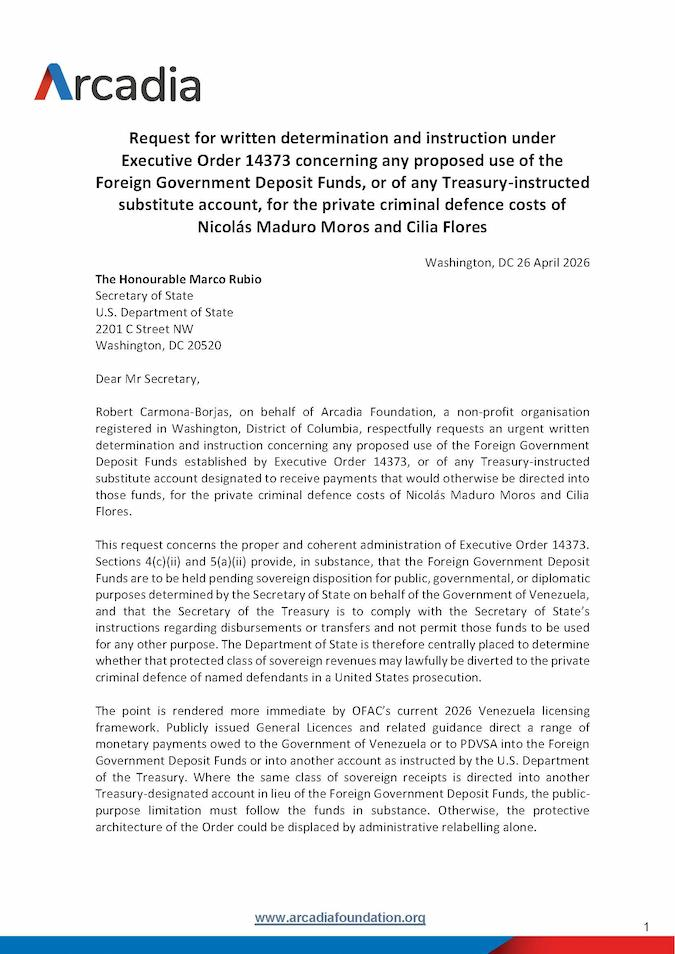
The Arcadia Foundationa non-governmental organization based in the US capital, formalized a legal and ethical action before the Washington administration to block the use of resources belonging to the Venezuelan State in paying for the private criminal defense of Nicolás Maduro Moros and Cilia Flores.
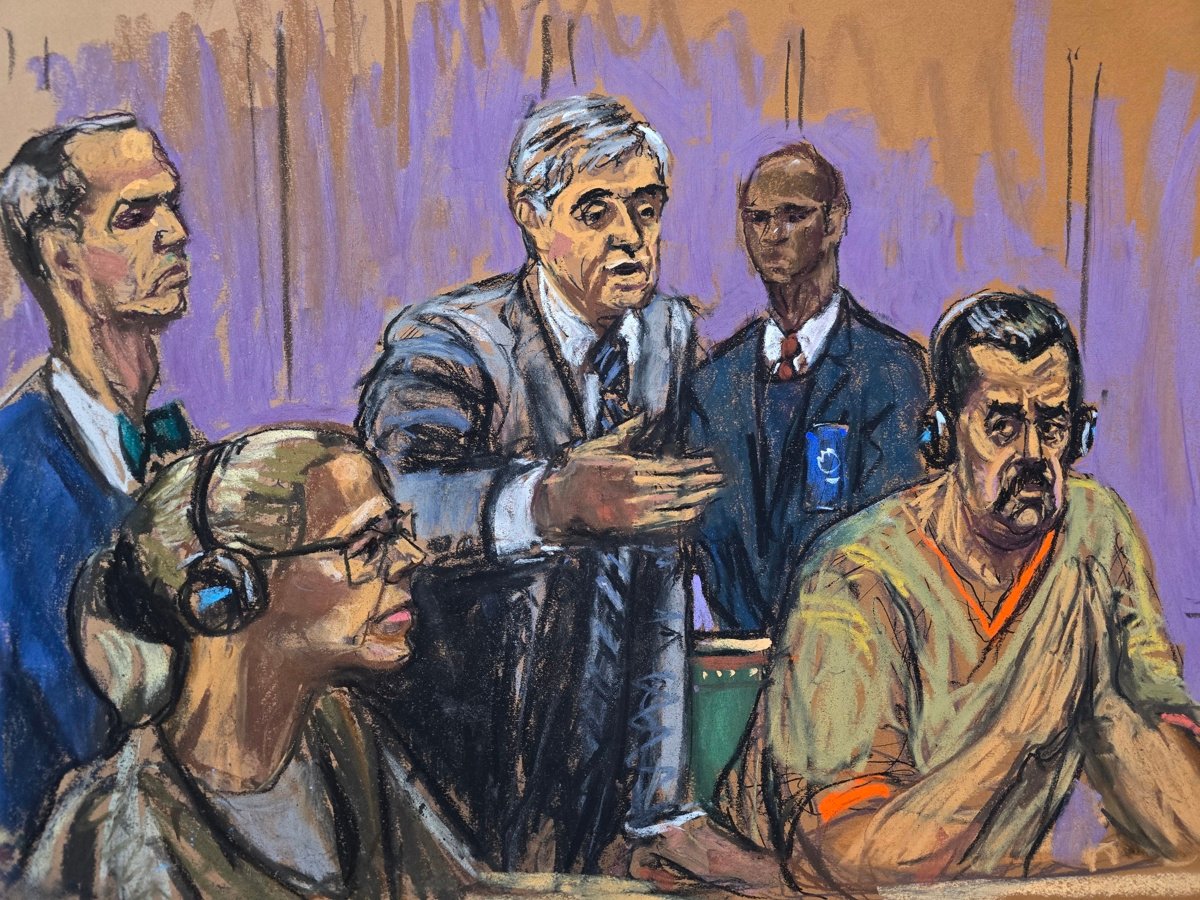
The measure comes as a direct response to the recent decision of the US Treasury Department that, through licenses from the Ofacauthorized the Venezuelan State to divert public funds to cover the fees of the defense lawyers of the former president and his wife, both in federal custody since January 2026.
The argument: Public heritage vs. private defense
Arcadia maintains that Venezuela’s sovereign resources are public heritage and its use for a personal criminal case—such as a narcoterrorism trial—lacks legal basis.
In its communication, the foundation demands that Washington define a “limiting principle,” arguing that allowing this payment sets a dangerous precedent where state funds could be used discretionarily for the private benefits of former officials accused of serious crimes.
“What is inadmissible is that a decision of this nature was made in silence, between licenses and administrative formulas, while the Venezuelan people are once again reduced to spectators of the disposition of their own assets,” says a statement from the organization.
Procedural turn in New York
The authorization of the payments by Ofac occurred after pressure from the judge Alvin Hellersteinwho is presiding over the case in New York. Defense attorneys, including Barry Pollack (Maduro’s representative), had requested the dismissal of the trial alleging that US sanctions impeded the constitutional right to due process by blocking access to funds to hire legal defense.
To prevent the case from being dropped due to this technicality, the US administration enabled the flow of resources.
What is the Arcadia Foundation?
The Foundation Arcadia is a nonprofit organization based in Washington, DC, dedicated to promoting democracy, fighting corruption, and defending human rights globally.
In the Venezuelan context, it has been an active voice in international forums. In September 2024, he gained notoriety by formally petitioning the International Criminal Court (ICC) the recusal of the chief prosecutor, Karim Khanfor alleged conflicts of interest related to the family ties of his sister-in-law, who was part of Maduro’s legal team in The Hague.