One hundred years, no interruption, one idea: that even a small state with barely 10,000 inhabitants can muster the courage to constitutionally restrain its own state power. On Tuesday evening, the State Court of the Principality of Liechtenstein celebrated this anniversary with a ceremony in Triesen – and with a commemorative publication that honored the court for what it is: a European pioneering achievement.
“Three things characterize the State Court when looking back over a hundred years: vision, courage and luck,” said Justice Minister Emanuel Schädler in his speech. He took the audience on a journey back in time to the 1920s – to a Liechtenstein that was economically at its limit, politically on the move and yet ready to enshrine a constitutional court with far-reaching powers with the 1921 Constitution. “Especially in this day and age, when the usual course of the “As things falter more and more often, the state needs even more continuity and reliability,” says Schädler.
Pioneer among constitutional courts
The fact that Liechtenstein made legal history at that time is no exaggeration. The first constitutional courts based on the model of the legal scholar Hans Kelsen had recently been established in Austria and Czechoslovakia. Liechtenstein was one of the first countries to combine this model with a comprehensive individual complaint: those affected could go to court not only in administrative matters, but also in civil and criminal matters. The German Federal Constitutional Court only followed suit in 1951.
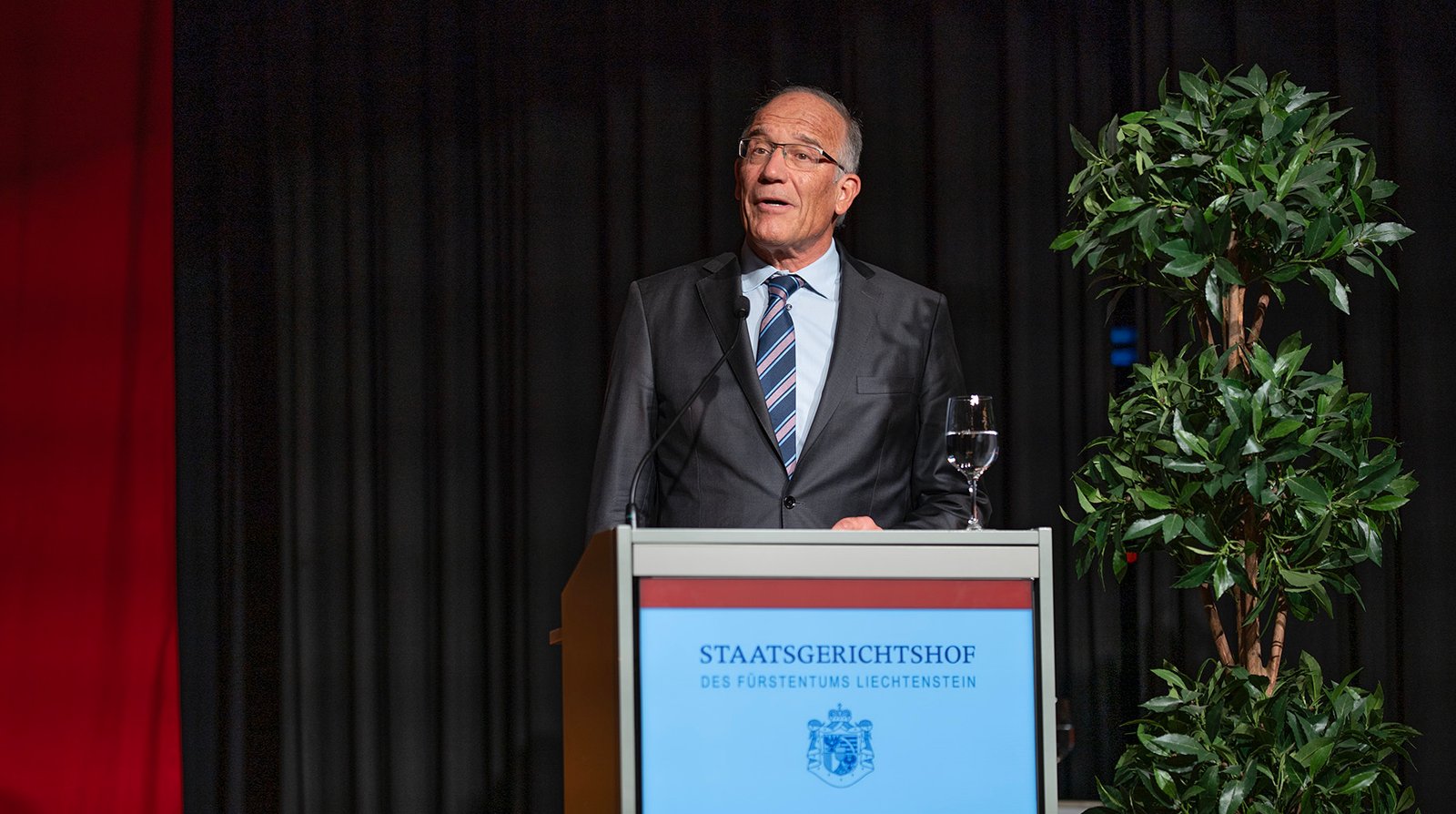
State Court President Hilmar Hoch, who has been a member of the court since 1994 and its president since 2018, traced this development with the authority of a man who knows around a third of the court’s history from his own experience. He will step down at the end of 2026. His view of the present was even more pointed than the historical data: “The boundary between law and politics is fluid.” A constitutional court inevitably finds itself in this area of tension – especially when it repeals laws that the people had previously approved at the ballot box.
The State Court was the only court of its kind to survive the Second World War without interruption. Austria and Czechoslovakia had to cease operations. The fact that the court continued to grow afterwards – with accession to the ECHR in 1982, accession to the EEA in 1995 and the most recent judicial reform, which has provided for full-time leadership positions for the first time since January 2026 – shows how vibrant this institution has remained.
Festschrift as the end of a dense evening
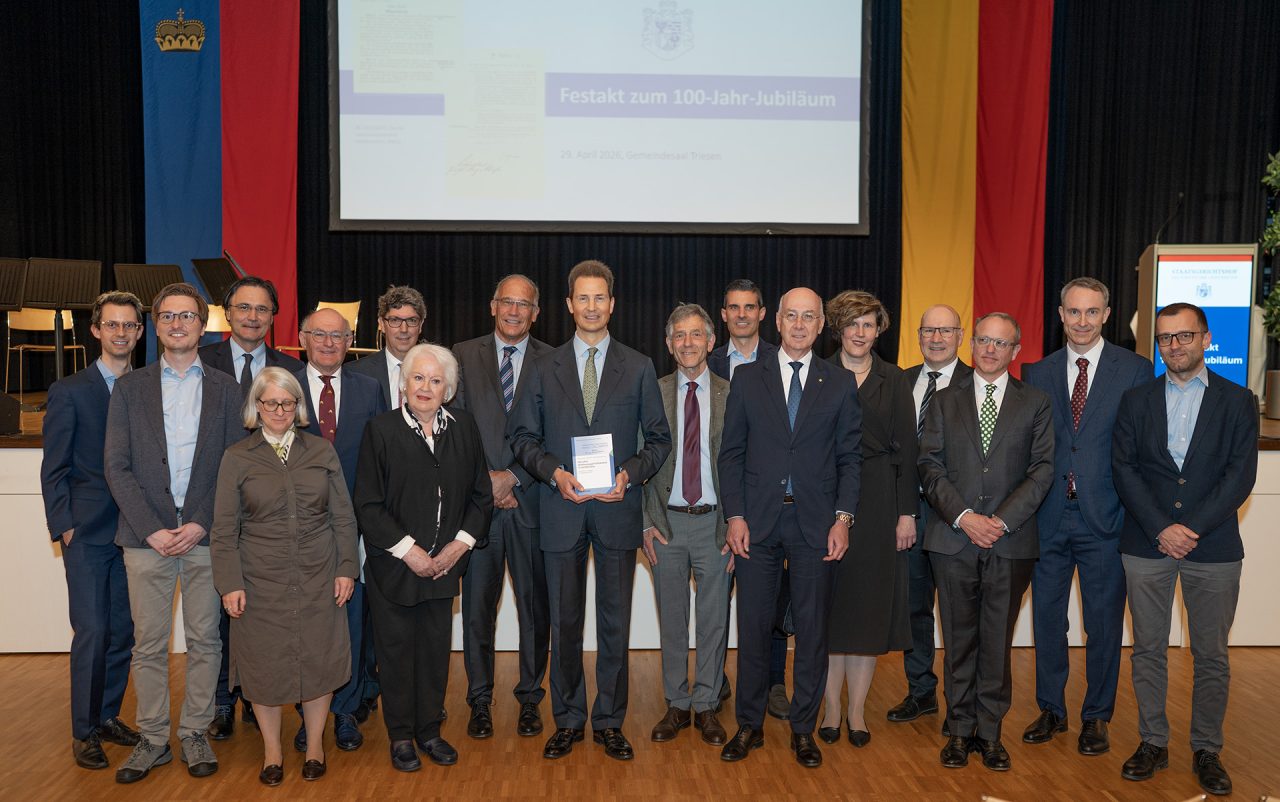
The highlight of the evening was the handover of the anniversary commemorative publication, which was presented by constitutional lawyer Prof. Dr. Patricia M. Schiess Rütimann was introduced. In the hall were Prime Minister Brigitte Haas, State Parliament President Manfred Kaufmann and State Parliament Vice President Franziska Hoop, as well as the President of the Swiss Federal Court, François Chaix, and the President of the EFTA Court – a silent signal of how far the reputation of the small Liechtenstein Constitutional Court extends.
The horn ensemble of the Liechtenstein Music School framed the evening, including Rossini’s “Guglielmo Tell”. The anniversary year is moving into its next phase: In September, the State Court of Justice is organizing the so-called meeting of six, at which the constitutional courts from Germany, Austria, Switzerland and Liechtenstein as well as the European Court of Justice and the European Court of Human Rights meet every two years for a specialist exchange.