The most recent report from the Stockholm International Peace Research Institute (SIPRI) shows a massive increase in military spending in practically the entire planet. Latin America is not left out of this phenomenon, even though the increases In most cases they respond to improvements in war material rather than an expansion of military capabilities.
“We have seen that several armed forces are facing a much-needed modernization of certain essential capabilities, such as fighter aviation in Argentina and Peru, which had been having problems,” international analyst Andrei Serbin, president of the Regional Coordinator of Economic and Social Research (CRIES), tells DW.
The expert refers to the news that recently appeared about the purchase of F-16 aircraft by these countries, to which is added the purchase of 17 Gripen fighters confirmed by the Colombian Aerospace Force.
“The purchases correspond to needs that have not been satisfied for many years. Argentina, for example, had almost run out of interceptor aircraft. Peru, meanwhile, has some MiG-29s from the era of the Cold war“, and Chile needs to modernize its F-16 fleet with electronic equipment,” Evan Ellis, an expert on Latin America at the Institute of Strategic Studies of the United States Army War College, told DW.
Retrofit and upgrade
In general, countries in the region spend between 1% and 2% of GDP on defense, according to the SIPRI report, and in most cases this spending responds to internal needs rather than potential war conflicts with other States. And while in the rest of the planet military spending has been growing at a tremendous pace for more than a decade, in Latin America this increase is much more moderate.
“Military expenditures in the region are among the lowest in the world, reflecting the fact that there have been no wars since the Cenepa between Peru and Ecuador in 1995,” says Ellis. However, he adds, “many countries have high levels of internal violencewith high homicide and organized crime rates. This has forced the armed forces to take on the role of supporting the police,” says the American expert. He mentions in this regard the examples of Mexico, Jamaica, Trinidad and Tobago, Colombia and Ecuador.
Other priorities
“There is a need on the part of the forces in the region to invest, and when they do not do so it is not because of disinterest, but rather because of prioritizing other aspects of the state budget, given the socioeconomic conditions that the region is experiencing,” Serbin points out. “An example of this is Argentina, which today is investing very little in defense, although it is trying to allocate extrabudgetary items for the acquisition of war material.”
For Serbin, the region perceives “that we are in an extremely convulsed world where most countries are betting very heavily on modernizing and re-equipping their armed forces.” To deal with uncertainty, military power is decisive, says the Argentine expert.
Furthermore, many Latin American countries have resources “of enormous strategic value in a context of global upheaval,” and mentions cases “of Argentinawhich is a great producer of food, has critical minerals and energy; Chile, with its strategic minerals; Brazil, with energy and more minerals, just like Peru, Colombia and Venezuela. In the latter case, the oil potential is added. That is why it is important that the countries of the region assume the responsibility of having the necessary means to defend those national interests.”
Competitive market
Both experts agree that, despite the striking headlines about weapons acquisitions, it is not possible to speak of a arms race in the region. A conclusion that SIPRI also makes in its report, where more than tensions between countries, what stands out are the internal security problems that, in general, do not require large outlays of money for the acquisition of war material.
In any case, the region is still an attractive market for weapons-producing countries, as reflected in the specific acquisitions of fighter jets, all of them worth several billion dollars.
“The purchases made by Chile, Peru and Argentina show that for now partners in the region continue to buy military equipment from the United States,” says Ellis, although it is an “increasingly competitive market, with offers from Russia, Israel, South Korea, China, India, among others.”
Ellis specifically mentions Chinese attempts to sell its J-10 fighter to Colombia and Brazil, and that Argentina evaluated buying fighters from Pakistan for its Air Force. He also remembers sales of K-8 fighters from China to Venezuela and Bolivia, radars to Ecuador, transport planes to Guyana and Colombia, rocket launchers to Peru and armored vehicles to Venezuela and Bolivia, but all still on a very smaller scale.
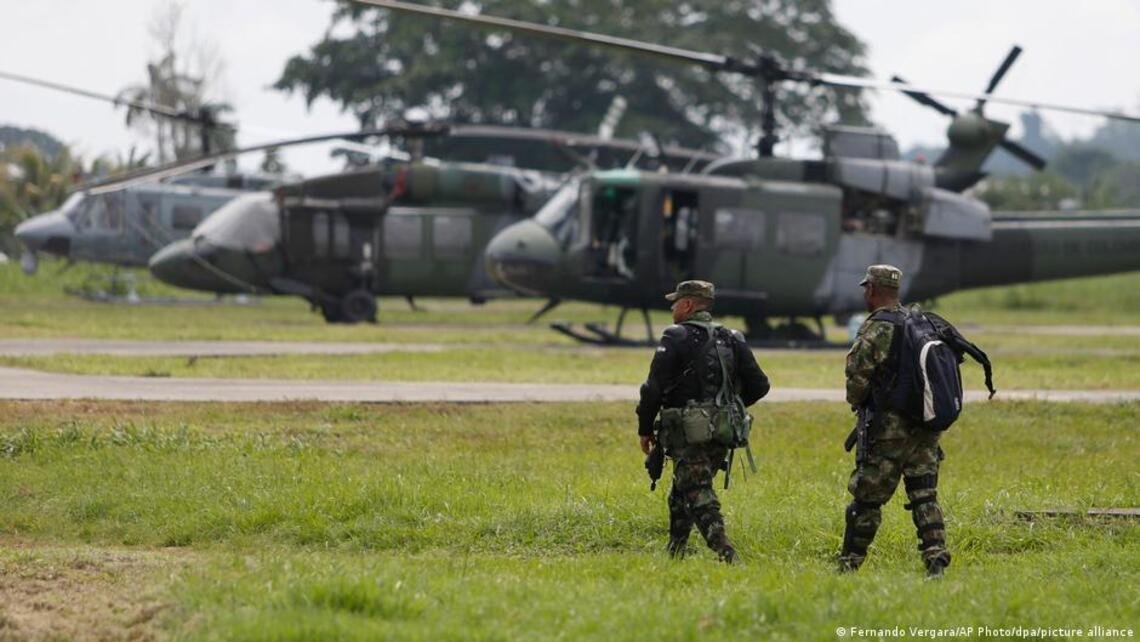
And although this is old material, says the American analyst, it is still true that “approximately a quarter of the helicopters in the region are Russian, although the availability of equipment from that country has suffered a significant decline due to the war against Ukraine and the sanctions.”
“Russia became an unreliable supplier not only due to the lack of material available for export, but also due to the lack of support,” adds Serbin, who also highlights that the United States is very proactive in trying to block Chinese sales in the region.
“In the current situation we see that this tendency to buy in the West will continue in the near future, not only because Donald Trump’s administration seeks to exert more presence, but also because both China and the United States will seek to carefully protect their spheres of influence,” adds the Argentine expert.