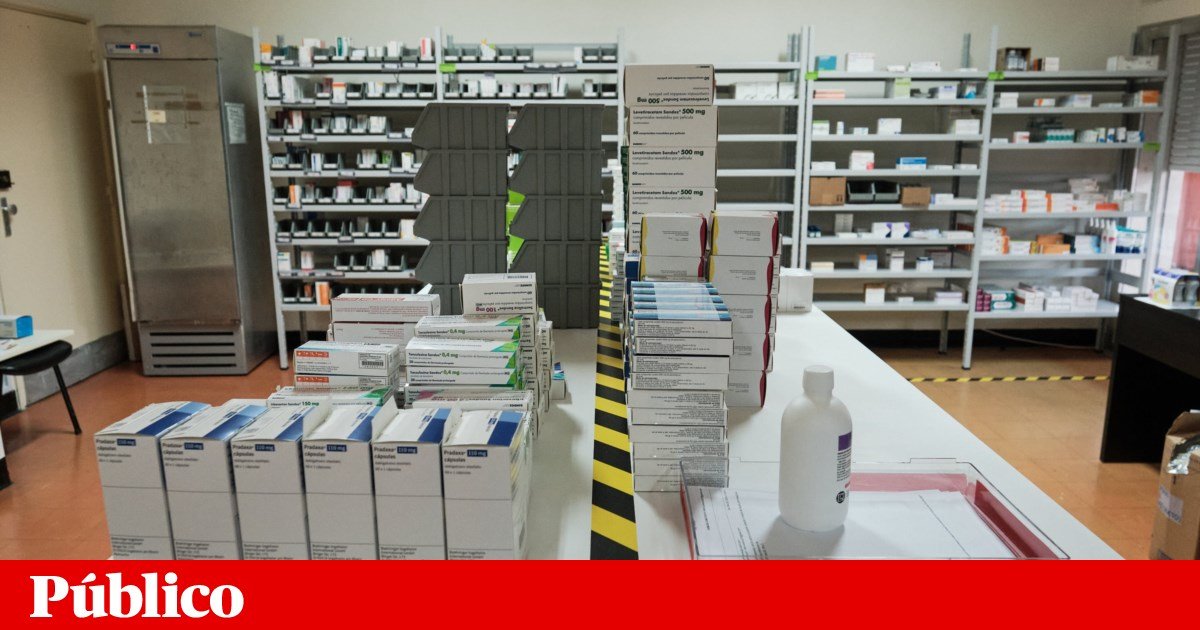
Portugal is closer to having a national reserve of medicines and medical devices, a long-standing request. The intention is part of a set of 96 measures from Portugal Transformation, Recovery and Resilience (PTRR), approved this Tuesday by the Government in the Council of Ministers. The plan also provides for the creation of a geolocation mechanism for the most vulnerable people and funding for the announced reform of the medical emergency.
“It has been a very important point regarding what we have been experiencing (the various storms that hit the country at the beginning of the year) and one of the issues that the President of the Republic has shared with me: the existence of national and regional reserves in fundamental areas such as medicines and medical supplies”, said Prime Minister Luís Montenegro in press conference.
For the reserve of medicines and medical devices and the provision of more critical home healthcare, the PTRR foresees 70 million euros. It is a medium-term measure, which means it covers “this legislature”. The short-term measures are for “this year” and the long-term measures are for “this and the next legislature”, including the year 2034 because of European financing frameworks, explained Luís Montenegro.
The announcement now made responds to a request from the Order of Pharmacists which, as PÚBLICO reported, submitted this proposal to the PTRR. In the plan revealed by the Government – the document was shared after the press conference – it is explained that this reserve “provides for the centralized acquisition of medicines and other goods and equipment, central and regional storage and reserve, monitoring of stocks and coordination between the various actors in the sector”.
It also includes “national planning of critical therapies and monitoring of patients and consumables, ensuring continuity of care in situations of supply chain disruption”. In this way, “the most critical care and essential goods remain accessible to the population in scenarios of catastrophe, pandemic or logistical interruption”.
In addition, 42 million euros will be available – this is a medium-term measure – for the creation of a national system for georeferencing people and families in vulnerable situation social, medical or territorial. It will have “certified bracelets, devices or sensors that collect essential biometric data”, such as pulse measurement or fall detection, with geographic coordinates that are communicated “automatically with emergency platforms and local social networks”.
Recipient entities include isolated elderly people, people with disabilities, dependents, chronically ill people, families in climatic risk areas, among others. “The measure does not exist in a structured form in the country and responds to persistent deficiencies in the protection and relief capacity, until 2026”, states the Government in the document. Remember that on the day of the blackout, April 28, 2025, many hospitals took measures to care for patients who are ventilated at home and several patients and caregivers across the country had to seek help, even as a precaution, to charge their devices. A 77 year old woman died at home because your device ran out of battery and you didn’t call for help in a timely manner.
Efficiency of health infrastructures
Another of the emblematic measures of the PTRR announced by Luís Montenegro is the reform of medical emergency which aims to refocus INEM’s activity and provide it with greater technological capacity. The planned investment is 90 million euros and is a short-term measure. In other words, to be completed this year. “This is one of the areas, looking at this recovery and resilience building plan, that we have taken advantage of to reform the system to be more efficient,” said the prime minister at the press conference.
It includes the “strengthening of emergency technological means, with the capacity to monitor and transmit clinical data in real time, improving coordination with health units and the efficiency of the response”. The investment will also allow for the modernization of communication and major dispatch systems and the “training of emergency teams and the adaptation of operational protocols to current requirements.
277 million euros are also planned (long-term measure) for the requalification and reinforcement of public health infrastructures. The measure integrates “civil and military capabilities with projectable infrastructures for triage, stabilization and advanced treatment, reinforcement of the medical evacuation fleet and clinical interoperability through the Single Clinical Process”. The existence of “energy autonomy and redundant communications solutions, Integrated Management Rooms in the SNS, training of specialized teams and drills for response in catastrophe scenarios” is expected.