Monday, May 4, 2026
    The GeoStrategic Consensus
    No Result
    View All Result
    • Login
    • HOME
    • AMERICAS
      • Argentina
      • Brazil
      • Canada
      • Chile
      • Colombia
      • Costa Rica
      • Cuba
      • Dominican Republic
      • Ecuador
      • El Salvador
      • Greenland
      • Guatemala
      • Honduras
      • Mexico
      • Nicaragua
      • Panama
      • Paraguay
      • Peru
      • United States
      • Uruguay
      • Venezuela
    • ASIA-PACIFIC
      • Australia
      • Brunei Darussalam
      • Cambodia
      • China
      • Federated States of Micronesia
      • Fiji
      • Indonesia
      • Japan
      • Kiribati
      • Laos
      • Malaysia
      • Marshall Islands
      • Mongolia
      • Myanmar
      • Nauru
      • New Zealand
      • North Korea
      • Palau
      • Papua New Guinea
      • Philippines
      • Samoa
      • Singapore
      • Solomon Islands
      • South Korea
      • Taiwan
      • Thailand
      • Timor-Leste
      • Tonga
      • Tuvalu
      • Vanuatu
      • Vietnam
    • CARICOM
      • CARICOM – Non-English
        • Haiti
        • Suriname
      • CARICOM Associates
        • Anguilla
        • Bermuda
        • British-Virgin-Islands
        • Cayman-Islands
        • Curacao
        • Turks-and-Caicos
      • CARICOM English
        • Antigua and Barbuda
        • Barbados
        • Belize
        • Dominica
        • Grenada
        • Guyana
        • Jamaica
        • Montserrat
        • Saint Kitts and Nevis
        • Saint Lucia
        • Saint Vincent and the Grenadines
        • The Bahamas
        • Trinidad and Tobago
    • EURASIA
      • Armenia
      • Azerbaijan
      • Balarus
      • Georgia
      • Kazakhstan
      • Kyrgyzstan
      • Moldova
      • Russia
      • Tajikistan
      • Turkmenistan
      • Ukraine
      • Uzbekistan
    • EUROPE
      • Albania
      • Andorra
      • Austria
      • Bosnia and Herzegovina
      • Bulgaria
      • Croatia
      • Cyprus
      • Czech Republic
      • Denmark
      • Estonia
      • Finland
      • France
      • Germany
      • Greece
      • Holy See
      • Hungary
      • Iceland
      • Ireland
      • Italy
      • Kosovo
      • Latvia
      • Liechtenstein
      • Lithuania
      • Luxembourg
      • Malta
      • Monaco
      • Montenegro
      • Netherlands
      • North Macedonia
      • Norway
      • Poland
      • Portugal
      • Romania
      • San Marino
      • Serbia
      • Slovakia
      • Slovenia
      • Spain
      • Sweden
      • Switzerland
      • United Kingdom
    • MIDDLE EAST AND NORTH AFRICA
      • Algeria
      • Bahrain
      • Egypt
      • Iran
      • Iraq
      • Israel
      • Jordan
      • Kuwait
      • Lebanon
      • Lybia
      • Morocco
      • Oman
      • Palestinian Territories
      • Qatar
      • Saudi Arabia
      • Syria
      • Tunisia
      • Turkey
      • United Arab Emirates
      • Western Sahara
      • Yemen
    • SOUTH ASIA
      • Afghanistan
      • Bangladesh
      • Bhutan
      • India
      • Maldives
      • Nepal
      • Pakistan
      • Sri Lanka
    • SUB-SAHARAN AFRICA
      • Angola
      • Benin
      • Botswana
      • Burkina Faso
      • Burundi
      • Cabo Verde
      • Cameroon
      • Central African Republic
      • Chad
      • Comoros
      • Cote d’Ivoire
      • Democratic Republic of the Congo
      • Djibouti
      • Equatorial Guinea
      • Eritrea
      • Eswatini
      • Ethiopia
      • Gabon
      • Gambia
      • Ghana
      • Guinea
      • Guinea Bissau
      • Kenya
      • Lesotho
      • Liberia
      • Madagascar
      • Malawi
      • Mali
      • Mauritania
      • Mauritius
      • Mozambique
      • Namibia
      • Niger
      • Nigeria
      • Republic of the Congo
      • Rwanda
      • Sao Tome and Principe
      • Senegal
      • Seychelles
      • Sierra Leone
      • Somalia
      • South Africa
      • South Sudan
      • Sudan
      • Tanzania
      • Togo
      • Uganda
      • Zambia
      • Zimbabwe
    • HOME
    • AMERICAS
      • Argentina
      • Brazil
      • Canada
      • Chile
      • Colombia
      • Costa Rica
      • Cuba
      • Dominican Republic
      • Ecuador
      • El Salvador
      • Greenland
      • Guatemala
      • Honduras
      • Mexico
      • Nicaragua
      • Panama
      • Paraguay
      • Peru
      • United States
      • Uruguay
      • Venezuela
    • ASIA-PACIFIC
      • Australia
      • Brunei Darussalam
      • Cambodia
      • China
      • Federated States of Micronesia
      • Fiji
      • Indonesia
      • Japan
      • Kiribati
      • Laos
      • Malaysia
      • Marshall Islands
      • Mongolia
      • Myanmar
      • Nauru
      • New Zealand
      • North Korea
      • Palau
      • Papua New Guinea
      • Philippines
      • Samoa
      • Singapore
      • Solomon Islands
      • South Korea
      • Taiwan
      • Thailand
      • Timor-Leste
      • Tonga
      • Tuvalu
      • Vanuatu
      • Vietnam
    • CARICOM
      • CARICOM – Non-English
        • Haiti
        • Suriname
      • CARICOM Associates
        • Anguilla
        • Bermuda
        • British-Virgin-Islands
        • Cayman-Islands
        • Curacao
        • Turks-and-Caicos
      • CARICOM English
        • Antigua and Barbuda
        • Barbados
        • Belize
        • Dominica
        • Grenada
        • Guyana
        • Jamaica
        • Montserrat
        • Saint Kitts and Nevis
        • Saint Lucia
        • Saint Vincent and the Grenadines
        • The Bahamas
        • Trinidad and Tobago
    • EURASIA
      • Armenia
      • Azerbaijan
      • Balarus
      • Georgia
      • Kazakhstan
      • Kyrgyzstan
      • Moldova
      • Russia
      • Tajikistan
      • Turkmenistan
      • Ukraine
      • Uzbekistan
    • EUROPE
      • Albania
      • Andorra
      • Austria
      • Bosnia and Herzegovina
      • Bulgaria
      • Croatia
      • Cyprus
      • Czech Republic
      • Denmark
      • Estonia
      • Finland
      • France
      • Germany
      • Greece
      • Holy See
      • Hungary
      • Iceland
      • Ireland
      • Italy
      • Kosovo
      • Latvia
      • Liechtenstein
      • Lithuania
      • Luxembourg
      • Malta
      • Monaco
      • Montenegro
      • Netherlands
      • North Macedonia
      • Norway
      • Poland
      • Portugal
      • Romania
      • San Marino
      • Serbia
      • Slovakia
      • Slovenia
      • Spain
      • Sweden
      • Switzerland
      • United Kingdom
    • MIDDLE EAST AND NORTH AFRICA
      • Algeria
      • Bahrain
      • Egypt
      • Iran
      • Iraq
      • Israel
      • Jordan
      • Kuwait
      • Lebanon
      • Lybia
      • Morocco
      • Oman
      • Palestinian Territories
      • Qatar
      • Saudi Arabia
      • Syria
      • Tunisia
      • Turkey
      • United Arab Emirates
      • Western Sahara
      • Yemen
    • SOUTH ASIA
      • Afghanistan
      • Bangladesh
      • Bhutan
      • India
      • Maldives
      • Nepal
      • Pakistan
      • Sri Lanka
    • SUB-SAHARAN AFRICA
      • Angola
      • Benin
      • Botswana
      • Burkina Faso
      • Burundi
      • Cabo Verde
      • Cameroon
      • Central African Republic
      • Chad
      • Comoros
      • Cote d’Ivoire
      • Democratic Republic of the Congo
      • Djibouti
      • Equatorial Guinea
      • Eritrea
      • Eswatini
      • Ethiopia
      • Gabon
      • Gambia
      • Ghana
      • Guinea
      • Guinea Bissau
      • Kenya
      • Lesotho
      • Liberia
      • Madagascar
      • Malawi
      • Mali
      • Mauritania
      • Mauritius
      • Mozambique
      • Namibia
      • Niger
      • Nigeria
      • Republic of the Congo
      • Rwanda
      • Sao Tome and Principe
      • Senegal
      • Seychelles
      • Sierra Leone
      • Somalia
      • South Africa
      • South Sudan
      • Sudan
      • Tanzania
      • Togo
      • Uganda
      • Zambia
      • Zimbabwe
    No Result
    View All Result
    Agentially
    No Result
    View All Result
    Home AMERICAS United States

    A hacker has allegedly breached one of China’s supercomputers and is attempting to sell a trove of stolen data

    The Analyst by The Analyst
    April 9, 2026
    in United States
    A hacker has allegedly breached one of China’s supercomputers and is attempting to sell a trove of stolen data


    A hacker has allegedly stolen a massive trove of sensitive data – including highly classified defense documents and missile schematics – from a state-run Chinese supercomputer in what could potentially constitute the largest known heist of data from China.

    READ ALSO

    Supreme Court Temporarily Restores Access to Abortion Pill by Mail

    Wild parrots copy their friends when deciding whether to try new foods, study finds

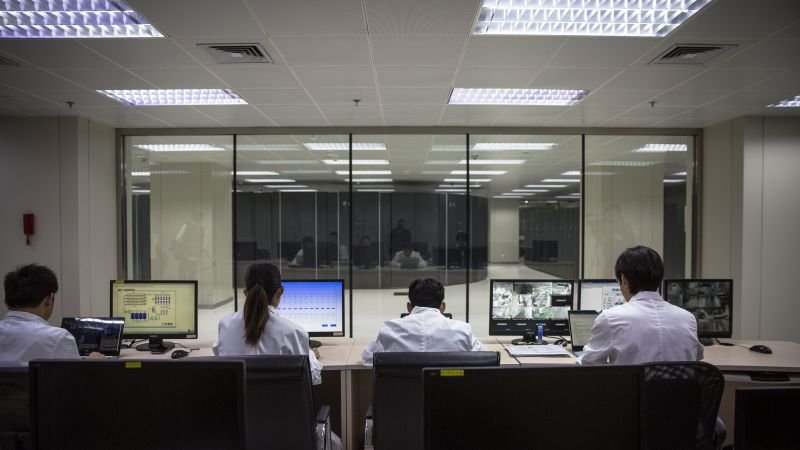
    The dataset, which allegedly contains more than 10 petabytes of sensitive information, is believed by experts to have been obtained from the National Supercomputing Center (NSCC) in Tianjin – a centralized hub that provides infrastructure services for more than 6,000 clients across China, including advanced science and defense agencies.

    Cyber experts who have spoken to the alleged hacker and reviewed samples of the stolen data they posted online say they appeared to gain entry to the massive computer with comparative ease and were able to siphon out huge amounts of data over the course of multiple months without being detected.

    An account calling itself FlamingChina posted a sample of the alleged dataset on an anonymous Telegram channel on February 6, claiming it contained “research across various fields including aerospace engineering, military research, bioinformatics, fusion simulation and more.”

    The group alleges the information is linked to “top organizations” including the Aviation Industry Corporation of China, the Commercial Aircraft Corporation of China, and the National University of Defense Technology.

    CNN has reached out to China’s Ministry of Science and Technology as well as the Cyberspace Administration of China for comment.

    The National Supercomputer Center building in Tianjin, China, on August 18, 2015

    Cyber security experts who have reviewed the data say the group is offering a limited preview of the alleged dataset, for thousands of dollars, with full access priced at hundreds of thousands of dollars. Payment was requested in cryptocurrency.

    CNN cannot verify the origins of the alleged dataset and the claims made by FlamingChina, but spoke with multiple experts whose initial assessment of the leak indicated it was genuine.

    The alleged sample data appeared to include documents marked “secret” in Chinese, along with technical files, animated simulations and renderings of defense equipment including bombs and missiles.

    “They’re exactly what I would expect to see from the supercomputing center,” said Dakota Cary, a consultant at cybersecurity firm SentinelOne who focuses on China and has reviewed the samples placed online from the alleged hack.

    “You would use supercomputer centers for large computational tasks. The swath of samples that the sellers put out kind of really speaks to the breadth of customers that this supercomputing center had,” Cary said.

    Most of those customers would have little reason to maintain their own supercomputing infrastructure independently, he added.

    The Tianjin center — the first of its kind in China when it opened in 2009 — is one of several supercomputing hubs located in major cities including Guangzhou, Shenzhen, and Chengdu.

    According to Marc Hofer, a cybersecurity researcher and author of the blog NetAskari, the size of the dataset would make it attractive to adversarial state intelligence services.

    “Only they probably have the capacity to work through all this data and come back with something useful.”

    To put the scale in perspective: one petabyte equals 1,000 terabytes, and a high-spec laptop typically holds around one terabyte.

    “There are leaks from China’s cyber ecosystem that I’m familiar with that have sold very quickly,” Cary told CNN. “I’m sure that there are plenty of governments globally that are interested in some of the data at the NSCC, but many of those governments that are interested also may already have the data.”

    Hofer, who reviewed the sample of the leak, said he was able to contact on Telegram a person who claimed they had carried out the hack. The attacker claimed to have gained access to the Tianjin supercomputer through a compromised VPN domain.

    Once inside, the attacker told Hofer they deployed a “botnet” — a network of automated programs that were able enter the NSCC’s system and then extract, download and store the data. The extraction of 10 petabytes of data took around six months.

    CNN could not independently verify the account the hacker gave to Hofer.

    Cary said the approach was less about technical sophistication and more about architecture.

    “You can think of it as having a bunch of different servers that you have access to and you’re pulling data through this hole in the security of the NSCC — pulling some down to one server, some down to the next,” he said.

    By distributing the extraction across many systems simultaneously, the attacker reduced the risk of triggering an alert. Somebody on the defensive side is less likely to notice small amounts of data leaving the system compared to large amounts of data going to one location, Cary said.

    Cary added that the method, while effective, was not particularly unique.

    “It wasn’t, at least my read on it, anything particularly incredible in the way that they pulled out this information,” he said.

    Staff members walk past the Tianhe-1 supercomputer at the National Supercomputing Center in Tianjin, China, on November 2, 2010.

    The alleged breach, if genuine, points to a potentially deeper vulnerability in China’s technology infrastructure as it vies with the United States to be a world class technology innovator and AI leader. Cybersecurity has long been a known weakness across both the government and private sector, according to Cary.

    In 2021, a massive online database apparently containing the personal information of up to one billion Chinese citizens was left unsecured and publicly accessible for more than a year until an anonymous user in a hacker forum offered to sell the data and brought it to wider attention in 2022.

    “They’ve really had poor cybersecurity for a very long time across a wide number of industries and organizations,” Cary told CNN. “If you look at what Chinese policymakers say themselves, cybersecurity in China has not been good. They would say it’s still improving at this point in time.”

    China’s own government has acknowledged as much.

    The country’s National Security White Paper in 2025 listed building “robust security barriers for the network, data, and AI sectors” as a key priority, adding that “China has continued to strengthen the development of coordinated cybersecurity mechanisms, means, and platforms to ensure the security and reliability of key information infrastructure.”




    Source link

    Related Posts

    Supreme Court Temporarily Restores Access to Abortion Pill by Mail
    United States

    Supreme Court Temporarily Restores Access to Abortion Pill by Mail

    May 4, 2026
    Wild parrots copy their friends when deciding whether to try new foods, study finds
    United States

    Wild parrots copy their friends when deciding whether to try new foods, study finds

    May 4, 2026
    What passengers need to know about Spirit Airlines
    United States

    What passengers need to know about Spirit Airlines

    May 4, 2026
    Rubio to Visit Rome, Vatican Says, After Trump’s Feud With Pope and Meloni
    United States

    Rubio to Visit Rome, Vatican Says, After Trump’s Feud With Pope and Meloni

    May 4, 2026
    Americans Will Do Anything to Get Indian Mangoes
    United States

    Americans Will Do Anything to Get Indian Mangoes

    May 4, 2026
    How Republicans came to embrace psychedelic drugs
    United States

    How Republicans came to embrace psychedelic drugs

    May 4, 2026
    Next Post
    They will speed up the titling process for informally occupied lands

    They will speed up the titling process for informally occupied lands

    POPULAR NEWS

    Justin Bieber fans flood Coachella festival for headlining show – Entertainment

    Justin Bieber fans flood Coachella festival for headlining show – Entertainment

    April 20, 2026

    Over 600 flee homes as Army, NPA clash in Negros Occidental

    April 21, 2026

    Ex-DPWH exec recalls P800-M ‘delivery’ to Zaldy Co 

    April 20, 2026

    Former PM Paluckas suspends party membership, to waive immunity over criminal probe

    April 24, 2026
    Pres. Ali challenges CARICOM to transform into health research powerhouse

    Pres. Ali challenges CARICOM to transform into health research powerhouse

    April 23, 2026

    EDITOR'S PICK

    NDP gov’t ‘unnecessarily burning political capital’ – Jomo – iWitness News

    NDP gov’t ‘unnecessarily burning political capital’ – Jomo – iWitness News

    April 16, 2026
    CNP reports on the death of a journalist in Aragua and demands clarification of the causes

    CNP reports on the death of a journalist in Aragua and demands clarification of the causes

    April 8, 2026

    Tourism sector drives delinquent loans to record high | Business

    April 8, 2026
    US has responded to Tehran’s 14-point plan to end war: Iran

    US has responded to Tehran’s 14-point plan to end war: Iran

    May 3, 2026

    Recent Posts

    • Football: Soccer-FIFA bans former Guyana football official Alves for five years over harassment
    • Union Information Minister inspects Wazira Cinema upgrade
    • Manila Bulletin – Peace I leave with you
    • Wage hike call, anti-NPA rally mark Labor Day in Bacolod

      © 2026 Agentially - Navigating shifting sovereignties and global risk .

      Welcome Back!

      Login to your account below

      Forgotten Password?

      Retrieve your password

      Please enter your username or email address to reset your password.

      Log In
      No Result
      View All Result

        © 2026 Agentially - Navigating shifting sovereignties and global risk .

        This website uses cookies. By continuing to use this website you are giving consent to cookies being used. Visit our Privacy and Cookie Policy.