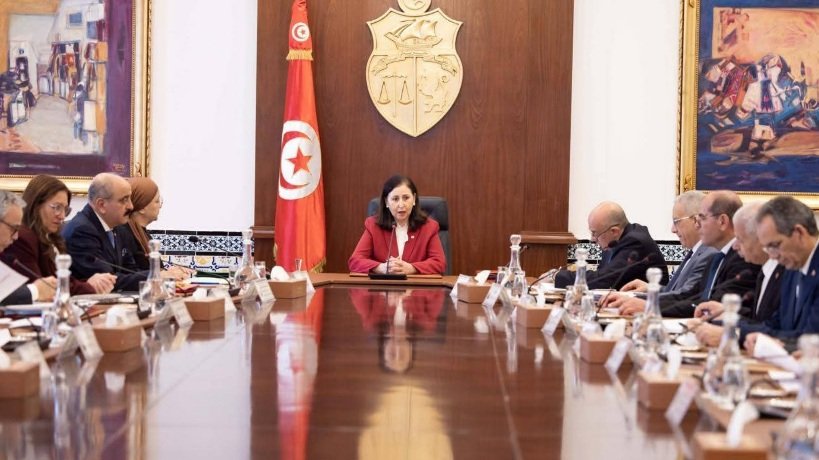
On behalf of the President of the Republic, Kais Saied, and at his request, the Prime Minister, Sarah Zaafarani Zanzri, supervised today, Tuesday, at the Government Palace in the Kasbah, a meeting of the Council of Ministers to consider the regulatory texts regarding the increase in wages and salaries in the public and private sectors.
The Prime Minister affirmed at the beginning of the work of this Council that this meeting comes as the culmination of a series of meetings held by the President of the Republic, to consider implementing the provisions of Chapter 15 of the Finance Law for the current year, which relates to the increase in wages and salaries in the public and private sectors and pensions for retirees for the years 2026, 2027 and 2028, within the framework of devoting the state’s social role in all fields and supporting the purchasing power of all Tunisian men and women. Ensuring a decent living for them and achieving social justice and social stability, by ensuring fair and remunerative wages for all employees and retirees.
The increase in wages and salaries, according to a statement issued by the government presidency, includes state employees, local groups, public institutions of an administrative nature, public establishments and institutions, and private sector institutions. The increase also applies to pensioners’ pensions.
The Council deliberated on eight orders related to wage increases: four (4) of which concern the public sector and another four (4) of which concern the private sector.
At the conclusion of the Council’s work, the Prime Minister affirmed that the Tunisian state is moving forward with its social policy, in accordance with the directives of the President of the Republic, to fulfill the demands of citizens everywhere and empower them with their legitimate rights to a dignified life, noting that work is currently underway and continues at all times to overcome social and economic difficulties and legacies and to implement a number of projects for the benefit of Tunisian men and women, in a way that responds to their expectations and achieves decent living and social justice for them.
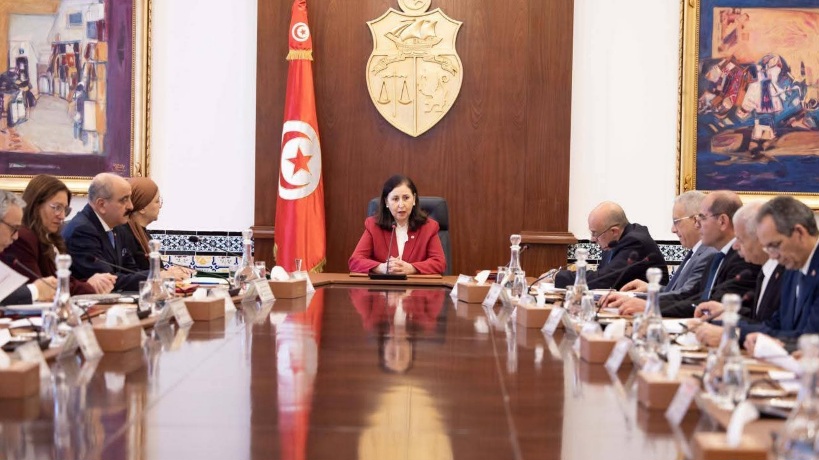
On behalf of the President of the Republic, Kais Saied, and at his request, the Prime Minister, Sarah Zaafarani Zanzri, supervised today, Tuesday, at the Government Palace in the Kasbah, a meeting of the Council of Ministers to consider the regulatory texts regarding the increase in wages and salaries in the public and private sectors.
The Prime Minister affirmed at the beginning of the work of this Council that this meeting comes as the culmination of a series of meetings held by the President of the Republic, to consider implementing the provisions of Chapter 15 of the Finance Law for the current year, which relates to the increase in wages and salaries in the public and private sectors and pensions for retirees for the years 2026, 2027 and 2028, within the framework of devoting the state’s social role in all fields and supporting the purchasing power of all Tunisian men and women. Ensuring a decent living for them and achieving social justice and social stability, by ensuring fair and remunerative wages for all employees and retirees.
The increase in wages and salaries, according to a statement issued by the government presidency, includes state employees, local groups, public institutions of an administrative nature, public establishments and institutions, and private sector institutions. The increase also applies to pensioners’ pensions.
The Council deliberated on eight orders related to wage increases: four (4) of which concern the public sector and another four (4) of which concern the private sector.
At the conclusion of the Council’s work, the Prime Minister affirmed that the Tunisian state is moving forward with its social policy, in accordance with the directives of the President of the Republic, to fulfill the demands of citizens everywhere and empower them with their legitimate rights to a dignified life, noting that work is currently underway and continues at all times to overcome social and economic difficulties and legacies and to implement a number of projects for the benefit of Tunisian men and women, in a way that responds to their expectations and achieves decent living and social justice for them.
Tags/article tags: