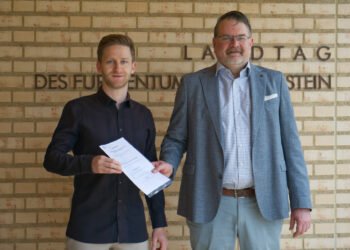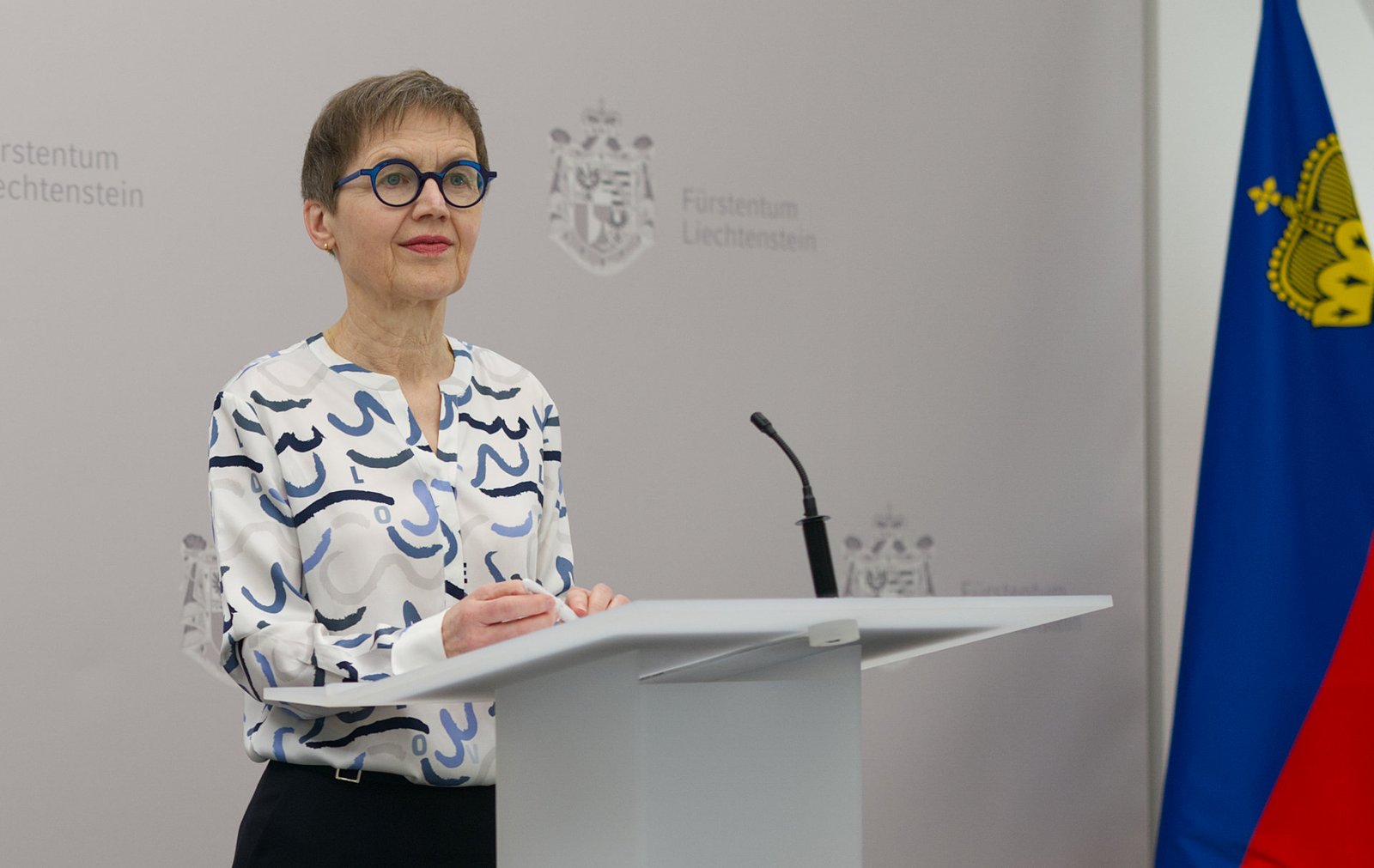
Prime Minister Brigitte Haas presents the state accounts for 2025 | Photo: Gregor Meier
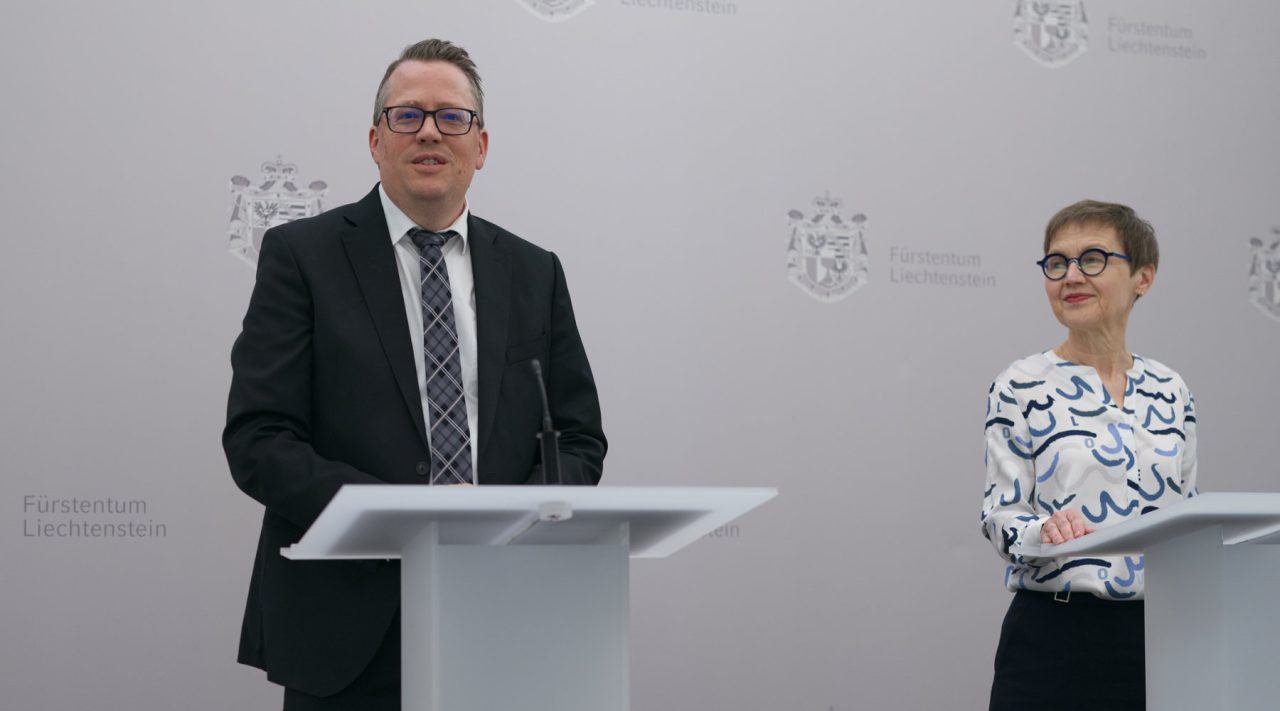
The Liechtenstein national accounts for 2025 close with a profit of 331 million francs. Prime Minister Brigitte Haas and Andreas Gritsch, head of the Finance Office, presented the result at a media orientation. The result significantly exceeds the estimate and is slightly below the previous year’s record result.
Yields far exceed expectations
Operating income – i.e. the country’s income – reached a volume of 1.135 billion francs and exceeded the estimate by 17 percent. By far the largest share is made up of taxes and duties, which make up 92 percent of all income.
The largest single item on the revenue side was once again the income tax on legal entities at 397 million francs – an increase of 137 million compared to the budget and 113 million more than in the previous year. The state share of the wealth and acquisition tax also exceeded the estimate by 15 million at 136 million. However, gaming levies declined: at 20 million francs, they were 15 million below budget and 33 million below the previous year’s figure.
Effort below budget – despite increase
On the expenditure side, the bill showed operating expenses of 1.007 billion francs. The country remained 45 million below the approved budget, but recorded an increase of 66 million compared to the previous year. The operating activities resulted in a profit of 128 million francs – the estimate had still expected a deficit.
The largest block of expenditure was on contributions and transfer payments at 435 million francs. These include, in particular, the state contribution to health insurance companies at 50 million francs, the state share of supplementary benefits to AHV/IV including care and nursing allowance at 36 million, and the state contribution to old-age insurance at 32 million. In a year-on-year comparison, health insurance contributions increased by CHF 3.1 million and supplementary benefits increased by CHF 2.3 million.
The personnel expenses of the entire state administration, the courts, commissions and all teachers at public schools amounted to 280 million francs – 6 million below the budget, but 17 million above the previous year. The increase is explained by the cost-of-living adjustment of 1.4 percent and salary adjustments of 1 percent as of January 1, 2025. There was also a one-time effect from the bridging funds for four departing government members at the end of the legislative period.
The financial allocations to the municipalities totaled 133 million francs, 23 million more than budgeted. This is directly due to the high income tax revenue from which the municipalities benefit proportionately. However, the statutory financial equalization was lower due to the municipalities’ increased tax capacity.
Strong financial result thanks to high returns
The financial result contributed significantly to the overall result at 260 million francs and exceeded the estimate by 140 million. The decisive factor was the net result from financial investments: at 6.7 percent, the return was well above the planned return of 2.5 percent taken into account in the estimate. In addition, increases in the value of investments and higher investment income – including the dividend from the Liechtensteinische Landesbank – contributed to the positive result. Assets under management grew from 2.757 billion francs at the beginning of the year to 3.83 billion francs at the end of 2025.
Gritsch pointed to the historically strong long-term development, but urged caution: the annual results of asset management could fluctuate significantly, as the slump in 2022 showed.
Extraordinary measures have a one-time impact on earnings
The extraordinary result includes expenses of 57 million francs, which can be attributed to measures adopted in the area of the state’s company pension scheme.
Investments remain at a high level
The country made gross investments of 100 million francs – 34 million below budget, but 14 million above the previous year. The largest construction items were around 10 million francs each for measures at the Mühleholz school center in Vaduz and for the new construction of the Unterland II school center. A further 17 million went to civil engineering and 15 million to IT and furniture. After deducting investment income – primarily loan repayments of 12 million – there was net investment of 88 million francs.
Overall accounts and outlook
Taking into account depreciation of 46 million and net investments of 88 million, the overall statement results in a cash inflow of 289 million francs. The estimate still assumed a cash outflow of 80 million.
Prime Minister Haas drew a positive conclusion, but urged caution: “We will certainly be affected by the geopolitical challenges in the coming years.” Geopolitical tensions, a dampened economic outlook and increased volatility on the financial markets pose risks to the national budget. In addition, the growth in expenditure in recent years requires careful management in order to ensure the long-term sustainability of public finances.