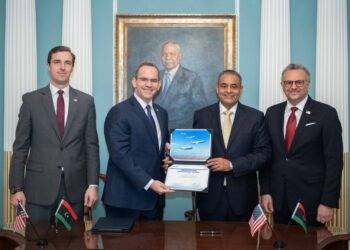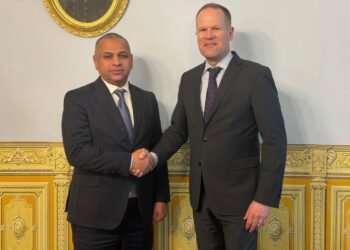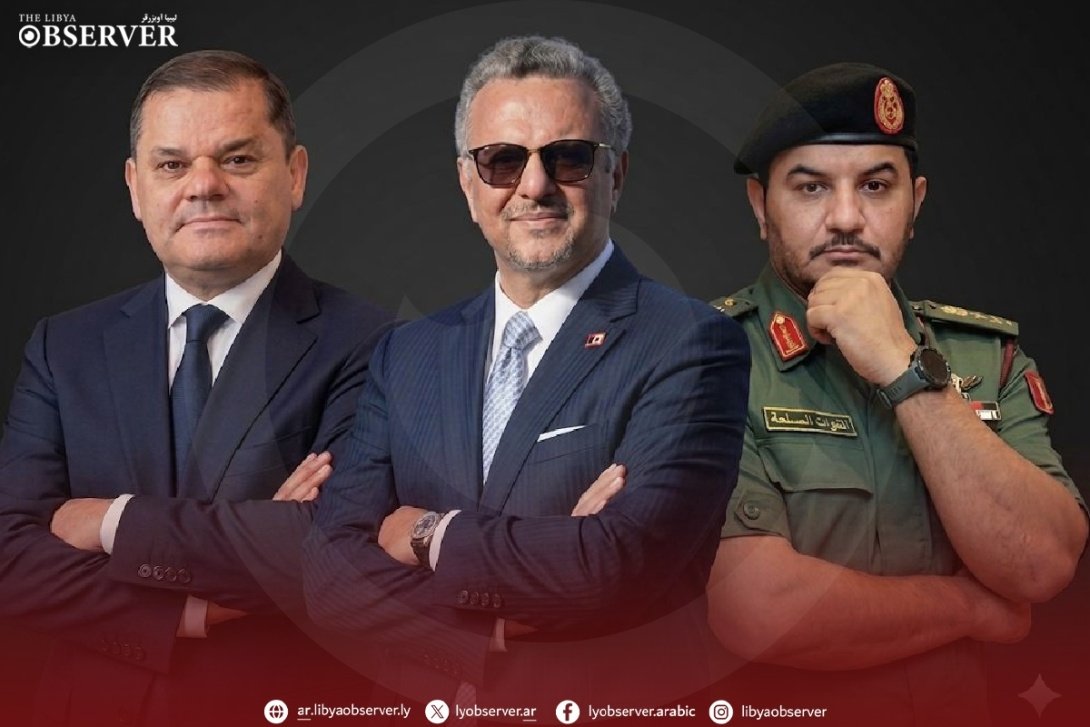
A power-sharing deal proposed by Massad Boulos, the U.S. President’s Senior Adviser for African and Middle Eastern Affairs, has triggered widespread opposition across Libya.
The plan, negotiated behind the scenes, seeks to divide power in Libya between the families of Dbeibah and Haftar, sidelining existing political institutions and parties.
Under the proposal, Dbeibah would remain as prime minister, while Saddam Haftar would assume the presidency.
Saddam is the son of Libya’s most notorious warlord Khalifa, who killed hundreds of opponents and launched a massive failed attack on Tripoli in 2019 to seek power.
The Boulos deal has been strongly rejected by various political and military factions. Both the Presidential Council and the High Council of State have publicly opposed it, with the latter warning it would freeze the membership of any of its members who support it.
Grand Mufti Sadiq al-Gharyani called on Dbeibah to align with the Presidential Council and the High Council of State. He also urged powerful western military brigades to reject the proposal, warning that a Haftar-led government could later target Dbeibah and his opponents in the western region.
Opposition to the deal is particularly strong in western Libya, where critics argue it would undermine the country’s political framework and bring the country back to an era of tyranny and public executions of dissents.
In the eastern part of Libya, where Haftar rules with an iron fist, Saddam unleashed their media outlets and mouthpieces to promote the deal, which they consider the only way to rule and control all of Libyan territory after the failure of their military project.