The conservative Keiko Fujimori and the progressive Roberto Sánchez led the vote count in Peru’s general elections on Wednesday, with more than 91% of the votes counted after a change in trend that displaced the former mayor of Lima Rafael López Aliaga from second place.
Fujimori, candidate for Fuerza Popular, led the vote with 17.02%, according to the preliminary count of the National Office of Electoral Processes (ONPE). This is the fourth time that the daughter of the late president Alberto Fujimori (1990-2000) has sought the presidency.
Sánchez – candidate of the Together for Peru party, popular in rural areas and political partner of the imprisoned former president Pedro Castillo (2021-2022) – was in second place with 12.05% support after a campaign marked by the high dispersion of the vote among the 35 candidates in Sunday’s elections.
In a very close third place was López Aliaga, from Renovación Popular, with 11.86%.
Sánchez—former minister of former President Castillo—climbed the count from fourth place and reached second, displacing López Aliaga and Jorge Nieto Montesinos, who was in third place and now moved to fourth with 11.06% of the votes.
Fujimori promises to fight crime with a “hard hand” following the model of Salvadoran President Nayib Bukele and to install judges with their faces covered as happened during the government of his father, convicted of murder and corruption.
On the other hand, former Minister Sánchez proposes renegotiating mining and natural gas contracts. He usually wears a poncho and a peasant hat that, he claims, Castillo gave him and affirms that if he becomes president he will pardon the former president, sentenced in 2025 to 11 years in prison for conspiracy to rebel.
runoff, next June 7
Peru will go to a runoff on June 7 because no candidate has achieved the 50% plus one of the valid votes required by law to win in the first round. But the close results in the partial count do not yet allow us to determine who the contenders will be.
The slowness in the count, although greater than the average of the countries in the region, also characterized the last presidential elections in Peru in 2021, when 100% was reached five days after the vote.
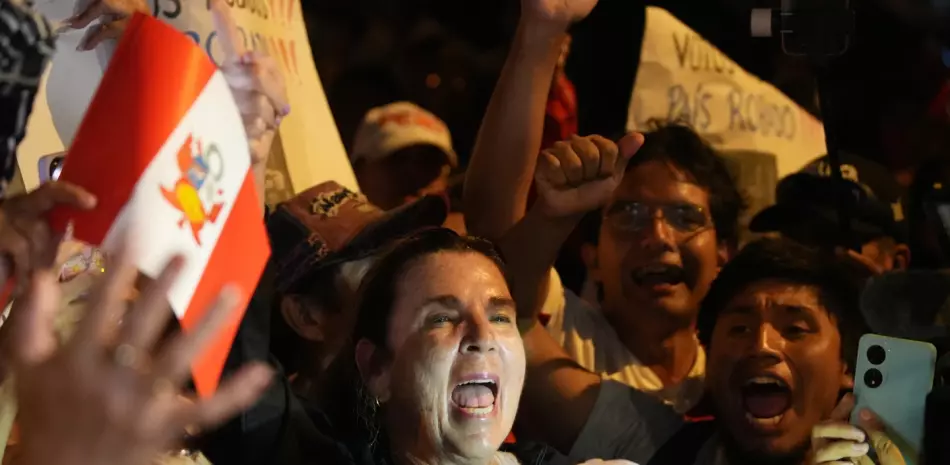
On Tuesday night, López Aliaga asked the authorities to annul the elections due to alleged fraud for which he did not present consistent evidence and gave them until Wednesday before his followers gathered in front of the Electoral Court.
Meanwhile, Sánchez urged his supporters to possible mobilize in case there are signs of not wanting to respect the citizen vote. “Without stories or narratives of fraud… the Andean, rural, Amazonian vote of deep Peru will be respected,” he said. His political wealth is concentrated in these areas of Peru.
But an electoral observation mission from the European Union ruled out any irregularities in the elections.
Nieto Montesinos questioned his rivals and maintained that “those who have accusations of fraud should prove them and if they don’t have them, they should keep their mouths shut… because they are harming Peru and generating more chaos, uncertainty and anxiety.”
Peru held the elections in the midst of a political crisis that has caused the parade of eight presidents and three Congresses in a decade and an increase in crime that citizens identify as their greatest concern.
In the last five years, complaints of extortion – a crime that has caused protests and frequent stoppages of public transport – have quintupled, while murders have doubled, according to official data.
Peruvians also voted to elect 130 deputies and 60 senators from a bicameral Congress in which the Senate has broad powers.