Campaigners have said Ireland should follow the example of Wales and mandate the Department of Education to increase access to Irish-medium education.
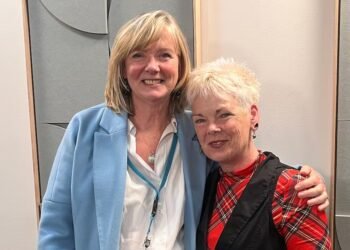
The campaign group Irish Medium Education at School (Imeasc) is made up of parents who have campaigned unsuccessfully for Irish-medium schools across the country is seeking cross-party support to amend primary legislation and compel the Department of Educationto increase the number of schools providing Irish-medium education where there is demand.
“The Department of Education uses three Acts as terms of reference: the Education Act 1998, the Education for Persons with Special Educational Needs Act 2004 and the Education and Training Boards Act 2013,” said Rachel De Bhailís, spokesperson for Imeasc.
“None of these acts that inform the operation of the Department of Education have any outline in relation to the provision of Irish-language education,” she said.
“The department has never been tasked or mandated to provide a strategic level of Irish-language education and, therefore, the bare minimum is being done.”
Imeasc was formed by parents frustrated at having campaigned for Irish-medium provision who campaigned “for 10, 12 or 15 years with no results”.
“There is no paperwork to fill in, there is no phone number to ring, there is no pathway to opening an Irish language secondary school,” said De Bhailís.
“Every member has a similar story to tell,” she said.
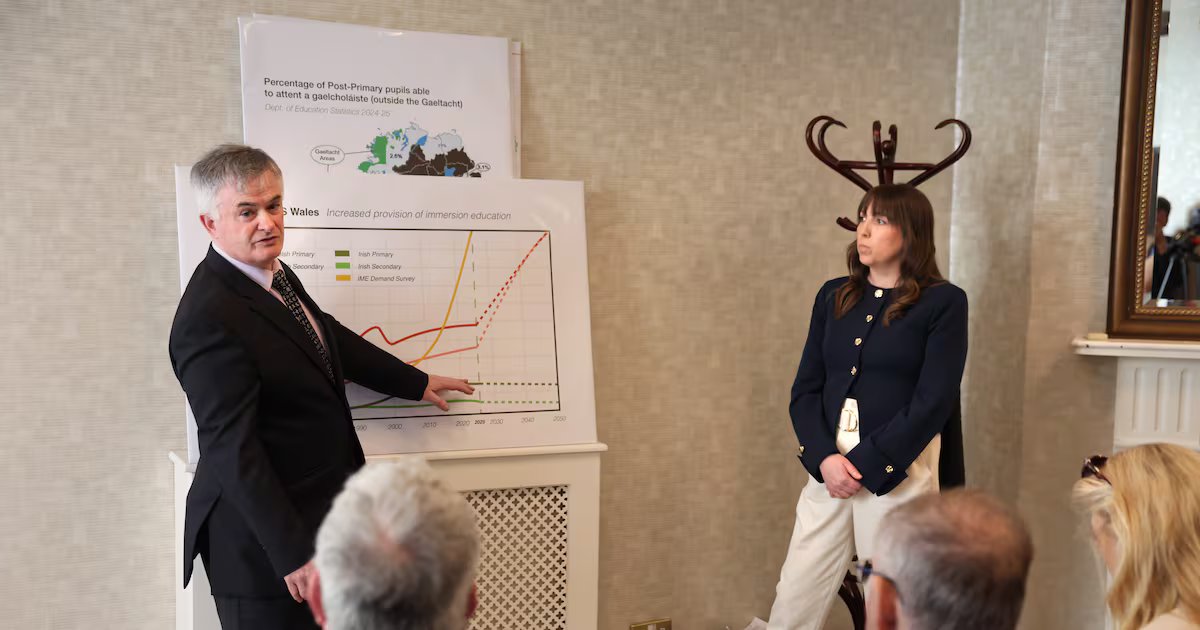
Imeasc is hoping the legislation will emulate the Welsh experience where a strategic approach has been taken to increase the numbers attending Welsh-medium schools.
Wales’s language policy is aimed at achieving a million Welsh speakers by 2050, and government statistics show that in 2025, 21 per cent of all pupils were being educated in Welsh-medium schools, with a further 5 per cent being educated in dual-language schools.
In Ireland, just 7.9 per cent of primary school students attend a Gaelscoil, while about 3.3 per cent of secondary school students attend a Gaelcholáiste (Irish-medium post-primary).
“Half the counties in Ireland don’t have a Gaelcholáiste,” said Imeasc’s Aidan Kinsella.
“It doesn’t have to be this way. We need legislation in place just as Wales has done. Wales opened their second Welsh-language secondary school in 1962 and they now have 19 per cent of all their pupils at second-level attending the equivalent of a Gaelcholáiste.
“At primary level they are now at 23 per cent and they have set a target that by 2040 they aim to have 40 per cent, and by 2050 they aim to have 50 per cent of all children attending Welsh-medium education.”
Campaigners are calling on the public to contact their local representatives through their website as part of their push for legislative change.
“We can’t wave a magic wand and invent capacity. We have to build capacity,” said Kinsella.
“It will take 15 or 20 years, it won’t happen in five years. It takes time to do this. We believe that political will counts. The Welsh have shown what can happen.”
Several politicians spoke at the event in support of the campaign, including former TD and Minister for the Gaeltacht Éamon Ó Cuív, Fianna Fáil’s Naoise Ó Cearúil and MEP Cynthia Ní Mhurchú. Fine Gael TD Catherine Callaghan, Sinn Féin’s Irish language spokesman Darren O’Rourke, and Social Democrats TD Jennifer Cummins also spoke.