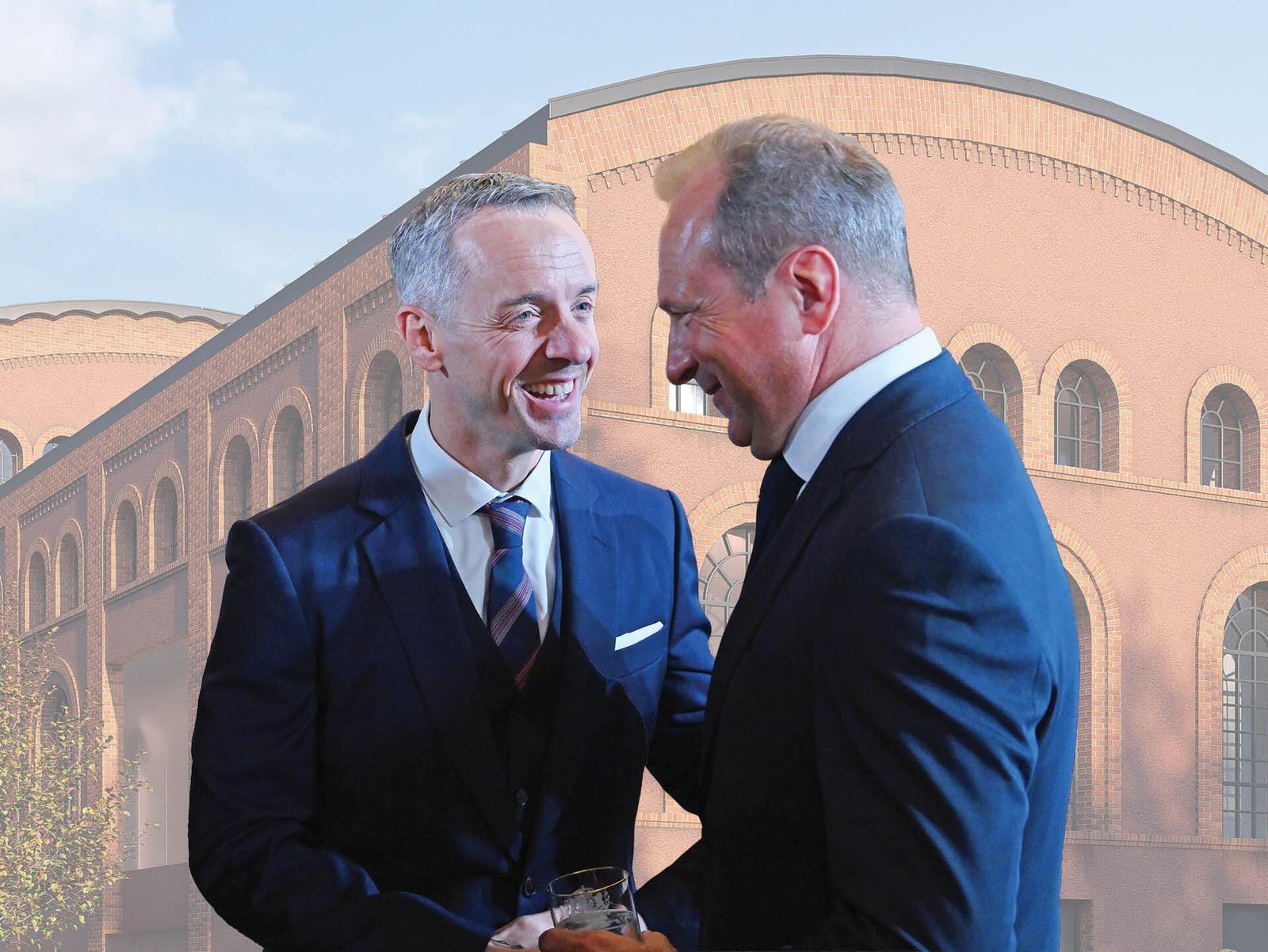
The sports museum affair surrounding the now resigned sports minister Georges Mischo (CSV) threatens to spread ever wider. At the center are still unresolved questions about the ominous “protocole d’accord” between the Ministry of Sports and the property developer IKO. It also remains unclear who made the proposal to acquire the intended building as a congress center and convert it into a sports museum – and thus withhold at least part of the project from a public tender. However, the legal report requested by the government on the construction project on the “Rout Lëns” contradicts the representation of the former sports minister Georges Mischo in key points: the “protocole d’accord” and the feasibility study carried out were illegal. “The influence of the Ministry of Sports was too great,” says Mischo’s successor and party colleague Martine Hansen, summing up the report, which was kept under wraps.
But that’s not enough. The explanations given by the general coordinator in the Ministry of Sports, François Knaff, but also Finance Minister Gilles Roth (CSV) and his officials were poor, to say the least. So poor that the LSAP MP Liz Braz burst her collar in the public part of the commission meeting. “I would like to remind you that you would have to tell the truth under oath as part of a commission of inquiry,” Braz said.
As Minister for Public Works, Yuriko Backes (DP) also made a statement to the Chamber Commission. Backes emphasized that the dossier “neither in terms of the idea nor the conceptualization” affected the public works administration.
A lot of ignorance
Time and again, ignorance was blamed on very essential elements. For example, on the question of why no one apparently thought it necessary to mention the “protocole d’accord” between the property developer and the Ministry of Sports to the representatives from the Ministry of Finance, none of whom claimed to have known anything about the agreement. It was also not possible to conclusively clarify who came up with the idea of granting the property developer IKO temporary exclusivity. “Who had the idea for this ‘protocole d’accord’? It wasn’t just lying on an office table at some point. And when did someone at the Ministry of Sports know that the path taken is not necessarily the most compliant? Was there this moment?” CSV parliamentary group leader Laurent Zeimet also wanted to know.
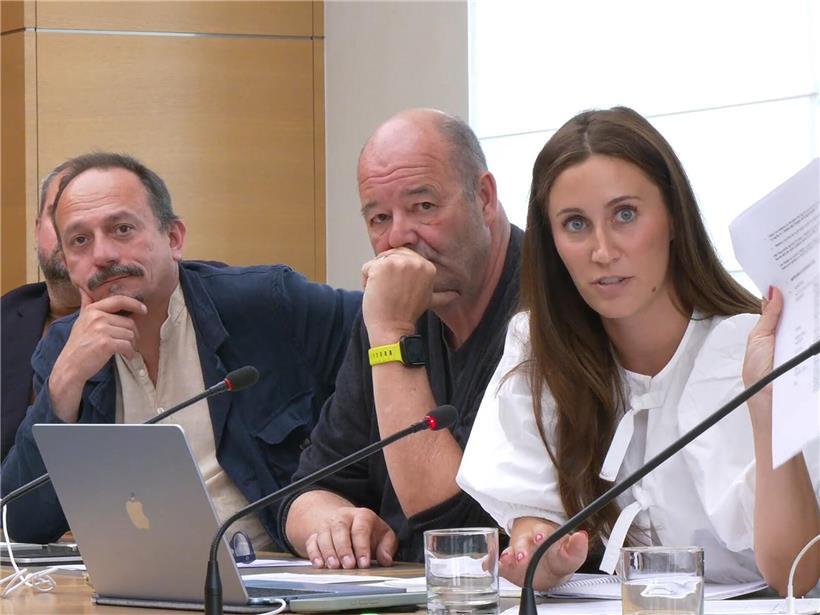
The LSAP MP Liz Braz wants the sports museum affair to be fully investigated – if necessary by an inquiry commission Screenshot: chd.lu
General Coordinator Knaff’s answer speaks volumes. “At the beginning of the feasibility study, the developer said that he could claim expenses of 120,000 euros and said that we were concentrating primarily on the project. This is where this ‘protocole d’accord’ came from.” Zeimet asked whether that had been the developer’s idea. “Those were not the conditions, but comments from the developer to enter into this collaboration.”
Due to “ignorance”, the consequences of this “protocle d’accord” could not be estimated; it was “not good”. That wasn’t the only thing that was “not good” about the project – Knaff had to admit that several times during the Chamber meeting. However, the intention was never to keep anything secret. Incidentally, Martine Hansen did not answer whether the sports minister wanted to draw conclusions now that the legal report was available.
The fact that the former sports minister and mayor of Esch instructed his officials to only look for alternative locations in Esch after the project in Lankelz failed becomes a side note. However, there was reportedly no contact between Minister Mischo and IKO before contact was made between officials of the Ministry of Sports and the property developer IKO.
Nobody has seen a ‘protocole d’accord’ to make that clear
Gilles Roth
Finance Minister
But it wasn’t just the high-ranking official from the Ministry of Sports who came under pressure at the commission meeting. Finance Minister Gilles Roth (CSV) was also unable to provide answers to crucial questions. In addition to the “protocole d’accord”, which is also said not to have been available to officials in the Ministry of Finance familiar with the dossier, a second aspect raises questions. In the turmoil of the dossier, the originally planned sports museum turns into a conference and exhibition center that the government should acquire as such. This would have made it possible to bypass some of the public tendering procedures and only the later conversion into a sports museum would have had to be put out to tender.
Origin of the “convention center” unclear
In this regard, the response to MPs, coordinated between the Sports, Finance and Public Works Ministries, states that this idea should come from the Finance Ministry at a meeting on October 25, 2024. “Il fut suggéré par un représentant du ministère des Finances de proposer l’acquisition dans un état de center de congrès et d’exposition. Les parties spécifiques pour le Musée, tels que la muséographie et scénographie, premier équipement) devraient y être greffés par la suite via marchés publics,” it says Government letter. This was disputed by the officials present as well as Finance Minister Gilles Roth, who attributed the suspicious sentence to an unfortunate wording in the minutes of the meeting. Neither the “protocole d’accord” nor the fact that workshops to develop the concept had already taken place between the Ministry of Sport and the IKO, nor any other plans or documents were transmitted at the meeting. The origin of the idea of acquiring a convention center to later convert it into a sports museum remained unclear during the meeting. “I can’t remember it,” was Knaff’s answer to the question from Commission President Franz Fayot (LSAP) as to whether the idea perhaps came from the Ministry of Sports or from the property developer himself.
“Either someone is not telling the truth or at least trying not to have to tell it straight,” Braz sums up the exchange between the MPs and ministry representatives. “It is said by a senior official that this agreement was not shared with others out of ignorance. Then it is claimed that it is only a feasibility study, with the agreement covering the entire project, as it should have been subsequently taken over by the state through purchase or rent.” What was also unbelievable for the MP was that it was no longer possible to determine when the agreement had been made to acquire a congress center – knowing that the specific development plan (PAP) envisages a sports museum.
IKO also tried to avoid the maintenance costs, which would then have been borne by taxpayers. The suspicion of a deliberate circumvention of the “Marché public” law came to the attention of several MPs at the meeting.