Loading Text-to-Speech…
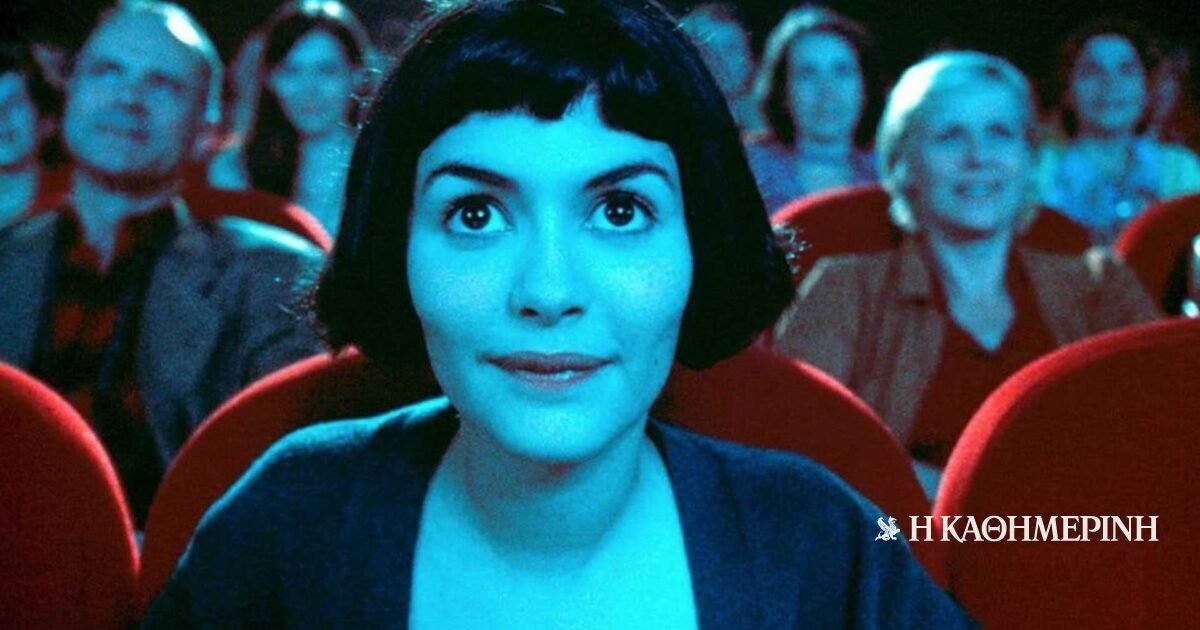
APRIL 25, 2001. THE Jean-Pierre Genet introduces her Amelie Poulina film character that at the time no one could have imagined would become one of the most unforgettable of French – but also international – cinema.
In “Le Fabuleux Destin d’Amélie Poulain“, as is its full title moviewe follow the life of a girl who grows up in a world of isolation and emotional distance, conditions that deeply shape her interiority. With a cold and overprotective father and the absence of essential tenderness, her childhood develops in a closed environment, where imagination becomes her main way of understanding reality. Gradually, she begins to obsess over the details around her, giving small, everyday actions a special meaning.
Many years later, at the age of 23, the shy but highly imaginative Amelie (Audre Tautou) moves to Paris and takes a job as a waitress in a bar-restaurant full of eccentric employees. One night she accidentally discovers in her apartment a box of “treasures” hidden since the 1950s. This gives her a new motivation to continue: she decides to track down the owner of the memorabilia and, shortly after, takes time to inspire a lonely painter while comforting a widowed neighbor. In the meantime, she meets Nino (Mathieu Kasowitz), an equally quirky young man with whom Amelie shares a similar sensibility. She will fall in love with him immediately.
A representative sample of the category of feel-good films, “Amelie” remains a timeless cinematic experience, reminding us that happiness – like human connection – is often hidden in anonymous gestures of kindness. The film also conveys the equally important message that we should stop and enjoy the small joys of life, the subtle details of everyday life that are often lost in the routine.
The film’s most charming and persistent promise is the idea that a small gesture can change the lives of others, and with it our own perspective on the world: it stares cynicism in the face, but disarms it with an innocent smile.

The need for human contact
In a world that is becoming increasingly distant and “digital”, Genet’s film still stands out for its warmth, tenderness and belief in the simple and human. And perhaps this is precisely why the film has stood the test of time: it is based not on realism, but on an emotional truth that remains recognizable even today. Amelie does not try to render the world as it is, but as it could be if we allowed it more tenderness. The dreamlike Paris with the intense colors of red, green and blue, the background music by hand Jan Tiersen that acts as her emotional guide, and the reminder that joys are found even in simple moments, all converge on an idea that never gets old: that even in the midst of alienation, human contact is not a luxury but a necessity.

And as long as that need remains unanswered in real life, Amelie will return, again and again, and not just remain a nostalgic film. In the age where human contact is declining, Genet’s heroine reminds us of the value of being truly present: to notice the details, to see the other and to care without noise.