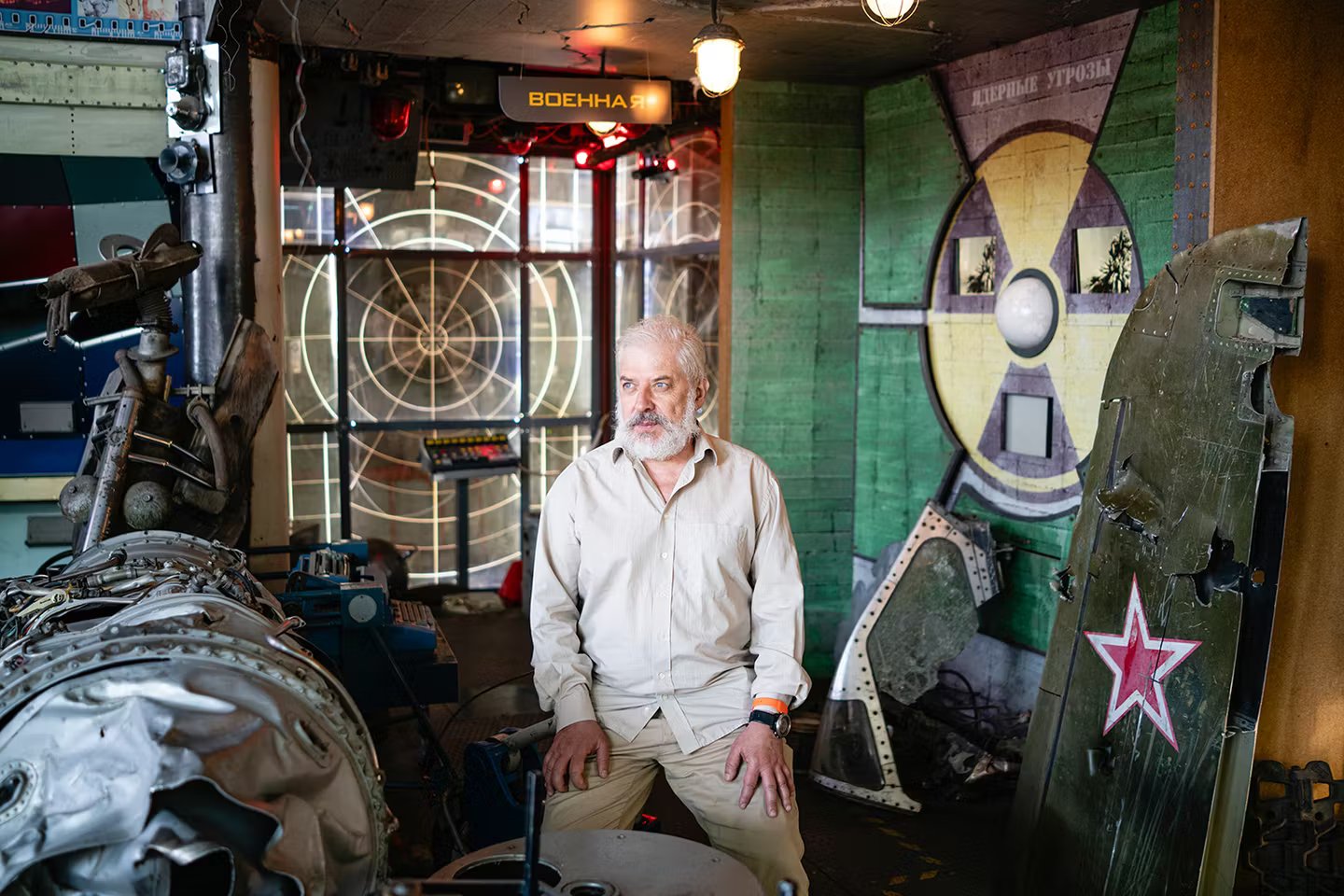
At first glance, the Karaganda Ecomuseum, located in central Kazakhstan, appears to have an eclectic collection. This space, dedicated to raising awareness about national environmental issues and opened in 2005 directly across from the City Hall, features metal debris from spacecraft alongside mining resource extraction maps.
There are also several photographs on display, showing mushroom-shaped explosions dated between 1949 and 1989 – the period when the Soviet Union conducted hundreds of nuclear tests at the Semipalatinsk Test Site in eastern Soviet Kazakhstan, irradiating hundreds of thousands of people in the region. The museum’s director, Dmitry Kalmykov, played the part of guide. “The atom was supposed to be peaceful,” he explained, “but human beings always act before they think, without realizing the consequences.”
At 62, with a white beard and blue eyes, he was speaking from experience. On April 26, 1986, he was 22 and serving in the military in Ukraine, his country of birth, as part of a chemical defense unit when he was sent to the Chernobyl nuclear power plant just hours after the reactor number 4 explosion. He was one of the hundreds of thousands of “liquidators,” the name given in the former Soviet Union to the civilian and military personnel dispatched from across the Soviet Union to contain the radiation from the worst civilian nuclear accident in history.
You have 73.38% of this article left to read. The rest is for subscribers only.