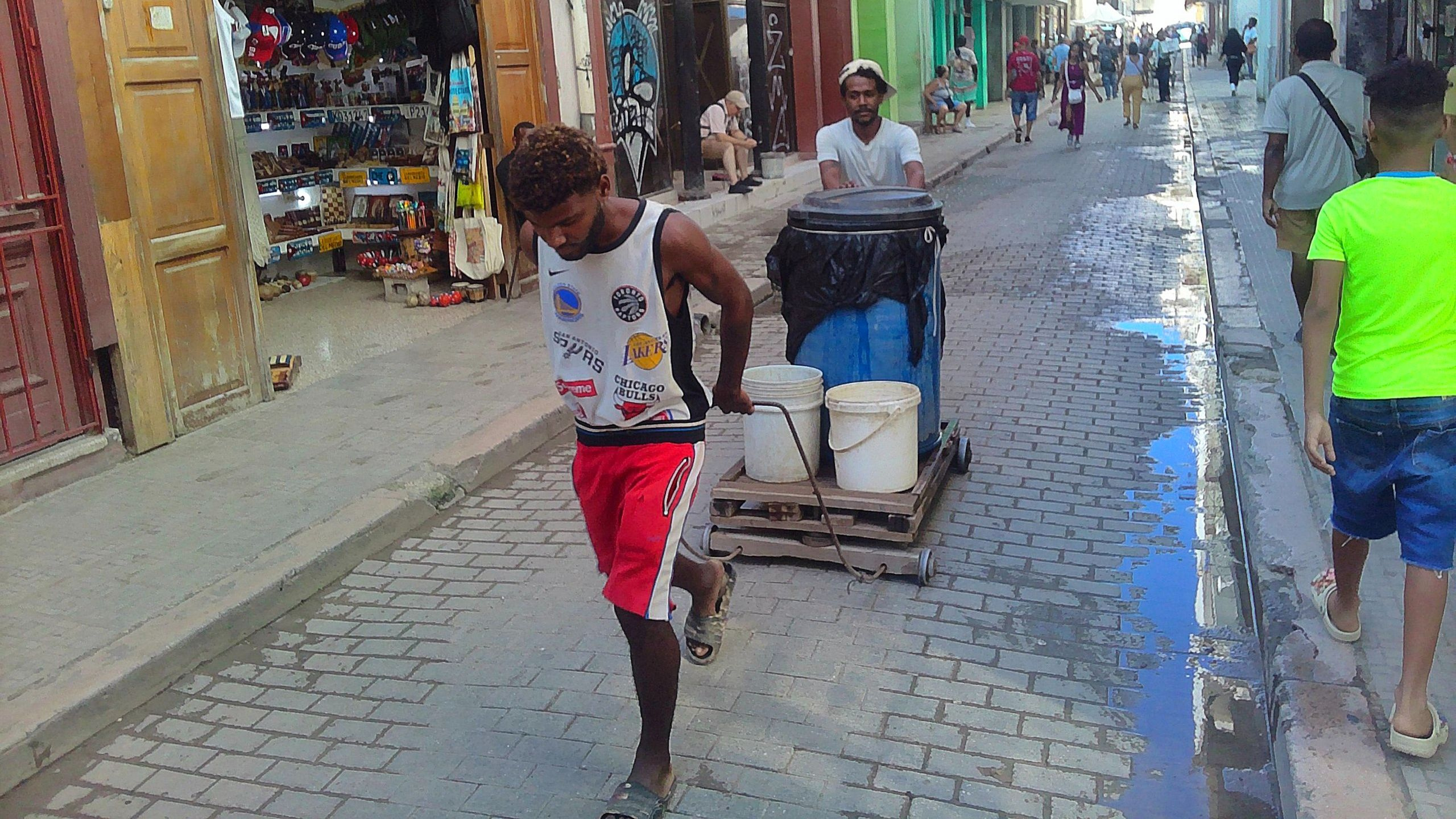
Havana/The rattle of the wheels on the cobblestones has replaced the music that previously escaped from the bars and restaurants on Obispo Street. Where a few years ago the chords of a Cuban son and the conversations of tourists from half the world could be heard, now the squeaks of wheelbarrows carrying water predominate. The most emblematic pedestrian artery of Old Havana seems to have changed its job: from a pedestrian promenade to a supply corridor.
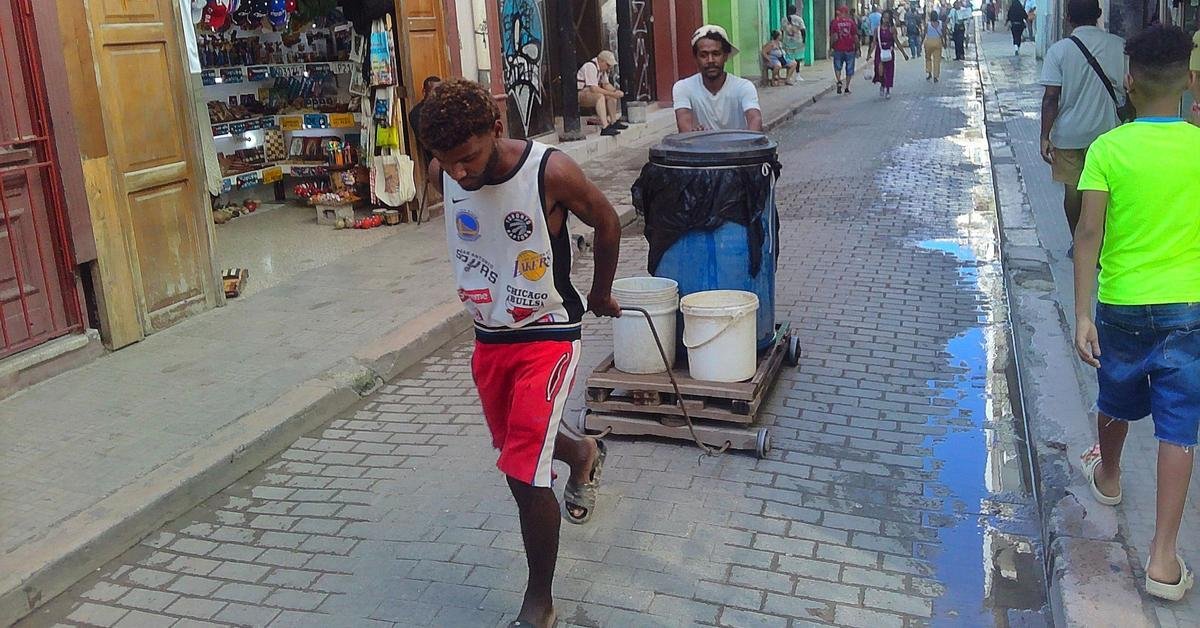
This Saturday, two young people advance along the road pushing an improvised wooden platform mounted on small wheels. On top they carry a large tank, partially lined with a black bag, and two buckets. One pulls the structure using a metal bar, while the other pushes from behind. The cargo sways on the uneven pavement, forcing them to coordinate their movements to prevent it from ending up overturned in the middle of the street.
The lack of water forces the residents of the area to dedicate hours and physical effort to this difficult task.
The scene takes place between old facades, wooden portals and establishments where souvenirs are still displayed for visitors who have not yet arrived. The lack of water forces the residents of the area to dedicate hours and physical effort to this difficult task. For those who sell food or run small businesses, having sufficient supply is also an essential condition to keep the business open.
Now, in Obispo, instead of suitcases with wheels, wheelbarrows and tricycles loaded with tanks and buckets pass by.