
Listen to this article
Estimated 3 minutes
The audio version of this article is generated by AI-based technology. Mispronunciations can occur. We are working with our partners to continually review and improve the results.
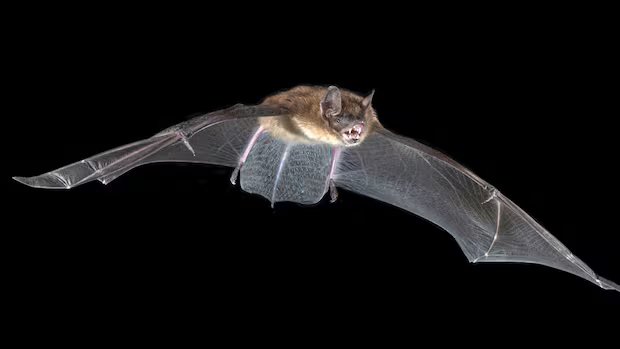
A colony of bats that recently caused an uproar at a Quebec long-term care home may soon have a new address: the Granby Zoo.
The Élisabeth-Lafrance CHSLD in Sorel-Tracy, Que., has had an issue with bats since 2017. But this month marked the first time that a rabies-infected bat made contact with one of the nursing home residents.
She and 15 other residents were treated, and no rabies symptoms have been reported.
As for the bats, the province’s Environment Ministry says it’s working with Santé Québec Montérégie-Est, the CHSLD management and an extermination company to figure out “the best way to proceed.”
If the bats can be safely and successfully located and caught, one of the options being considered is sending them to Granby Zoo in the Eastern Townships. The zoo has a bat refuge that welcomes dozens of bats every year.
Louis Lazure, the zoo’s scientific director, says people from around the province are able to call them if they encounter bats in their home or barn in the fall, and the zoo then gives them tips for how to safely catch the bats and bring them to the zoo.
Last year, the zoo received 86 bats. They’re all given a spot to hibernate for the winter, and the zoo releases them back into the wild in the spring.
1 bat with rabies doesn’t mean entire colony infected
In the case of the bats from the Élisabeth-Lafrance CHSLD, where one was found to have rabies, Lazure explains the zoo would still take the same precautions as it does with all the other bats it houses.
While he says there is a “slightly higher chance” that more of that colony may have rabies, he insists it’s not a given.
“If a bat bites another one through just normal interactions, it might transmit rabies,” he says. “But we don’t assume that the entire colony has rabies if one bat is tested positive.”
The bats are also housed individually in the refuge, unless they’re brought in as a group in the same container.
According to Lazure, it’s estimated that roughly one per cent of bats in Quebec have rabies.
He also explained that bats play an important role in the ecosystem, including eating insects and pests that would otherwise negatively impact local agriculture. So he believes it would be a shame if they were killed.
Meanwhile, the Environment Ministry says its priority remains the health and safety of the long-term care facility residents and staff.
The province says it’s working closely with the facility’s management to promptly restrict bat access to open areas and workspaces. Specialists will also be on-site Friday to assist management and the exterminator in identifying solutions.
“This winter, thermal imaging cameras will be used to locate the colony’s entry points, allowing for an effective intervention,” said ministry spokesperson Louis Potvin.
“The bats can then be captured alive and transferred to a sanctuary at the Granby Zoo.”