The Pacific’s message at the 31st United Nations Conference of the Parties or COP31 has been heard.
Now the region wants to see what happens when the delegates go home.
As the climate talks in Antalya, Türkiye, enter their final hours, Pacific leaders are pointing to the gap between what is agreed in conference rooms and what reaches island communities facing rising seas, stronger weather events, drought and food insecurity.
The Marshall Islands says the biggest test is whether countries will confront the risk of going beyond the 1.5°C warming limit or accept it.
Jess Gasper Jr, the Marshall Islands Minister in Assistance to the President and Environment, says Pacific countries need to leave COP31 with a clear response to a possible overshoot.
“This is my first COP and the Pacific needs to stand together. We cannot leave this COP without responding to the overshoot of 1.5°C.”
Watch this report from the Pacific Community at COP31 below.
He describes 1.5°C as the Pacific’s “first line of defence” and warns that going beyond it could push island countries towards limits on their ability to adapt.
“If we overshoot, we will reach adaptation limits that will be devastating for the Pacific. We will experience unprecedented loss and damage. We need to return to 1.5°C as fast as possible.”
But he says for Pacific countries, the climate fight is not only about the temperature target. It is also about whether money and practical support reach the people already dealing with the impacts.

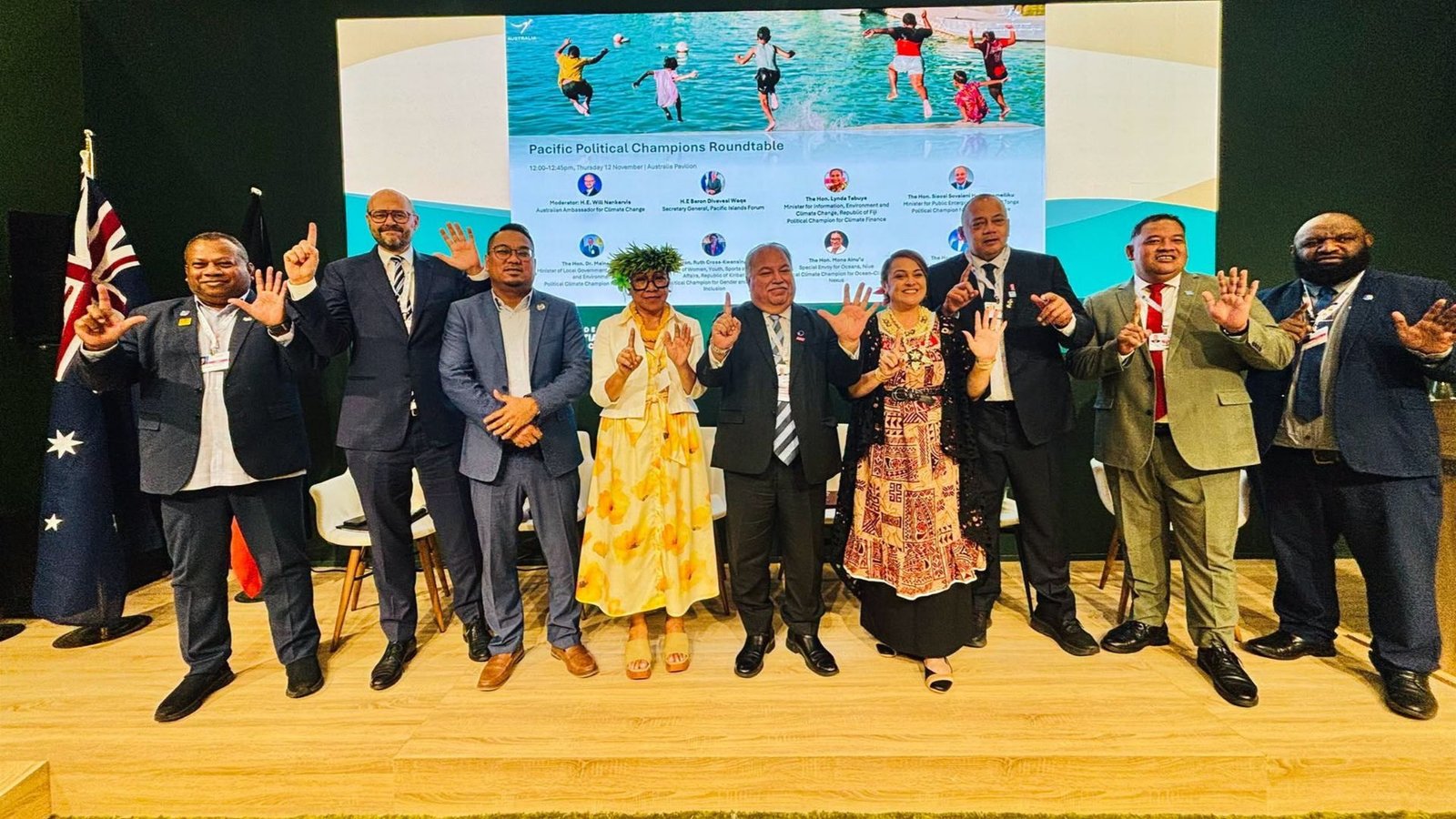
Speakers take part in a session at the Pacific Pavilion where island nations are sharing their experiences and solutions to the climate crisis. Photo/Facebook/Fiji Ministry of Environment and Climate Change
Gasper says Pacific countries have plans for adapting to climate change but lack the money to put them into action. “We have the plans in the Pacific. We just need the funding.”
Tuvalu Prime Minister Feleti Teo has put a more specific figure on one of the region’s needs, calling for US$160 million (NZ$289.44 million) to strengthen weather forecasting and early warning systems across the Pacific.
His message is that having an early warning system on paper is not enough.
“We must plan for the full life of our investments, not just the day they are installed.”
For remote islands, that means keeping equipment working, maintaining communications and having people with the skills to repair systems when they fail.
“For Tuvalu and our Pacific family, resilience is about whether our people have time to protect their families, livelihoods and communities before danger arrives,” he says.
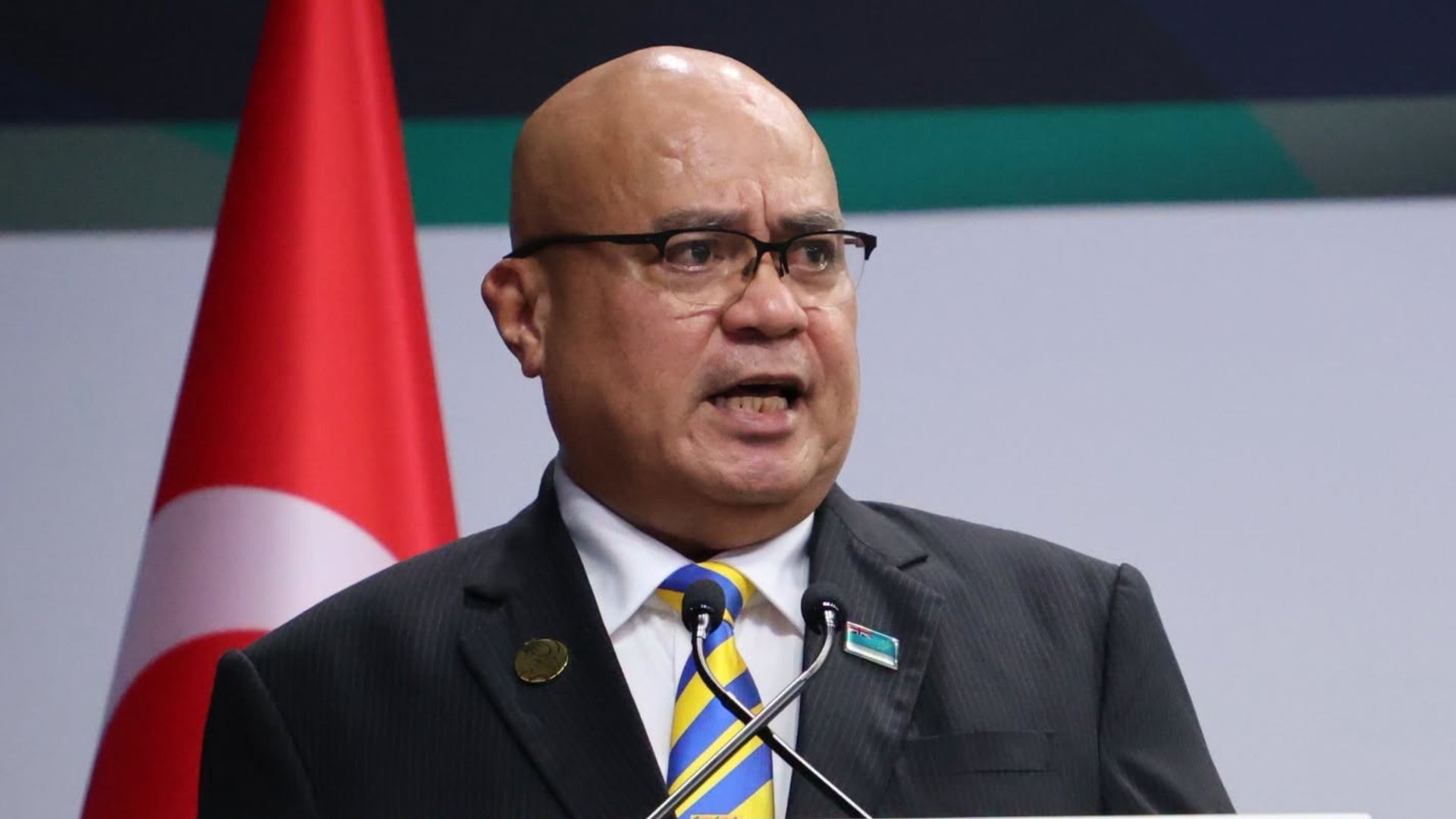
Tuvalu Prime Minister Feleti Teo calls for climate commitments to deliver practical support for Pacific communities. Photo/Facebook/Pacific Islands Forum
And Teo has also challenged the way the world talks about the people already doing much of the work of adapting.
He says women in Pacific communities are managing water, food, reefs and household needs while men and young people are also helping communities respond to a changing climate.
“Calling our people agents of change gives no one the right to ask them to carry more. They did not cause this crisis.”
Teo’s message to the negotiators is blunt. “They are already doing their share of the transition. They deserve to hear what this Conference committed to put in their hands. Give me something to tell them.”
Kiribati’s Minister of Women, Youth, Sports and Social Affairs, Ruth Cross Kwansing, has taken that argument further, calling for climate finance to reach women-led and community organisations and not just stopping at national and international levels.
She says the Pacific’s new regional work on gender and climate change needs to move from agreement to implementation.
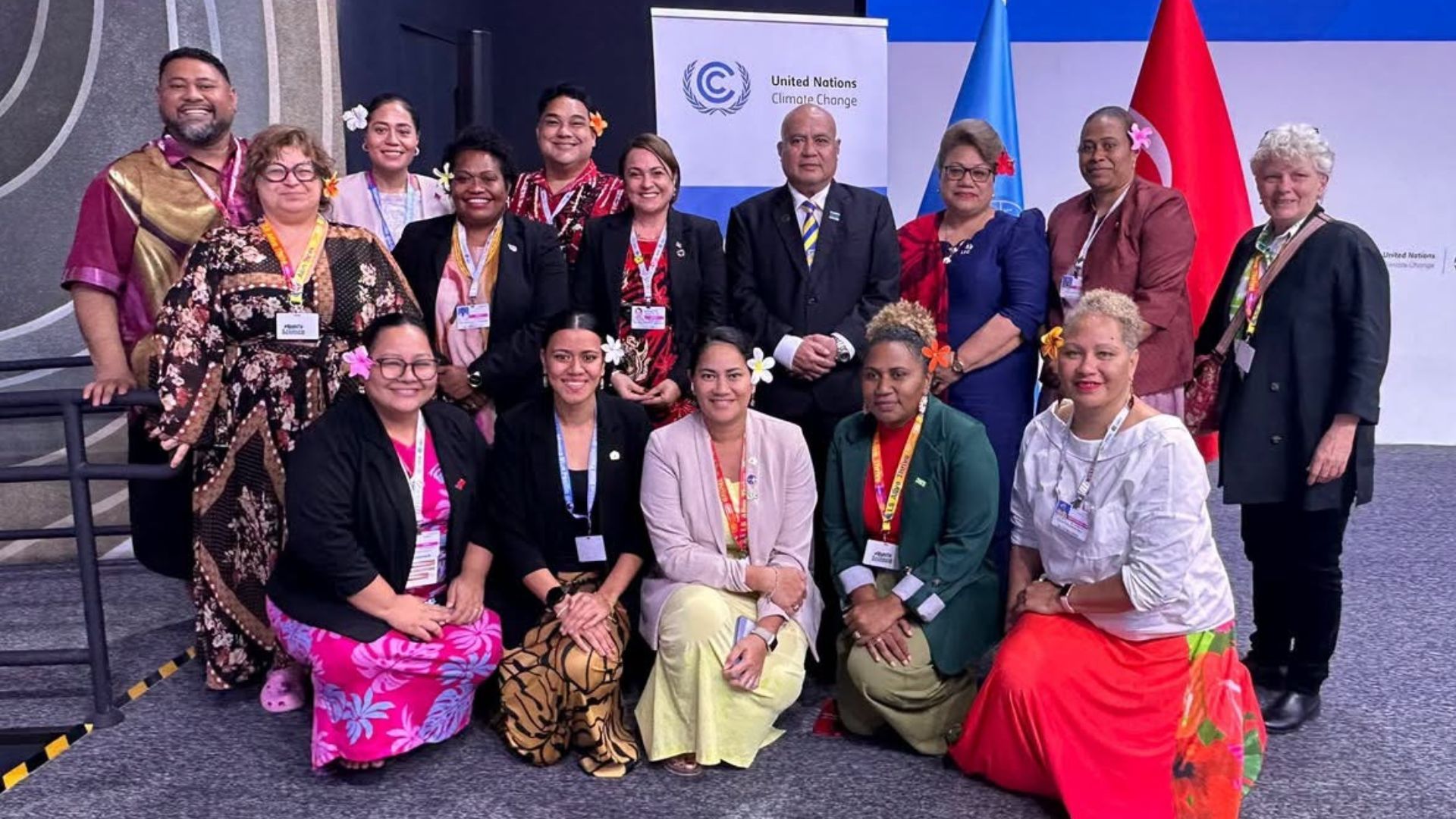
Pacific leaders join women delegates and representatives to highlight the growing role of women in shaping the region’s climate response. Photo/Facebook/SPREP
“This is the workstream that starts to happen now and it’s really exciting. It’s the thing that we’ve all been asking for for many, many years.”
Kwansing says the next step is about resources and power as much as policy.
“This is where our women leaders and our women in communities are really gonna see some wind under their wings to move forward, and with that I think we’ll start to see some real change.”
Vanuatu and Solomon Islands have brought the same focus on local communities to COP31.
At a Pacific-led event in Antalya, Vanuatu’s Climate Change Minister Ralph Regenvanu argued that communities already have many of the answers to the climate challenges they face.
The message from the two countries was that global promises need to be matched by local delivery with communities given a real say in how adaptation money is used.
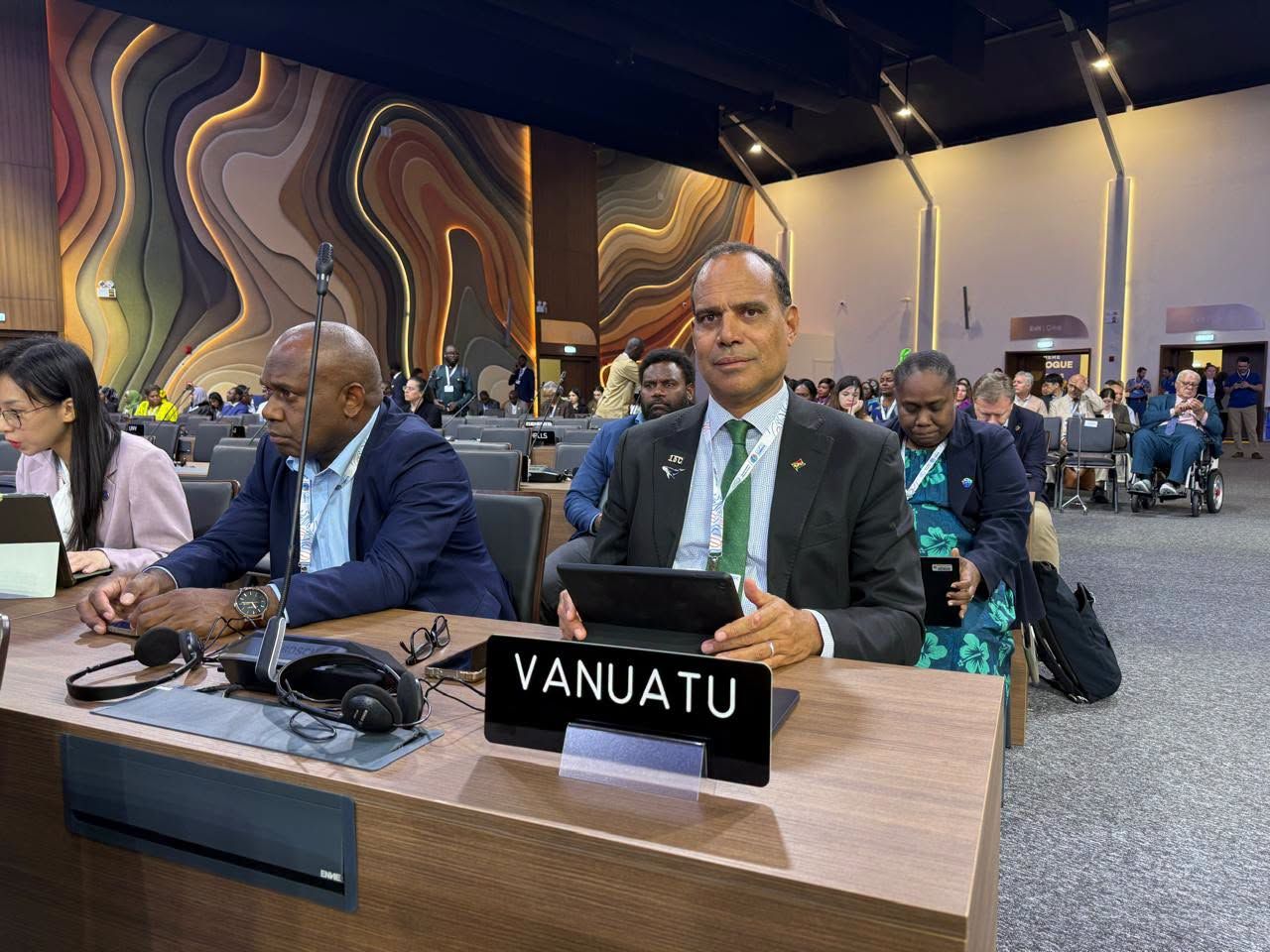
Vanuatu Climate Change Minister Ralph Regenvanu highlighted Pacific-led solutions and the need for climate action to reach local communities. Photo/Facebook/Department of Climate Change
Projects in Vanuatu and Solomon Islands are already supporting climate-resilient farming, water security, renewable energy, stronger schools and local disaster planning.
The lesson, officials say, is not to design one solution for every island.
Pacific communities are combining traditional knowledge, local priorities and climate science to decide what works for them.
That approach also exposes one of the biggest problems facing the region: the cost and difficulty of getting climate finance to remote communities.
Pacific countries face high transport costs, small administrations and limited capacity to manage complex funding systems.
The call from Antalya has therefore been for finance that is more flexible, predictable and easier for local communities to access.
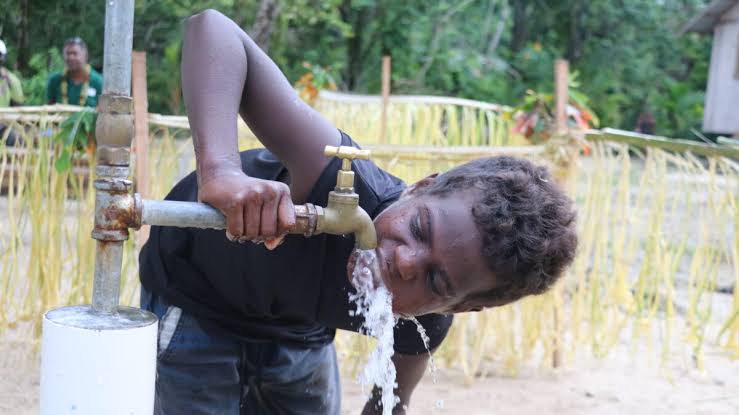
Pacific communities are facing growing pressure on water supplies as drought and changing rainfall patterns affect islands across the region. Photo/Solomon Islands government
Kwansing says the same principle should apply to gender-responsive climate finance.
“For SIDS, this means adequate, predictable and accessible finance, including grant-based and highly concessional resources, together with technology and sustained capacity-building.”
The Pacific is also leaving COP31 with a stronger focus on the ocean.
The region has pushed for the ocean to be treated as central to climate action because its communities depend on marine ecosystems for food, jobs, government revenue and protection from climate impacts.
But the message from Pacific delegates is that recognition alone is not enough.
Watch highlights of the opening of the Pacific Pavilion at COP31 below.
The next test will be whether commitments made in Antalya turn into money, working systems and projects that people can see and use.
For Tuvalu, the measure is simple: communities need to know what they are getting from the promises made in the conference halls.
“When I return to Tuvalu, the next king tide will already be on its way,” Prime Minister Teo says.
That is the Pacific’s challenge as COP31 closes, he adds: the negotiations may end in Antalya but the climate crisis does not. The work now moves back to the islands, Teo says.
COP31 ends on Friday 20 November. Ethiopia will host the following summit, COP32, in Addis Ababa from 8 to 19 November 2027.