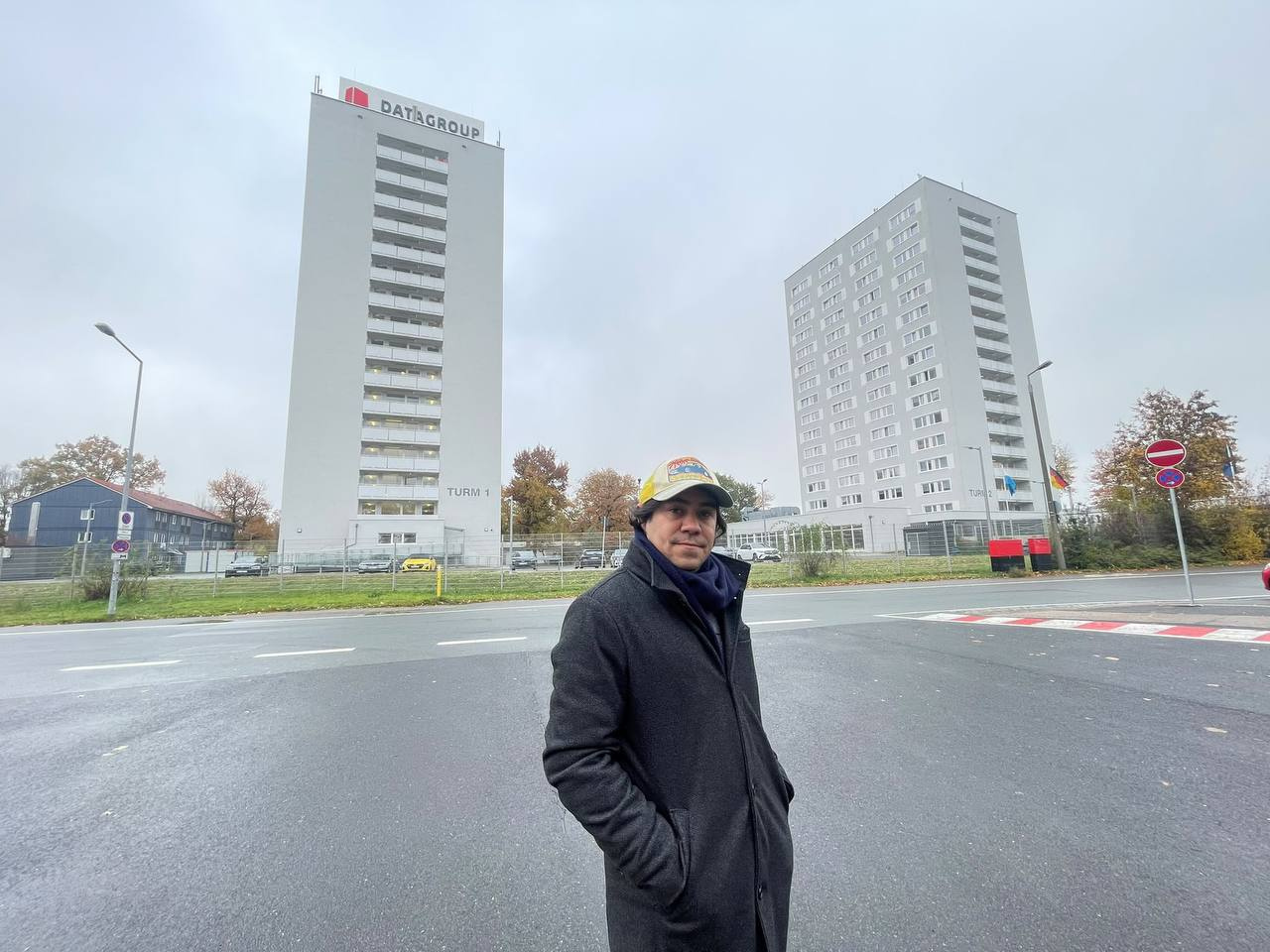
Madrid/The Cuban visual artist Hamlet Lavastidawho resides in Germany after being exiled by the Cuban regime in September 2021, now officially has refugee status in Germany. He obtained it on October 21.
For the artist, this recognition represents a turning point after “five long years that seem like ten,” he tells ’14ymedio’ by telephone. “I finally manage to have a State behind me that can provide me with documentation. From now on I can access at least one travel document, a passport under the 1951 Geneva Convention,” he explained.
Beyond the document and free mobility in the European Union, Lavastida highlights the institutional support in the face of previous helplessness: “By imprisoning me in 2021 without any motivation, the Cuban State was basically saying that it was denationalizing me, through law and exile.”
“By imprisoning me in 2021 without any motivation, the Cuban State was basically saying that it was denationalizing me, through law and exile”
During recent years, the creator resided in German territory through temporary permits linked to scholarships and artistic projects. However, last July he formalized his request for international protection due to the risk of persecution and reprisals by the Cuban State if he returned to the Island.
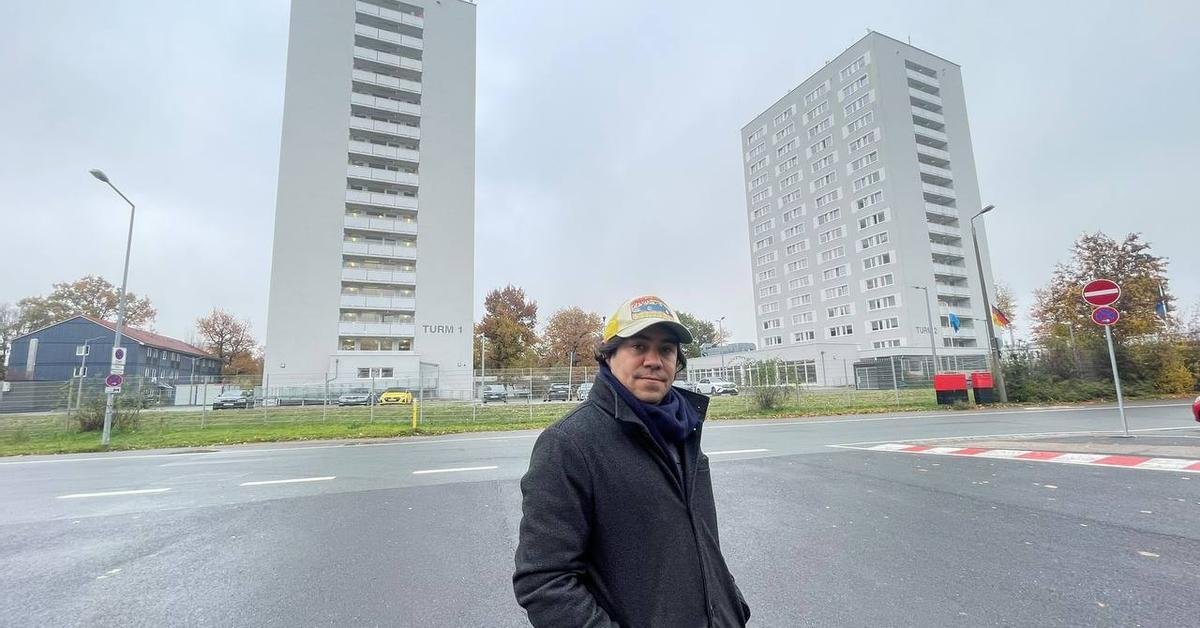
Lavastida is currently in a reception center in Nuremberg, waiting to complete the final administrative procedures, scheduled until January 11, such as the issuance of her residence card and the linking of her health insurance to refugee support institutions.
Upon receiving the news, the first thing he did was tell his partner, a young Cuban who is currently in Spain in a similar immigration situation. “It is very good news because it can mean our soon union, seeing each other again,” he said, describing the ruling as a relief from “the burdens of exile.” However, he admits that the imprint of authoritarianism persists psychologically: “Totalitarianism transcends the conditions of space-time, sleep and wakefulness. Although my psychology always tries to suspect the State, in Germany I see a concrete form of protection within the rule of law.”
The 43-year-old artist from Havana was expelled from the country after spending 87 days in prison after being arrested in June 2021 in Havana, a week after returning from an artistic residency in Berlin. His stay in prison took place in Villa Marista, headquarters of the Political Police in the capital, after being investigated for proposing in a private Telegram chat to mark bank notes with logos of the San Isidro Group and the 27N movement.
“I live the distance with nostalgia, sadness and restlessness, searching in the rain of the European summer for something that reminds me of Cuba”
Since then, he has not seen the sea again. “I left Cuba in 2019 and, although I returned in 2021, it was not in civic conditions. I went from the airport to a medical institution controlled by the military and then to Department 10 of Villa Marista until they exiled me; I could not set foot in any civil institution or see the sea,” he says.
From a distance, 80% of his daily thoughts revolve around the Island, its history and the fragility of its democratic aspirations. “I miss a life that I know will not return, friends that are no longer here, my house, my brother, my mother. I live the distance with nostalgia, sadness and restlessness, searching in the rain of the European summer for something that reminds me of Cuba.”
When evaluating the country’s evolution since his departure, Lavastida is blunt: “Objectively and practically, Cuba has changed for the worse.” It describes an “institutional debacle” and a humanitarian crisis marked by a devastated infrastructure, the collapse of the health and educational system, mass exodus and galloping repression under what it defines as “a military junta disguised as the Communist Party and vice versa.”
As the only positive counterweight, it identifies the breakdown of the official consensus and an “involuntary deinstitutionalization” of the regime. “Discontent has increased and there is a real perception of the failure of the communist political administration. Both in exile and within the Island, the debate has grown about the regime’s inability to control citizens and its own institutions,” he says, convinced that this wear and tear will end up causing a fall or a radical mutation, although he warns that “now is not the time” and will require time and will, both internally and internationally.
“The repression in Cuba is specific, direct and ends in the physical violence that entails imprisonment and the horrors inside prison”
Regarding the medium and long-term future of the creators who remain in Cuba, the panorama it draws is one of extreme vulnerability due to the “iron control of the cultural establishments” and the restrictions on freedom of expression. As an example of “judicial farces” (which he prefers to call “trials”, Soviet style), he mentions the recent cases of the influencers and content creators Ernesto Medina and Kamil Zayas, from El4tico, and Eddy Ceballos, creator of Despingovery Channelin addition to the situation of protesting musicians and artists like Maykel Castillo Osorbo.
“The repression in Cuba is specific, direct and ends in the physical violence that entails imprisonment and the horrors inside prison,” he maintains. Although he assures that in private many artists on the Island are increasingly critical, fear and skepticism paralyze open protest. However, he perceives an accumulation of underground unrest: “There is a silent layer that has grown a lot. There is like a great magma down there that is about to explode into a volcano of creative disobedience towards oppression.”
The career of Lavastida, awarded in November 2022 with the Freedom of Expression in the Arts award Index on Censorshiphas maintained a constant pulse with Cuban political memory. Last January, he even publicly identified the State Security officer who arrested him, interrogated him in Villa Marista and took him to the exile plane, pointing out that the same agent has visited his mother to warn her about the consequences of an eventual return.
This obsession with archives and ideological control mechanisms articulates your next project: Mea Culpaan exhibition curated by Marco A. Castillo that will open on November 24 in Mérida, Yucatán (Mexico).
The exhibition brings together four works of hand-drawn text on paper that reproduce letters of self-criticism and public self-incrimination from figures who were part of the revolutionary system and ended up devoured by it. Among them are Aníbal Escalante, a former communist official tried by the Party’s Central Committee in 1968, and the poet Heberto Padilla, whose 1971 letter of self-incrimination was circulated in English through the cultural bulletin of the Cuban embassies. The set is completed with the testimonies of Major General Arnaldo Ochoa Sánchez and Interior Ministry Colonel Antonio de la Guardia, subjected to a televised trial during Case 1 and shot on July 13, 1989.
“They are portrait letters that try to understand the psychological, social, political and physical decomposition of an individual before the State,” explains Lavastida. The exhibition is completed with twelve small hand-drawn pieces with views of renovated prisons and two video animations about Cause 1 of 1989.
For the artist, manual work with knives, paper, drawing and collage It is also an aesthetic statement about the precariousness and analog materiality that still defines the circulation of information and politics in Cuba. “It is a very historical and political exhibition, but also about my own life, because ultimately I also ended up in these same corridors of repression in which these individuals ended up,” he concludes.