The courses started on November 8 and the closing tests were scheduled for April 29

father-in-law
Expressiveness
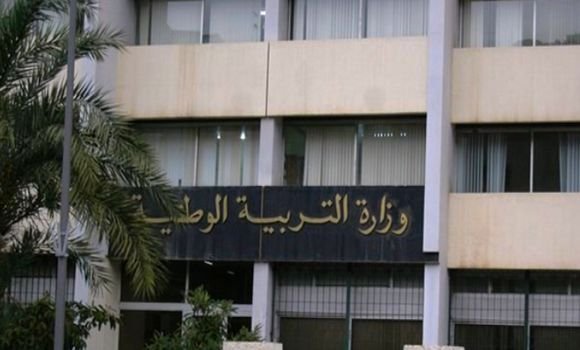
The Ministry of National Education, through its state directorates, has begun implementing the innovative plan for the new training year, whereby its employees at 15 higher ranks will be subjected to two training tracks, namely, “specialized training for promotion” and “pre-promotion training,” with a maximum hourly rate of 420 hours and a minimum of 336 hours.
In this regard, the trainees will benefit from theoretical lessons that extend over 6 periods, starting on November 8 and ending in April 2027, and will receive practical lessons that begin on November 22 and extend until April 15, so that the curtain will come down on the process by programming the “end of training” exams during the next April and May, and those concerned will be obligated to return to their original work positions immediately after the end of each in-person training period.
In detail, Al-Shorouk sources highlighted that training at the level of the National Institute for Training Educational Employees and Improving Their Standards was launched on November 2, while courses at the National Institutes for training education sector employees began on the 8th of the same month, in compliance with the provisions contained in Ministerial Circular No. 437 dated October 27, 2026 regarding the organization of the 2026/2027 formative year.
8 ranks concerned with specialized training for promotion
From this standpoint, our sources pointed out that a commitment has been made to implement the training calendar and map approved during the national forum held on the 24th and 25th of last October.
Therefore, it was decided to adopt two basic training tracks, namely “specialized training for promotion,” which targets employees concerned with promotion to higher ranks according to organizational conditions. This includes primary school principals, middle school principals, and high school principals, in addition to the ranks of primary education inspectors, in the subject specialty and primary school management, middle education inspectors, in the subject specialty and middle school management, secondary education inspectors, in the subject specialty and secondary school management, school and vocational guidance and counseling inspectors, as well as financial and material management inspectors.
These ranks are concerned with training before promotion
As for the second track, the same sources indicated that it concerns “pre-promotion training,” and is directed to employees whose promotion requires completing “qualifying training” before joining the targeted ranks. It will affect a number of educational supervision and administration ranks, including education supervisors, main education supervisors, and general education supervisors, in addition to four other ranks. This concerns the responsible deputies, the responsible deputies in charge, the main laboratory attachés, and the laboratory attachés.
Regarding the hourly volume and duration of training, the same sources showed that directors of educational institutions and inspectors receive 420 hours of training over the course of eight weeks. While main supervisors, general supervisors, and deputy supervisors will benefit from 400 training hours, while education supervisors, main attachés to laboratories, and deputy supervisors will receive 336 training hours.
Theoretical training distributed over 6 periods and practical training over 8 weeks
As for the part of the theoretical training schedule for directors of educational institutions, our sources explained that it extends over six periods, with the first starting from the 8th of November until the 19th of that month, while the second starts from the 6th of December until the 24th of that month, with the third period of training being programmed starting from the 3rd of next January until the 14th of the same month.
Regarding the fourth training period, it will start from January 24 and extend until February 4, 2027, with the fifth period starting next March 21 and concluding on April 8, with the sixth period being scheduled from April 18 to April 29.
While the applied training extends over a period of eight weeks distributed over five periods, the first period begins on November 22nd and continues until next December 3rd, and the second period starts from December 27th until next 31st, while the third period is programmed for next January 17th and extends until the 21st day, then the fourth period comes on February 14th and continues until March 4th, provided that the process concludes with the organization of the fifth period of the course, starting from April 11th until April 11th. 15 of it.
Clarifications about final exams
Regarding the “end-of-training” exams, our sources highlighted that the candidates who benefited from the specialized training for promotion will pass the exam in the period from 02 to 6 May next, provided that the tests are programmed for the benefit of the candidates who benefited from the “pre-promotion training”, starting from the 25th of next April until the 29th.
In conclusion, our sources confirmed that the trainees are obligatorily required to follow a set of new arrangements and implement them on the ground, and the matter relates to the compulsory return to their original work positions immediately after the end of each in-person training period, in addition to not considering the periods between training courses as an exemption from performing job tasks, in addition to organizing applied training at the level of educational institutions according to the “group system.”
In addition, the competent departments are called upon to take into account the place of residence of employees when determining the institutions receiving training, for those not responsible for management, in addition to the continuation of practical training during school holidays, given that educational institutions continue their administrative activity during these periods, with the importance of entrusting the education directorates of the states to follow up on the implementation of the program, coordinate with the training institutions, and address organizational difficulties.