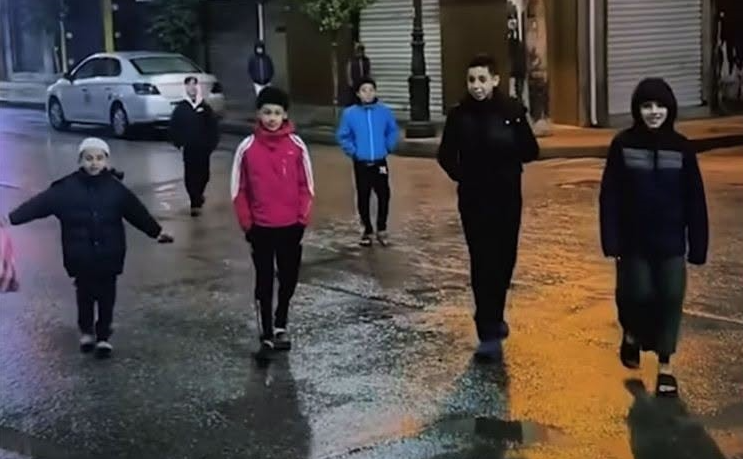
The controversy over taking children to mosques to perform prayers in the early morning hours has escalated, in an issue that has become known in the media and on social media platforms as “the men of dawn,” after the discussion moved from the virtual space to the legislative institution.
In detail, Representative Omar Muammar directed, A written question to the Minister of Justice, Lotfi Boudjemaa, About the legal ramifications of statements and campaigns criticizing these religious and educational initiatives.
The parliamentarian relied on the provisions of the Algerian Constitution, especially Article 2, which stipulates that Islam is the religion of the state, in addition to articles related to the protection of national identity and the religious constants of society.
The question addressed what the representative considered an increase in speeches, media content, and publications across social media platforms, criticizing the phenomenon of taking children to mosques and performing dawn prayers, as well as initiatives that encourage young people to Memorizing the Holy Qur’an and frequenting the houses of God.
He pointed out that some of these contents, according to what was stated in his question, describe these educational and religious initiatives in negative terms, and link them to concepts of extremism or harming childhood innocence, which sparked dissatisfaction with a segment of citizens and guardians who view the mosque as a space for education, moral upbringing, and the promotion of religious values.
He added that those with critical opinions believe that the discussion falls within the scope of freedom of expression and expression of opinion regarding methods of raising children, and the extent to which their safety and needs are taken into account, especially when taking them to mosques in the early morning hours.
The representative asked the Minister of Justice to clarify the legal status of media statements and campaigns targeting the ritual of prayer and attending mosques, and the extent to which some practices can be subjected to accountability in accordance with the provisions of the Penal Code and the Media Law.
The parliamentarian’s question was not limited to the theoretical legal aspect, but rather extended to inquiring about the measures that the Ministry of Justice and the Public Prosecution can take in such cases, whether based on complaints submitted by those concerned, or through automatically filing a public lawsuit when the legal conditions for that are met.
The representative also requested clarification regarding the legal mechanisms available to control media and digital discourse, ensuring respect for freedom of opinion and expression on the one hand, and protecting the religious authority and constitutional constants of Algerian society on the other hand.
The accountability came in the wake of the escalation of criticism and controversial statements on social media platforms, which targeted the “Men of Dawn” initiative, and included skepticism about the educational role of mosques and imams in raising children, and even went to portray taking children to perform dawn prayers as something that threatens their safety.
It is mentioned that The Independent National Council of Imams Employees of the Religious Affairs and Endowments Sector previously condemned statements and positions critical of initiatives to take children to mosques to perform the dawn prayer, considering that encouraging young people to visit the houses of God and consolidate their religious values falls within the educational efforts aimed at raising them in morals and virtue.
The “Men of Dawn” initiative is no longer just a limited local activity, after it has turned into an educational experience that has spread widely inside and outside Algeria. It was launched with the participation of children who were accustomed to waking up to perform the dawn prayer in congregation in mosques, before the idea spread to other states and received remarkable interaction on social media platforms.
The initiative also received praise from the International Union of Muslim Scholars, which described it as a blessed educational experience that deserves to be spread throughout the countries of the Islamic world, given the spiritual and educational meanings it carries, and the strengthening of children’s connection to mosques from a young age.