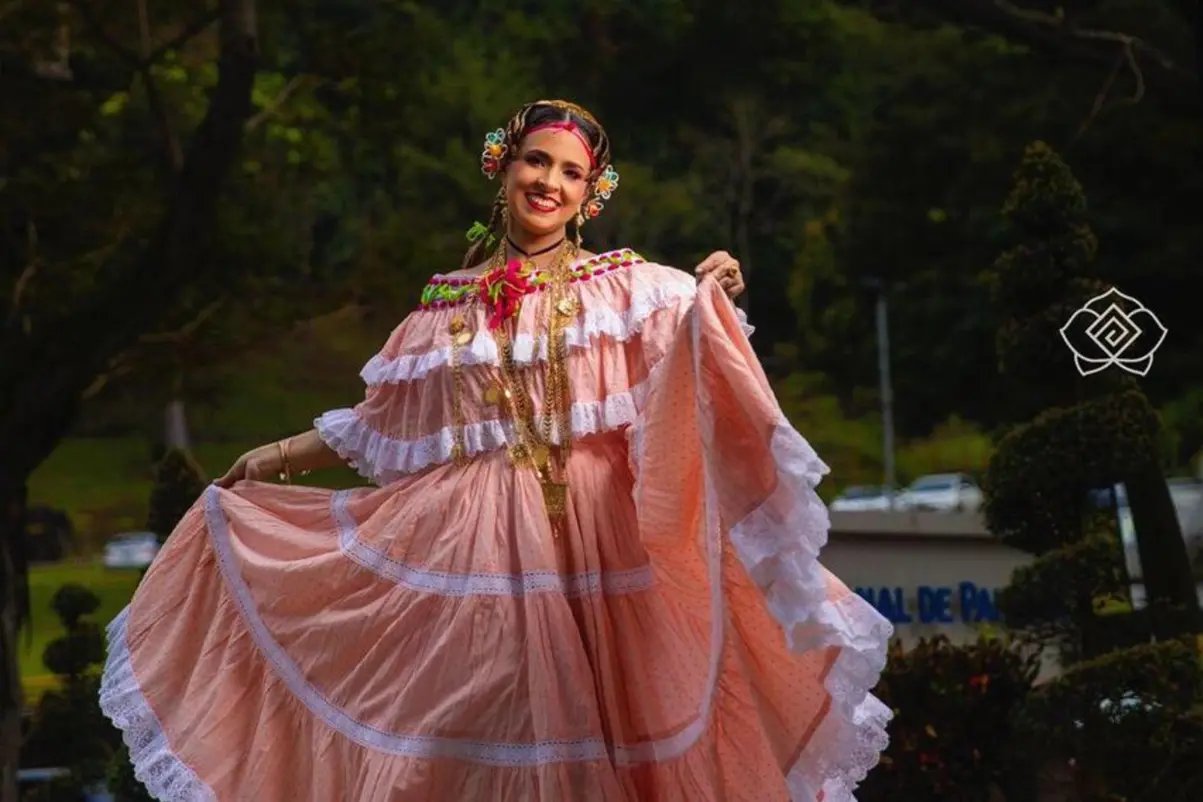
In the province of Veraguas, where folklore studies document up to 21 different traditional clothing, The regional skirt retains a three-section skirt, a zigzag grating of two colors and a palette of pastel tones that separate it from others typical costumes of panama in the face of the growing influence of styles such as Santeño, as revealed by historical and technical records compiled by sector specialists.
The analysis of this clothing is based on field work accumulated for more than two decades by Eduardo Cano, graduate in Art History from the University of Seville, master in Flat Weaves from the Complutense University of Madrid and author of eleven publications on Panamanian clothing.
In conversation with The Star of PanamaCano pointed out that the Veragüense suit faces the greatest cultural shocks in the country in terms of preparation and selection of materials, due to a phenomenon that he defines as “santeñism” and which consists of the adoption of aesthetic elements typical of the Los Santos region in other provinces as if they belonged to their local heritage.
To understand these differences, it is convenient to specify the two aspects of the pollera in Veraguas: the gala and the montuna.
While the gala version responds to ceremonial acts through the use of fine fabrics and specific dressings, The montuna constitutes the work suit or festive everyday wear, made with printed fabrics and less jewelry.
In both cases, however, the structure of the dress obeys cutting and assembly rules that are not repeated in other areas of the isthmus.
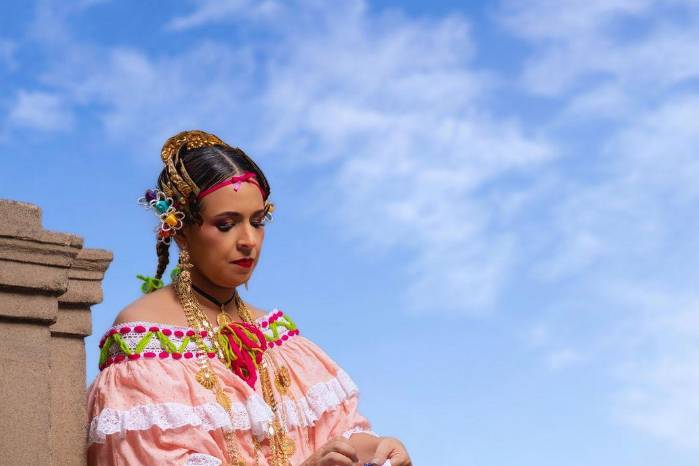
The gala skirt with its two-color zigzag mesh and a sober headdress composed of gold combs and natural buds, dispensing with openwork and fancy lace.
The most decisive distinction compared to the rest of the polleras in the country lies in the composition of its skirt, called pollerón.
While in other regions the skirt is usually divided into two horizontal bodies, the Veraguense pollerón records the use of three tucos or sections, a configuration that Cano identifies as “unique in the country”pointing out the royal pollerín of La Chorrera as the only technical exception, although it clarifies that in Veraguas the habitual use of two sections is also documented.
This geometry finds direct support in local workshops.
In interview with The Star of Panamathe artisan Rosario N. De Montenegro —trained under the guidance of teachers such as Diamantina Herrera, Amanda de Villarreal and Belkis Vargas, and whose work focuses on “preservation of traditional use”— confirmed that in the Veragüense montuna pollera the skirt is invariably constructed with “three tucos divided into equal parts.”
Added to this are two technical absences that distinguish an authentic piece from patterns from other provinces: according to Montenegro, this skirt “does not use pecillo He doesn’t even have the braid of the tapabalazo.”excluding both the intermediate band that joins sections in other costumes and the lace that covers the front opening of the skirt.
The contrast with the Santeña gala skirt deepens when examining the needlework.
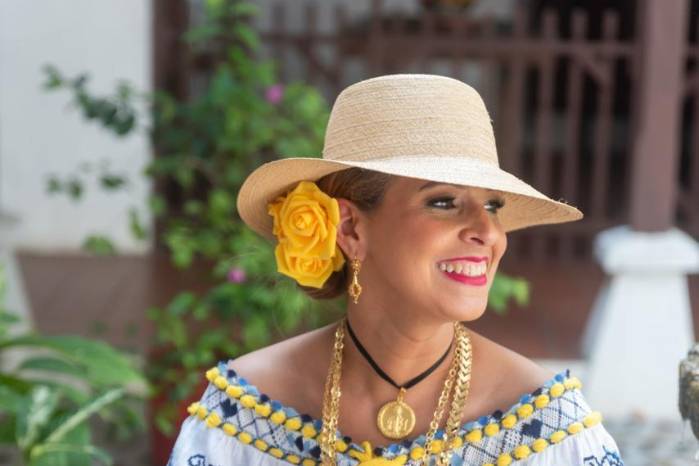
Unlike the clothing of Veraguas, the Santeña gala skirt is characterized by the predominance of white, the use of openwork work, artisan braids and a greater profusion of tembleques and chains in its dressing.
Cano stressed that the Santeña skirt is the “the only one in Panama that uses handcrafted openwork and braids”techniques based on unraveling the fabric or weaving complex lace using bobbins.
In opposition to Azuero’s display of white lace, the veragüense skirt dispenses with openwork and supports its visual identity in the drape of its fabrics and a defined color range.
In terms of colors and materials, the historical records of the Veraguense gala document the predominance of pastel tones in silk – pink, white, yellow and beige – a tradition that after a period of disuse during much of the 20th century was recovered from the 1970s.
Montenegro confirmed to this medium that pastel colors constitute the traditional norm that separates the Veraguense gala from the Santeña one, although it recognized “isolated cases where other colors are used.”
In contemporary practice, the textiles used for the gala include speckled lawn, industrial coquito, volié—bual or gual—and printed fabrics, genres that the artisan described as “very beautiful and fresh.”
For the montuna, on the other hand, the canon requires fabrics with small flowers on a plain background on the skirt and white shirt.
Faced with these criteria, Cano warned about the introduction of materials without historical support in the province, such as satin, organza, fabrics with perforations and red or brown backgrounds.
According to his diagnosis, these alterations respond to three factors:
1- The search for “what is beautiful”, understood as the preference for attractive inputs but unrelated to regional history.
2- The “cheap” argument, which uses savings as a pretext despite the fact that Panama registers 104 variants of traditional clothing accessible without counting indigenous costumes.
3- The impulse of “the merchants”, who offer non-traditional materials for commercial interest.
Another distinctive feature lies in the grating, the wool cord that runs along the neckline of the shirt.
While in other provinces linear or monochromatic designs predominate, in Veraguas it is woven in zigzag using contrasting colors with the base fabric.
Montenegro explained that executing this two-color grating takes “a few minutes” and is complemented on the back with matching pennants with the same tones.
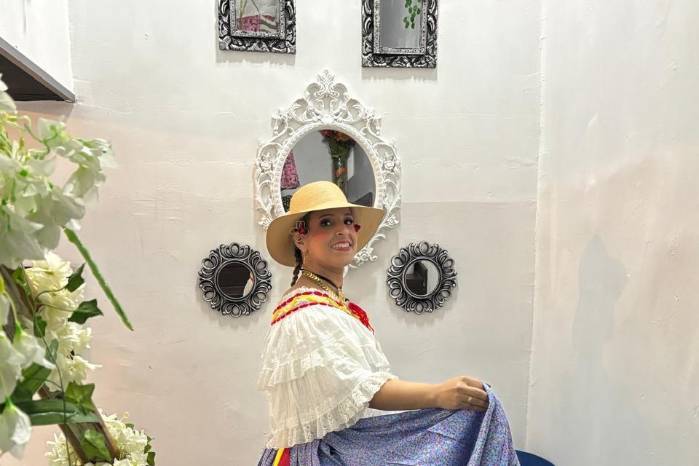
Conceived as work clothing or festive everyday wear, the Veraguense montuna pollera combines a white shirt with a skirt made of fabrics with small flowers on a plain background, divided into three equal sections and accompanied by a light jewelry decoration.
Regarding sewing and costs, the artisan indicated that in Veraguas “It is allowed to make the hems by machine and their bobbins and joints can be done by hand”although making the piece entirely by hand gives “an added bonus when competing for a skirt.”
While a gala skirt in other provinces can cost between 2,500 and 25,000 balboas. or more depending on his drafts and world, Montenegro pointed out that in his workshop the hand of artisanal work starts from 750 balboas, varying the final price depending on the fabric and lace chosen.
Finally, the Veraguense headdress dispenses with dozens of tremors to opt for a sober composition.
Montenegro claimed to have observed “from three pairs of balconies onwards”, within a traditional range of one to six pairs of gold combs, accompanied by the comb, the comb holder and the comb “steals hearts”typical of the region, combined with natural blossoms, a detail that is considered the most authentic.
On the chest, limited garments are worn such as the flat chain, the Rosary, the scapular, the guate flower brooch, the bone cap and earrings.
This jewelry allows Cano to refute the myth that Veragüense women did not wear shoes due to precariousness, pointing out that anyone who could afford up to six pairs of combs could purchase footwear.
For the researcher, the skirt “It’s not elitist, it’s the people”so the festivals must act as guardians of the heritage while the workshops work so that, as Montenegro expresses, in every Panamanian home there is a family trunk of skirts.