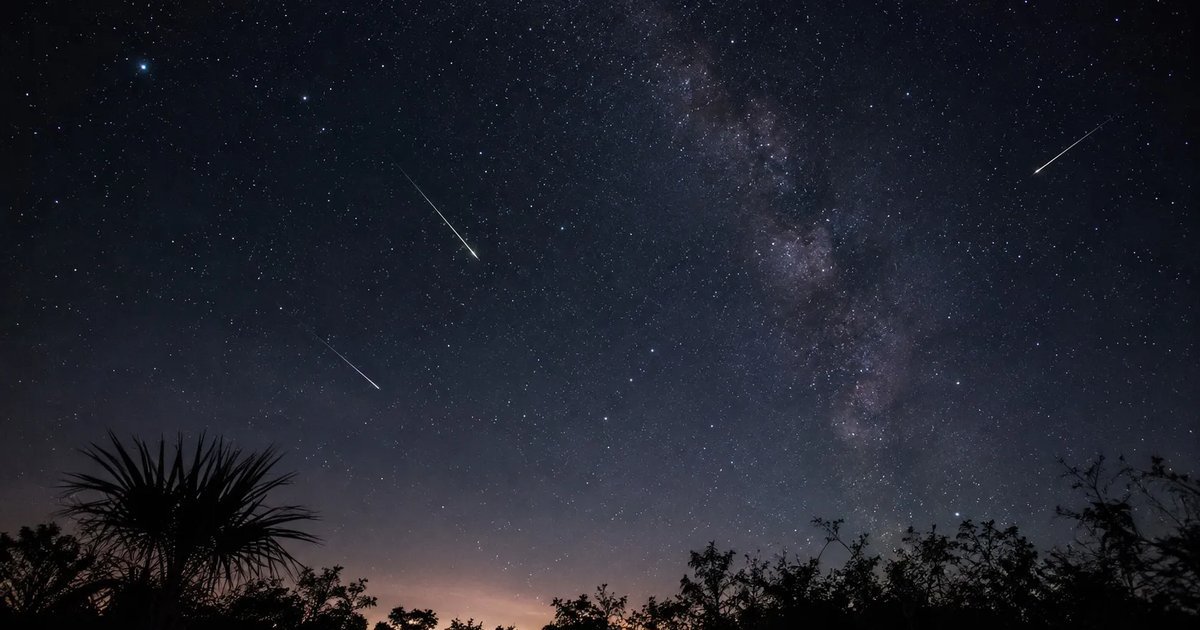
The Leonids are a meteor shower that occurs annually in mid-November. and this 2026 it will reach its peak during the night of the 17th to the 18th. Associated with the remains left by the comet 55P/Tempel-Tuttle As they orbit around the Sun, these meteorites owe their name to their point of origin: it is located near the constellation of Leo.
NASA explained that the Leonids are also known for his fireballs and meteorites that graze the Earth. Fireballs are larger explosions of light and color that can persist longer than the average meteor trail. This is because fireballs originate from larger particles of cometary material.
On social media, the Leonids are famous for being some of the fastest shooting stars: They travel about 71 km per second. Fireballs are also brighter, move closer to the horizon, and have long, colorful tails.
Where and when to see the Leonids in Venezuela?
The meteor shower can be observed throughout the territory of Venezuela. However, the areas that will be best appreciated will be those far from the light pollution characteristic of cities.
It is recommended to go to open places that have dark areas. For example, the surroundings of the National Astronomical Observatory of Llano del Hato in Mérida or areas natural and beaches.
To observe the Leonids, look towards the east or northwest, looking for the constellation of Leo in the sky. The ideal time to observe them will be between 2:00 am and 5:00 amjust before dawn.
Tips to see them
The Leonids are best observed after midnight. Below a series of recommendations to enjoy them:
- Find an area away from the city or light pollution.
- Go prepared for the cold temperatures at night.
- Point your feet towards the east, if possible lie on your back.
- Wait 30 minutes for your eyes to adapt to the darkness.
- Be patient, the show will last until dawn.
Where do meteorites come from?
Leonid meteorites come from leftover comet particles and broken asteroid fragments. As comets circle the Sun, the dust they emit gradually spreads in a dusty trail around their orbits.
Every year the Earth passes through these debris trails, allowing these fragments to collide with the atmosphere. There they disintegrate to create fiery and colorful trails in the sky.