Political polarization, the gaps between Lima and the regions, and the State’s difficulties in executing public investment will be some of the central themes of the 64th edition of CADE Executiveswhich will take place from November 24 to 26 in Cusco. Under the motto “United to Advance”, the meeting organized by IPAE Business Action will seek to bring together representatives of the public and private sectors, regional authorities and specialists to discuss how to convert the country’s potential into growth opportunities.
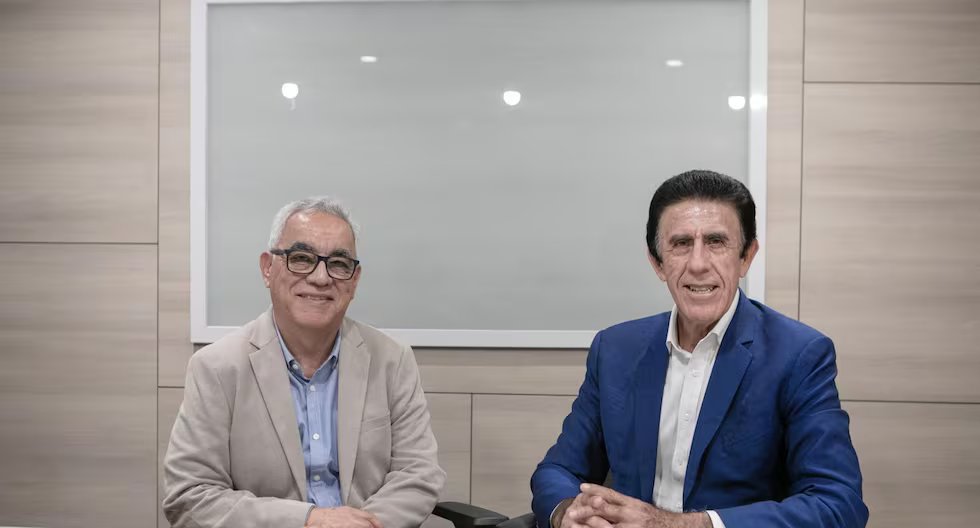
Rolando Arellano, businessman and president of CADE Executives 2026, and Gonzalo Galdós, president of IPAE Acción Empresarial, explain what commitments the different actors should assume to promote the development of Peru.
-The motto of this edition of CADE is “United to Advance”. Why did you choose this message and what would have to happen for this unity to translate into concrete decisions for the country?
Rolando Arellano (RA): We are in a moment of important changes, there are new authorities at different levels of government and transformations in the geopolitical and technological scenario. This generates an expectation of openness, as if we were facing the possibility of a new beginning. Furthermore, macroeconomic conditions are adequate. We believe it is a good time to think beyond the development model we have had until now.
Gonzalo Galdós (GG): In recent years we have experienced political polarization in which each group considered that it had the solution for the country and that the adversary could not execute it. We have challenges in security, justice and education, in addition to the risks associated with the El Niño phenomenon. We need to put aside personal and partisan interests to build a space for collaboration. “United to Advance” expresses the will of IPAE and CADE to promote basic agreements and a shared vision of the country.

Rolando Arellano, businessman and president of CADE Executives 2026 and Gonzalo Galdós, president of IPAE Acción Empresarial | Photo: Julio Reaño
-How did you build the agenda for this edition and what topics did you decide to put at the center of the discussion?
RA: We want a practical and business agenda, aimed at finding solutions. First we will make a diagnosis of the economic, social and political situation of the country, as well as the international geopolitical scenario. The central block will be focused on bringing together different actors to talk about development, especially in the regions. If we want the country to grow, all its territories have to grow. That is why we call on representatives of the productive and essential sectors, regional businessmen, the 24 chambers of commerce and elected regional authorities. The idea is that they explain what they need and what opportunities they identify, and that business owners propose how they can contribute.
-What do you expect from the Executive and Legislative authorities that will participate in CADE?
RA: We don’t want them to come only to receive complaints or requests. We expect better conditions of infrastructure, education and services, as well as fewer procedures to facilitate productive activity. But we also want to consider how we can collaborate with the authorities. There are mechanisms such as Works for Taxes and public-private partnerships (PPP). The private sector can offer its collaboration and ask the new authorities what they need from companies.

Rolando Arellano, businessman and president of CADE Executives 2026 | Photo: Julio Reaño
-Which authorities have already confirmed their participation in the event?
GG: With the exception of the president, whose participation is not confirmed for security reasons, the representatives of the Executive and Legislative Branch have already confirmed their attendance. This edition may mark a turning point. On the one hand, there is the possibility of bringing together the different actors. On the other hand, confidence and private investment show high levels compared to recent years, with projects that are already being completed. This represents a responsibility for companies in generating formal employment.
– They have indicated that CADE seeks to be a space for proposals and commitments. How will you measure if the meeting was productive?
RA: After each CADE, the results and ideas that arise are analyzed. It is important to understand that this is a space for reflection and exchange, a sort of Davos on a smaller scale. The relevant thing is that projects emerge from the conversations that can be developed. There is also a change in the position of the business community: it is taking a step to meet and work with the State and civil society. That represents a new way of addressing the country’s challenges.
GG: The Private Competitiveness Council prepares a report on progress regarding the commitments of previous editions. CADE is not an execution or policy body; It is a space for reflection that has ceased to be a place of complaints and has become one of proposals and commitments. We seek specific commitments from the different actors to achieve a central objective: for Peru to grow at a rate greater than 6% or 7% of GDP. Without that growth, we are not going to reduce poverty.

Gonzalo Galdós, president of IPAE Business Action | Photo: Julio Reaño
– In a context of political uncertainty, insecurity and informality, what factors are weighing on private investment decisions today?
RA: Part of CADE’s commitment is to show the opportunities offered by the development of the regions. The regional GDP has gained weight compared to that of Lima and cities such as Arequipa, Huancayo and Trujillo have increasingly greater economic relevance. However, there is still resistance from companies to invest outside the capital. Sometimes this investment is understood as a helpful action, when it can also be profitable and positive for society. A virtuous circle is generated: investment creates jobs, increases consumption capacity and opens new business opportunities. We want entrepreneurs to identify these opportunities and understand that investing in the regions can be profitable and contribute to reducing social and political instability.
GG: There are factors that are generating better conditions for investing. One is the expectation of continuity of the current government until the end of its mandate. Having a stability horizon of four and a half years is an element that economic agents value. This helps explain the increase in business confidence, investment and formal employment.
– How present will the El Niño phenomenon be in CADE discussions and what impact could it have on private investment?
RA: Without a doubt, it will be present in all conversations, as will insecurity and other challenges in the country. We did not want to dedicate a single session to it because it is a cross-cutting issue that will appear when talking about investment and when the economic authorities participate.
GG: El Niño opens opportunities for collaboration between the public and private sectors. The State needs the support of machinery companies, contractors and specialists for prevention work. Then will come the reconstruction, which will also require joint work. I don’t think business activity will decrease; on the contrary, it could increase. The service capacity of the private sector linked to mining is especially useful for tasks such as earthworks and clearing. There are even companies that have already moved teams to the north to collaborate with prevention.

Rolando Arellano, businessman and president of CADE Executives 2026 | Photo: Julio Reaño
– Will CADE also be an opportunity to make greater demands on the State and promote concrete changes in its management?
RA: More than asking the State to do everything, we need it to generate the conditions for development. One of the main problems of the private sector is the lack of infrastructure to reach the regions. This can be promoted through Works for Taxes or PPP. It is essential to facilitate investment and reduce bureaucracy. From the private sector we can collaborate in education and health, and develop productive chains with companies of different sizes. Although CADE brings together mainly medium and large companies, we share the same spirit of the millions of entrepreneurs in Peru.
GG: The demand from the State must come from all citizens. We need to do more monitoring so that the authorities fulfill their offers and carry out the necessary works. Part of the failure of regionalization is explained because, after electing authorities, citizens do not sufficiently follow up on their commitments. Businessmen must also demonstrate that we live up to expectations: invest, generate formal employment and participate more in mechanisms such as Works for Taxes. In addition, we must help compensate for the State’s management limitations.
– What role can education and new technologies play in reducing gaps between regions?
GG: Artificial intelligence and disruptive technologies can help close the gaps, but political will is needed and public basic education must be strengthened. It is essential that the private sector gets involved because, otherwise, we are mortgaging the country’s human capital.

Gonzalo Galdós, president of IPAE Business Action | Photo: Julio Reaño
– After the first 100 days of Keiko Fujimori’s government, what aspects do you think his management still needs to improve?
GG: The main criticism is that the executive capacity that they would find in the state apparatus was underestimated. They had a clear plan, but they did not consider that the technical teams of the ministries would not necessarily be able to implement it quickly. They are now working on rebuilding that capacity, but it will take time.
RA: It is valid to say that a government is still beginning and needs time. But we also see that you need help, and we are willing to collaborate. Regardless of who won the election, we cannot simply point out what is wrong. It is up to us to support because the destiny of the country belongs to everyone.
– What expectations do you have for this edition of CADE and what message do you hope to leave at the end of the meeting?
RA: Peru is a country with many opportunities. From the outside it is said that it is fashionable: we have growth that stands out compared to the regional average, markets for our natural resources, recognized gastronomy and enormous tourism potential. Artificial intelligence is not going to compete with our blueberries. We have advantages that we could take advantage of much more. However, within the country we do not always believe those possibilities. I would like those who participate in CADE to come away convinced of the opportunities we have and for that message to reach more Peruvians. Working together, we can do a lot. We can be the star of the continent.
GG: We are not sufficiently convinced of our ability to lead a process of economic growth in Latin America and reduce poverty again. In addition, at CADE we will present a vision of Peru in 2050. It is important to stop focusing solely on the short term and define where we want to take the country, with ambitious goals and indicators of comprehensive development and well-being.