
Dominica is set to benefit from a regional initiative aimed at strengthening agricultural competitiveness and identifying new markets for locally produced commodities.
A delegation from the Organisation of Eastern Caribbean States (OECS) Commission, accompanied by a consultancy firm, will visit the island on November 19 and 20, 2026, to conduct a study on market opportunities for Dominican agricultural products. The exercise will assess the commercial potential of selected commodities and explore ways to boost production, value addition, and export opportunities.
The study will identify and rank promising agricultural value chains across Dominica and other OECS member states, with the three highest-ranked sectors in each country undergoing deeper assessments. These evaluations will cover Good Agricultural Practices (GAP) and guide the creation of production expansion and marketing strategies.
Funded by the European Commission through EuropeAid, this regional study falls under the wider OECS Regional Agricultural Competitiveness Project. The project seeks to improve market access and increase sales for competitive farmers and fishers through business development assistance and complementary grant support.
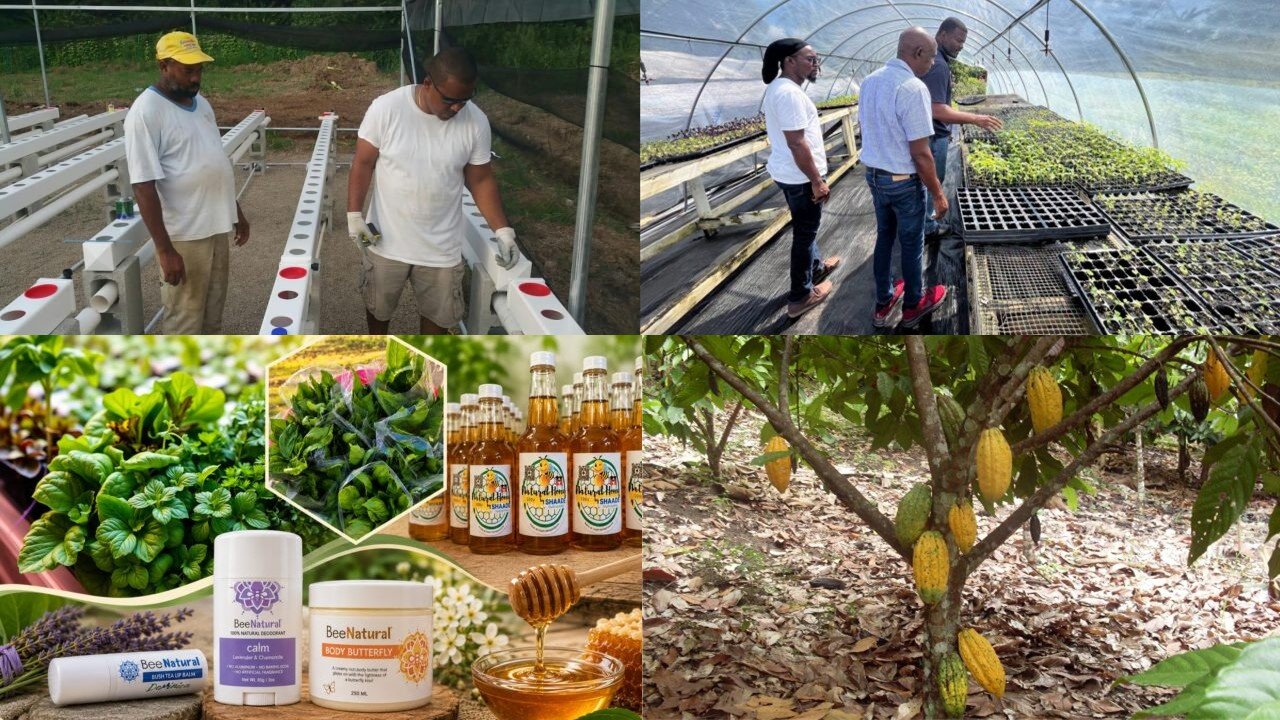
During the mission, the delegation is scheduled to visit several agricultural and agro-processing operations, including hydroponic and greenhouse production facilities in Les Pointe, Massacre; Bee Natural’s honey production and by-products operation in Grande Savanne, Salisbury; CocoListo’s instant cocoa production facility in Dublanc; and the diversified farming operation of Whitnel Louis in Syndicate. Other scheduled stops include the DEXIA Pack House, the One Mile Agriculture Station and Tissue Culture Facility in Portsmouth, and the chocolate factory in Calibishie.
Cocoa beans, which remain Dominica’s leading agri-food export commodity, have already been identified by the Ministry of Agriculture, Fisheries, Blue and Green Economy as a priority value chain for further development. The Ministry views the initiative as an opportunity to build on the country’s existing agricultural strengths while identifying new areas for investment and diversification.
Officials recognize that expanding export-oriented production, improving processing capabilities, and strengthening connections with regional and international markets are essential to increasing agriculture’s contribution to the national economy. To achieve this, the Ministry is encouraging continued cooperation among farmers, fishers, agro-processors, private-sector stakeholders, and regional partners as Dominica works toward a more competitive, resilient, and commercially sustainable agricultural sector.