The repercussions of the diplomatic crisis on economic relations
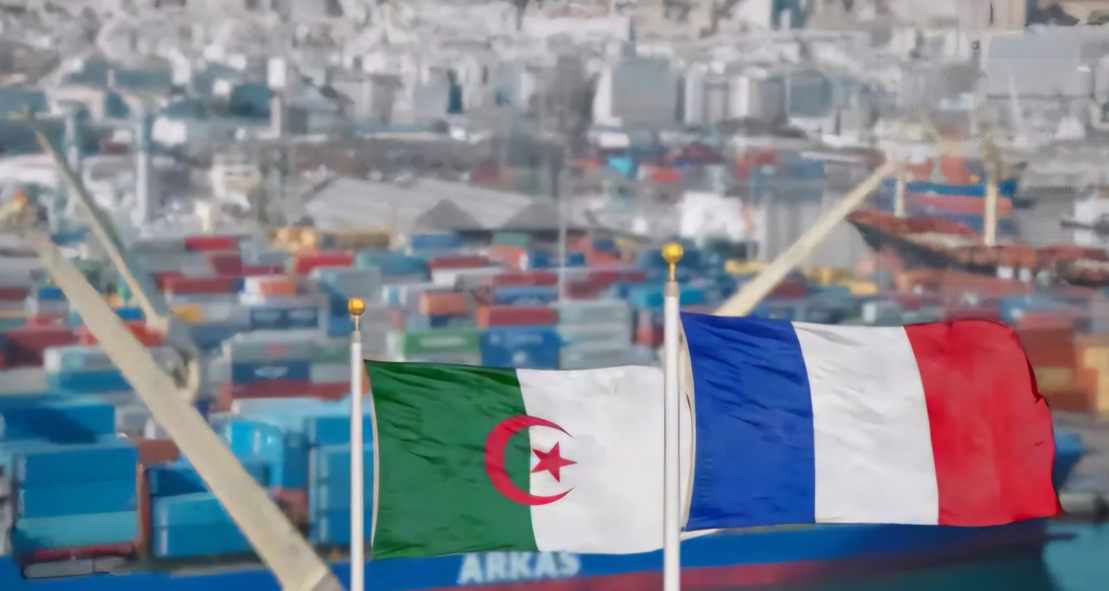
Le Monde newspaper revealed The repercussions of the diplomatic crisis between Algeria and France on economic relations, as it highlighted the sharp decline in exports and the concerns of hundreds of companies. From losing its positions in the Algerian market to European and Asian competitors.
And in a report Published by the French newspaper on November 12, under the title “Between France and Algeria… trade exchanges are collapsing, a new result of the crisis between the two countries.” Journalist Frédéric Bobin highlighted the decline in French exports to Algeria by 34 percent during the past months of August and September, compared to the same period of the previous year, based on French customs statistics.
According to the figures cited in the report, the value of French exports decreased during August and September 2025 from 707 million euros to 466 million euros during the same period in 2026, meaning a loss of 241 million euros. The decline rate increased to 43 percent when compared to the same period in 2024.
The decline was not limited to a specific sector, but rather included a wide range of French products, as exports of iron and steel products to Algeria recorded a decline of 52.3 percent during the period from October 2025 to September 2026, compared to the previous twelve months.
Exports of food products also decreased by 50.9 percent, clothing by 31.3 percent, refined petroleum products by 28.3 percent, automobile industry products by 25 percent, chemical products by 22.7 percent, and machinery and equipment by 22.3 percent.
The newspaper warned that the continuation of this trend, especially with expectations of an aggravation of the decline during the last quarter of the year, may cause the outcome of French exports to Algeria to record sharper declines.
The report stopped at the grain sector, which is one of the most prominent French sectors affected by the decline in trade exchanges with Algeria, noting that the Algerian market represented a major outlet for French wheat, as it absorbed in some periods up to half of its foreign sales.
Le Monde quoted Thierry Bosch, responsible for economic studies at the Permanent Association of French Chambers of Agriculture, as saying that France was exporting between 6 and 8 million tons of soft wheat annually during the period between 2018 and 2023, before its exports to Algeria became “almost non-existent.”
In its reading of the reasons for the decline in French exports to Algeria, Le Monde newspaper linked this development to the repercussions of the diplomatic crisis between the two countries, and the transformations it resulted in in the nature of economic and trade relations.
However, this decline reflects, from another angle, an Algerian trend towards reorganizing commercial partnerships and diversifying import sources, in line with national interests and the requirements of protecting the economy, away from any dependence on one trading partner.
The report indicated that the pace of decline in French sales accelerated starting last August, conveying fears in French economic circles that its products would lose their positions in the Algerian market. Some French voices went on to describe what was happening as a “clear boycott,” an expression that reflects the extent of concern within French economic circles about the transformations taking place in the Algerian market.
In the same context, the newspaper discussed the Pre-Import Forecast Program (PPI), which Algeria adopted during the summer of 2025, as a mechanism to regulate import operations, combat fraud, and protect foreign exchange reserves. These are procedures that fall within the state’s powers to control its foreign trade, determine its economic priorities, and choose partners and suppliers in accordance with its standards and sovereign interests.
The report also quoted a professional as saying that requests to import some products made in France or transiting through French ports are facing rejection, which reflects the extent of the challenges facing French exporters in the Algerian market, in light of the new regulatory and commercial transformations.
In contrast, the report revealed increasing repercussions on French institutions that built part of their commercial activity on the Algerian market, noting that about 600 companies out of 5,000 French companies that market part of their production in Algeria are in a state of bankruptcy, equivalent to 12 percent, according to a memorandum issued by the French Montaigne Institute in September 2026, entitled “France and Algeria: Getting Out of Irritation,” prepared by Michel Dulo and Augustin Motte.
The newspaper warned that the continued decline in exports may push more French companies to transfer their production activities to other European countries, to avoid difficulties associated with the country of origin of their products, which may be reflected in job positions within France.
In an additional indication of the changes taking place in the map of Algeria’s trading partners, Le Monde reported that in 2023, France was ranked second among Algerian market suppliers, with a share of 11.7 percent, compared to 7.4 percent for Italy.
However, the current data open the way for this arrangement to change, with the possibility of Italy ahead of France, in light of the growing competition from China, Turkey, Germany, and Spain. This reflects the breadth of options available to Algeria, its ability to benefit from international competition to obtain more favorable trade terms, and to enhance the diversity of its partners and sources of supply.
The report also indicated a decrease in the number of employees in the office of the “Business France” agency, which is charged with accompanying French companies in Algeria, from 13 employees to only three.
On the other hand, the newspaper cited an internal document of which it said it had obtained a copy, signed on September 30, 2026 by the President and General Manager of the Algerian Water Desalination Company, affiliated with the Sonatrach complex.
According to what was reported by “Le Monde”, the document includes instructions prohibiting the direct or indirect import of goods and services coming from countries with which Algeria has severed diplomatic relations or classifies them as enemy countries, while calling for the adoption of contractual and regulatory mechanisms and tools for control and auditing to ensure the implementation of these directives.
Although the document did not mention France by name, the newspaper considered that it might be concerned with these instructions, along with Morocco and the United Arab Emirates, based on its interpretation of the categories contained therein.
Reading the data reported by Le Monde concludes that the decline recorded in trade exchanges between Algeria and France is no longer merely a circumstantial reflection of a diplomatic crisis, but rather has become an indicator of a change in the balance of economic interests between the two countries.
It is noteworthy in this context that the former French Minister, Ségolène Royal, had warned Paris of the dangers of losing its economic positions in Algeria, stressing that the continuation of the escalatory rhetoric towards Algeria conflicts with French interests and gives competing countries an opportunity to strengthen their presence in the Algerian market.
Royal stressed that Algeria represents a very important economic partner for France, noting that countries such as Italy, Spain, Germany, Turkey and China are working to expand their economic relations with Algeria. She also called for adopting an approach based on dialogue and mutual respect.