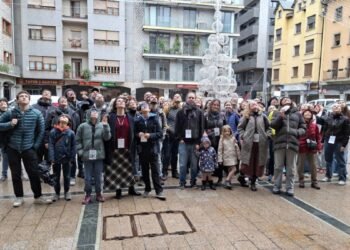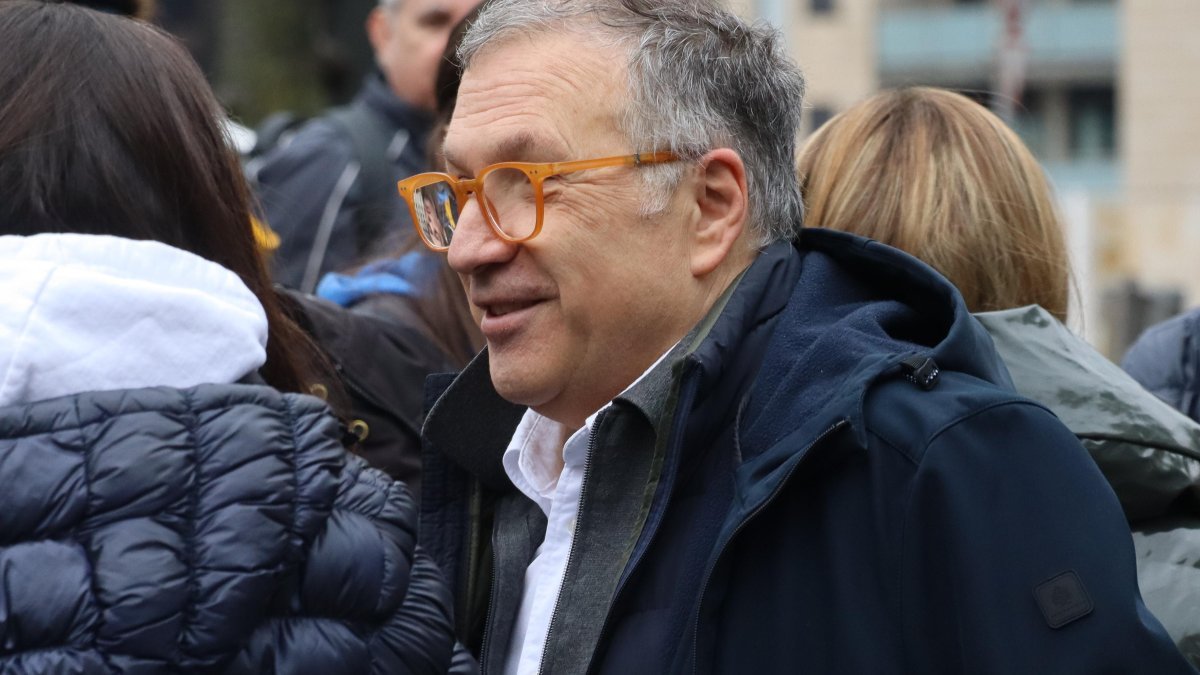
The culture councilor of the municipality of Escaldes-Engordany, Valentí Closa, defends that the parish maintains one top-level cultural offer despite the departure of the Carmen Thyssen Museumand trusts in the potential of l‘Espai Caldes and the Escaldes-Engordany Art Center (CAEE) to continue attracting audiences. In this regard, he highlighted, in statements to the Andorran News Agency, that the last two exhibitions organized in these facilities have totaled more than 10,000 visitors.
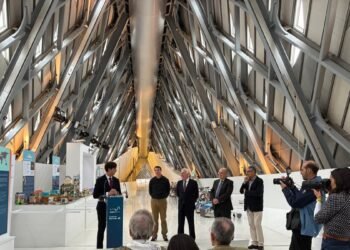
The sample Women of waterinstalled inCaldes Space, has closed with 4,080 visitors, while The sculpture revolutionat CAEEaccumulated 6,004 visitors on October 26, when there were still a few days left to close it. closed he particularly valued the response of the public to the first exhibition, since, as he pointed out, “it was not a large public exhibition”. In this sense, he has attributed part of the influx to the intervention of the artist Javier Balmaseda in the “zone of the bathtubs”, which has made it easier for visitors walking around to enter the room and get to know the work.
“It is a loss not to have the Thyssen”, acknowledged the councilor, who, however, believes that the parish can reverse this situation. “We will have to make an even greater effort than was done and frame the exhibitions more,” he pointed out, while defending the ability of the two facilities to maintain an attractive program.
Regarding the expository model, closed has ensured that there are no plans to change the orientation of the two rooms. Thus, the CAEE it will continue to develop a more pedagogical function, focused on making known the basics of art and contextualizing its evolution, while Espai Caldes will maintain its commitment to contemporary proposals. “What we intend to do is always give global visions and remind the new generations where we come from,” he explained.
In this sense, he has defended that cultural policy cannot be based exclusively on attendance figures, since it is also necessary to schedule exhibitions that, despite not having a large turnout, contribute to offering a broader view of history and art. “The figures cannot mark a cultural policy, neither with a common one nor with one Government“, he remarked.
On the other hand, closed has explained that the common will leave the premises occupied by the Thyssen Museum at the end of the year, coinciding with the end of the rental contract. The councilor has positively assessed this decision because it will allow the corporation to stop paying the rent. In this sense, he has vindicated the community’s commitment to acquire properties of its own property and reduce dependence on leased spaces. Among the examples, he cited the Gabriel building, which currently houses the Department of Culture, and the premises where the textile art school has moved, which is also communally owned.