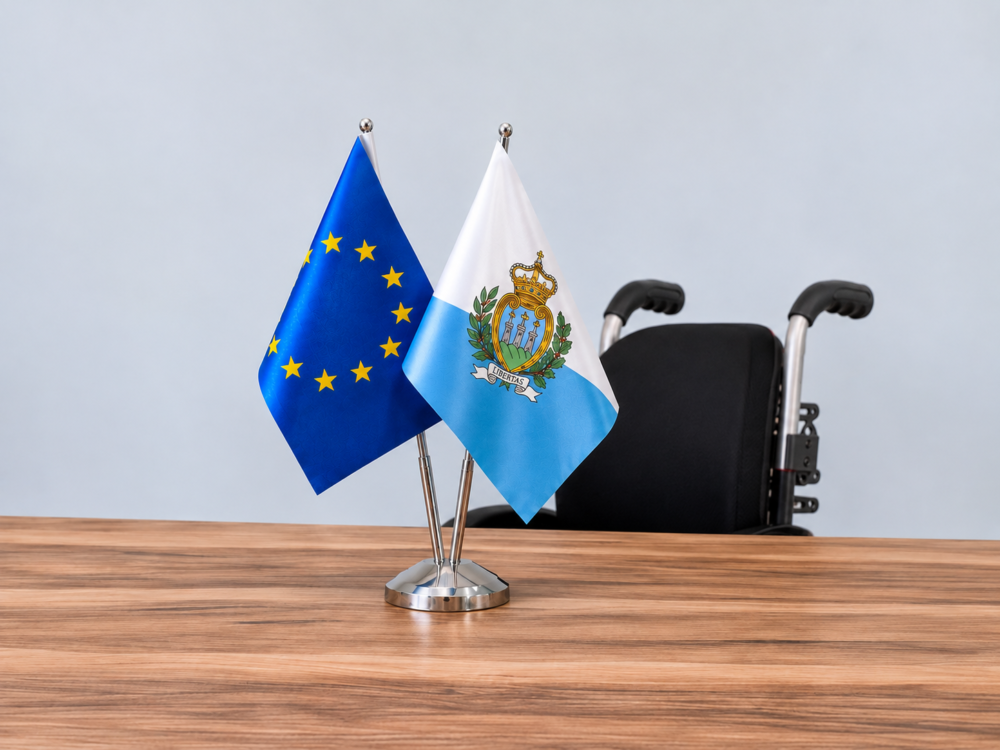
SAN MARINO – What opportunities will the Association Agreement between San Marino and the European Union offer to people with disabilities? This is the question at the center of a reflection by Attiva-Mente, which examined the documentation published on the official portal dedicated to the Agreement, highlighting possible repercussions on rights, accessibility and inclusion policies.
The analysis reveals references to various European regulations concerning the accessibility of products and services, including digital ones, equal treatment at work, the accessibility of websites and public administration applications, passenger rights and the coordination of social security systems. The documents also include the European Strategy for the Rights of Persons with Disabilities 2021-2030.
The association underlines, however, that signing the Agreement will not lead to the automatic and immediate application of all the provisions. Further information on the procedures, any regulatory adaptations and implementation times will be necessary.
According to Attiva-Mente, the debate on the economic and social prospects of the country after the Agreement should also include the issues of accessibility, inclusion and the rights of people with disabilities from the beginning. A reflection which, according to the organisation, should accompany development projects, investments, innovation and the transformation of public administration.
The areas to be explored also include European cooperation, through possible collaborations between institutions, universities and civil society organisations. The association invites you to verify which programs and financing opportunities may be accessible in San Marino and under what conditions.
Attiva-Mente also draws attention to European experiences in the fields of accessibility, deinstitutionalisation, work inclusion, living, independent living, self-managed personal assistance and assistive technologies. Other topics indicated concern international mobility, the recognition of certifications and the European Disability Charter.
Among the proposals put forward there is a survey of the provisions of the Agreement relevant for people with disabilities, the related implications and the available tools. A work that could involve representative organizations and contribute to the implementation of the principles of the UN Convention on the Rights of Persons with Disabilities, to which the European Union is also a party.
The association specifies that the Agreement cannot automatically resolve existing critical issues nor replace the political choices and investments necessary to guarantee rights, but it can offer new tools and references to improve public policies.
The reflection concludes with an invitation to consider people with disabilities not only as recipients of future opportunities, but as protagonists of decisions that concern the development path of the Republic.