In his speech at the Climate Summit (COP31) in Antalya, Turkey
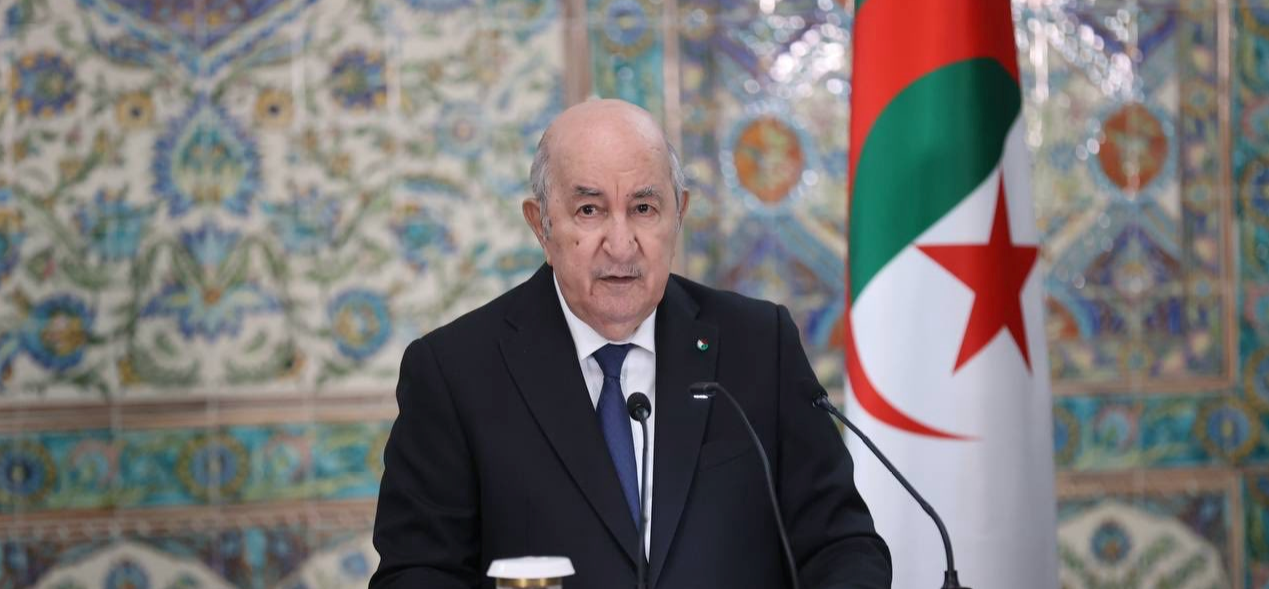
The President of the Republic, Abdelmadjid Tebboune, addressed the participants in the opening of the Leaders’ Summit of the Conference of the Parties to the United Nations Framework Convention on Climate Change (COP31), held in the Turkish city of Antalya, read by Prime Minister Sefi Gharib.
In his speech, the President of the Republic stressed that collective efforts to confront climate change are still below the required level, noting that the gap in financing is no less wide than the gap recorded in reducing emissions, which requires making this conference an actual station for implementation and fulfillment of commitments.
President Tebboune explained that Algeria, most of whose territory is located in arid and semi-arid regions, is already facing the repercussions of climate change, which affect its water and food security, through desertification, the frequency of droughts, and the expansion of forest fires.
In this context, the President of the Republic stressed that Algeria is working to include climate change at the core of its public policies, while ensuring a balance between development and employment requirements and contributing to international efforts aimed at reducing emissions.
The President of the Republic revealed that Algeria has deposited its nationally determined contribution, which includes an unconditional target to reduce emissions by 14 percent in 2035, fully funded from its national resources, with its readiness to raise this percentage to 31 percent if international support is available.
He added that Algeria has begun to implement its commitments by launching the first phase of the program for developing renewable energies, which aims to reach 15,000 megawatts by 2035, in addition to adopting a national strategy for hydrogen, enhancing energy efficiency and developing mass transportation, as well as reducing gas burning and methane emissions.
Regarding adaptation to climate change, the President of the Republic highlighted that Algeria attaches special importance to protecting its water security, through seawater desalination projects and the reuse of treated water, as well as reviving the Green Dam project according to an approach that combines combating desertification and developing rural areas, pointing to work on completing a national adaptation plan that identifies priorities and needs.
On the other hand, President Tebboune stressed that the extent of climate needs exceeds national capabilities, calling for a just energy transition that respects the development paths of countries and their sovereignty, and is based on the principle of common and differentiated responsibilities.
He also stressed the need to fulfill international commitments related to financing, especially in the areas of adaptation, technology transfer and capacity building, while rejecting unilateral trade measures that use climate as a pretext to impose restrictions on countries.
The President of the Republic concluded by emphasizing that confronting the climate challenge is a collective responsibility that requires cooperation, justice and fairness, reiterating Algeria’s commitment to contributing to international efforts to confront climate change, in order to preserve the rights of future generations.