Text and Image Ivan Cairo
SHANGHAI— China wants to further expand its imports, stimulate foreign investment and reduce trade barriers through consultation. Vice Prime Minister Ding Xuexiang made this statement on Thursday at the opening of the ninth China International Import Expo (CIIE) in Shanghai. According to him, a more balanced international trade cannot be achieved by shielding markets, but through economic cooperation, innovation and better access to each other’s markets.
The Deputy Prime Minister spoke during the opening ceremony of the fair, which has been held annually since 2018. This year, 162 countries, regions and international organizations are participating. According to Commerce Minister Wang Wentao, more than 4,100 companies are represented at the commercial exhibition. Both the number of participating companies and the exhibition area have reached a record. The participation of companies from the Fortune Global 500 and other leading companies is also greater than in previous editions.
Ding stated that China wants to make its market more accessible to foreign producers with the import fair. According to him, the average Chinese import tariff has now been reduced to 7.3 percent. In addition, restrictions on foreign investment in the manufacturing sector have been completely lifted. The least developed African countries with which China maintains diplomatic relations enjoy a zero tariff on their exports to China.
Trade surpluses
An important part of Ding’s speech was about the international discussion about trade surpluses. He acknowledged that China has a significant surplus in goods trade, but pointed out that at the same time the country has a deficit in services trade.
According to the Deputy Prime Minister, the current account surplus has fallen from 9.9 percent of gross domestic product in 2007 to 3.7 percent in 2025. According to him, China has been one of the two largest importers of goods in the world for seventeen years in a row and is an important export destination for almost eighty countries.
In the first nine months of this year, Chinese imports grew by 22.3 percent, according to figures presented by Ding, almost six percentage points faster than exports. He emphasized that China is not deliberately pursuing trade surpluses. The country will continue with programs that help foreign companies sell their products in the Chinese market.
Criticism of trade restrictions
Ding opposed protectionist measures and restrictions on international technology trade. Citing research from the World Trade Organization, he stated that almost twenty percent of global goods imports are affected by existing trade restrictions.
According to him, restrictions on certain high technology products also prevent Chinese companies from purchasing goods they need. China wants to resolve such disputes through negotiations and advocates mutual respect for economic and security interests.
The Deputy Prime Minister also rejected criticism that Chinese production capacity is displacing foreign companies and industries. According to him, international companies benefit from their presence in China. Foreign companies accounted for 27 percent of China’s exports and 16 percent of its total trade surplus in 2025. Their average return on investments over the past five years was approximately nine percent, according to Ding.
Technology and investments
Technological development also received attention. Ding reported that China’s integrated circuit exports increased by 99.1 percent in the first three quarters of this year. Exports of the so-called three new products, including electric vehicles, lithium batteries and solar cells, increased by 45.6 percent.
He attributed the competitiveness of Chinese products to investments in research, development and business innovation, and not to government subsidies. China wants to expand international cooperation in digital technology and green development.
Minister Wang Wentao announced that 23 thematic forums and eighty additional activities will take place during the fair. For the first time, a report is also being published on the possibilities for countries to export to China.
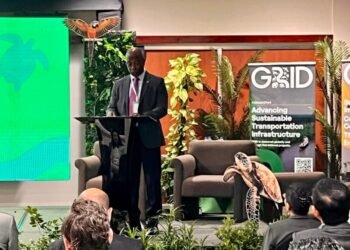
More than fifty high-ranking representatives from more than thirty countries, regions and international organizations participated in the opening ceremony, according to Wang. The President of Gabon was one of the speakers at the opening ceremony.
Ding invited foreign companies to expand their business in China. According to China’s forecast, annual retail sales may reach about 60 trillion yuan by the end of the Fifteenth Five-Year Plan, while the service sector is expected to reach a size of more than 100 trillion yuan.