Vice President of the National Association of Exporters, Ali Bey Nasseri, told Al-Shorouk:
father-in-law
Expressiveness
Orders for “DZ” goods in 57 countries, and the target is $10 billion outside of fuel
Date revenues rose to $98 million and these products are sold in foreign markets
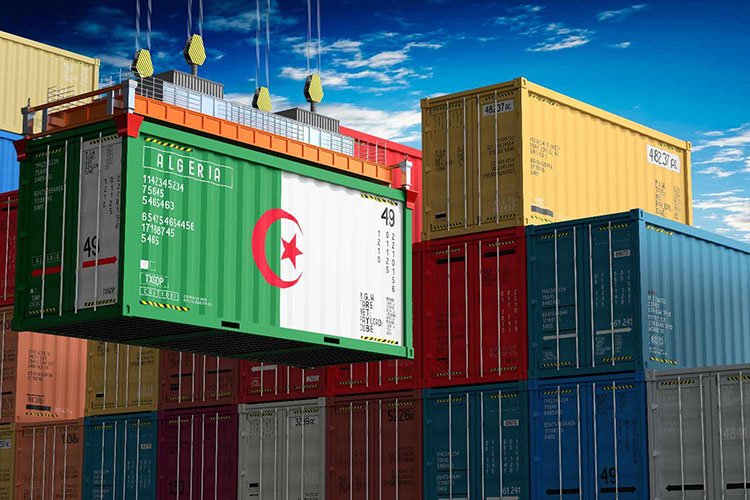
Algerian exports outside of hydrocarbons are heading to exceed the threshold of 7 billion dollars in 2026, compared to more than 5 billion dollars in 2025, at a time when the authorities are working to expand the base of products destined for foreign markets and diversify export destinations, which have increased from 33 countries to 57 countries, as part of an effort to raise the contribution of exports outside of hydrocarbons to 50 percent of total national exports.
The Vice President of the National Association of Algerian Exporters, Ali Bey Nasseri, revealed in a statement to Al-Shorouk that Algerian exports have witnessed a remarkable expansion in terms of the number of markets and sectors active in the field of export, stressing that the move from 33 countries to 57 countries reflects the transformation witnessed by the national export map, after export destinations were mainly concentrated in a limited number of European and African countries, along with certain products and materials.
The spokesman explained that the second gain is the inclusion of new sectors within the export activity, after their contribution was limited or absent in the past, such as the food, agricultural and industrial industries, electrical equipment and the energy sector, including electric generators and compressors, as well as household electrical appliances, medicines and building materials.
The list of Algerian products destined for export, according to the spokesman, includes cement, ceramics, gypsum, and various types of paint, in addition to other products related to the building and construction sector, which reflects the expansion of the marketable national production base abroad, and the fact that exports are not limited to traditional materials.
In a related context, Nassiri pointed out that there are promising opportunities in the field of exporting specialized equipment and machines in works and preparation, by benefiting from partnerships with international institutions and brands, allowing for the transfer of technology and developing the capabilities of Algerian institutions in this field, citing specialized equipment in preparing roads, paths and related works.
The spokesman stressed that these transformations would consolidate the export culture among economic clients, whether the institutions currently active in this field or those preparing to enter it for the first time, considering that the expansion of markets and exported products constitutes a practical indicator of the transition of export from a mere economic trend to an actual activity that requires investment, accompaniment, and development of productive capabilities.
The Vice President of the National Association of Algerian Exporters stressed that export is no longer a secondary economic option, but rather has become a necessity and a priority, given its importance in improving the trade balance and enhancing the country’s hard currency income, noting that the proposed strategic goal is to raise the share of exports outside of hydrocarbons to 50 percent of total national exports.
He added that achieving this percentage requires continuing to expand the export fabric, including new production sectors, as well as enhancing the presence of Algerian products in international markets, making the diversification of exports a long-term economic option and not just a temporary goal.
Nasseri’s statements come just days after the largest official announcement on the export file, where the Minister of Foreign Trade and Export Promotion, Kamal Razik, revealed on November 5, during a public session in the National Assembly, that Algerian exports outside of hydrocarbons amounted to $5.16 billion during the year 2025, registering an increase of about $972 million compared to the year 2024, which is the number that represents the official base from which the 2026 forecasts are based.
To understand the importance of the current figure, it must be remembered that exports outside of hydrocarbons did not exceed $1.7 billion in the past, before jumping to $5.9 billion in 2022, then declining to $5.06 billion in 2023, and to $3.84 billion in 2024 according to the Bank of Algeria, before returning to the rise in 2025 to $5.16 billion, which explains the authorities’ keenness to stabilize the upward trend and not return. To retreat. The authorities had set a strategic goal of reaching $10 billion in non-hydrocarbon exports, a goal set by the President of the Republic, Abdelmadjid Tebboune, in April 2025 during his meeting with economic stakeholders, before the ceiling was raised to $30 billion by the year 2030, with a focus on the African market as a primary driver, to include foodstuffs, agricultural products, medicines, and industrial and petrochemical products.
In the context of accompanying this endeavour, Minister Raziq revealed that the Special Fund for Export Promotion recorded, during the year 2025, the deposit of about 3,900 files by exporters to benefit from support mechanisms, especially covering part of the expenses of participation in international economic demonstrations and international transportation costs. It was also announced that the free trade zone in the state of Tindouf would enter into exploitation before the end of the current year, on an area of 200 hectares, to enhance exchanges with Mauritania and West African countries.
Among the divisions that reflect this transformation is the Dates Division, where the value of its exports moved from 78.06 million dollars in 2024 to 98.32 million dollars in 2025, while it reached approximately 75.04 million dollars during the first six months of 2026 only, with quantities increasing from 111 thousand tons to 115 thousand tons, which dealers consider as evidence that diversification of exports can start from an agricultural product. One, before expanding to other sectors.