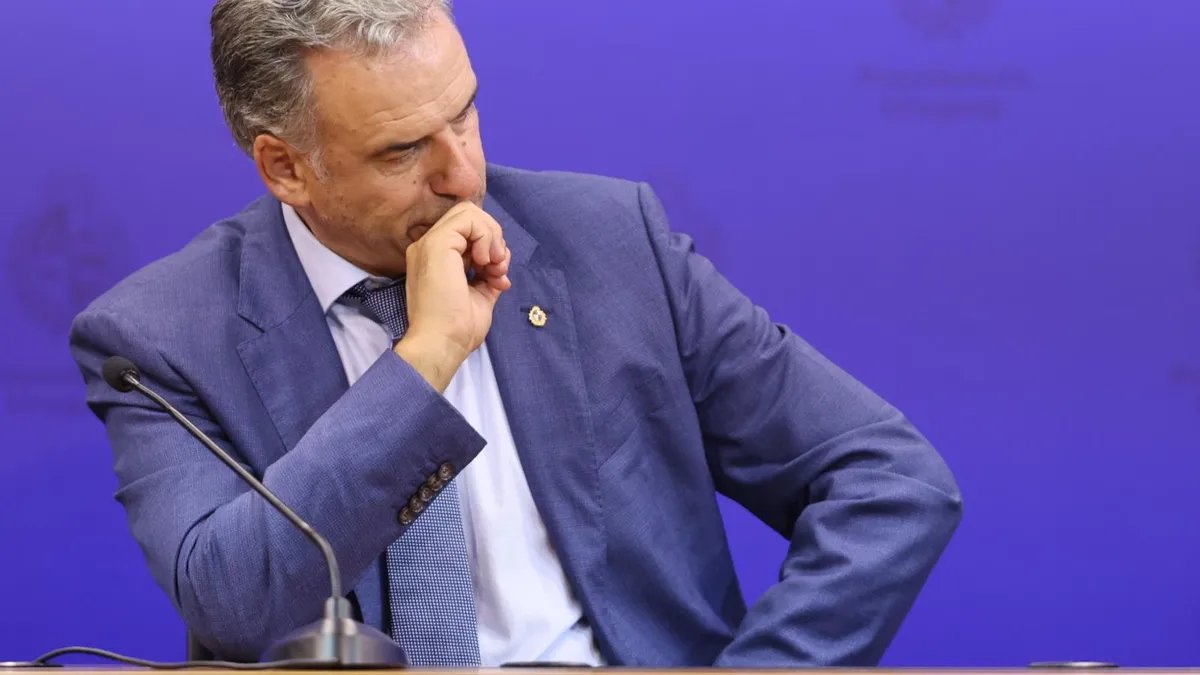
The president Yamandu Orsi referred to the possible rise in fuel price in maygiven the international circumstance caused by the war in the Middle East.
From Tacuarembó, the department where he traveled to participate in the inauguration of a new Tacuarembó Refrigeration plant, the president was consulted about the increase in fuel prices, a possibility that was handled by the Minister of Economy, Gabriel Oddone, earlier.
“And, it depends. Depends. Apparently, the news is not very encouraging because of what comes from the Middle East, the Strait of Hormuz and a number there stuck at 100 (dollars) that is worrying,” he said about the price of a barrel of oil.
Although a new increase in May is not ruled out, the president highlighted that Uruguay has been the country that has “increased the least” in fuel prices and defended the pricing method.
0028796683.webp

“He has a state company and has a method of cushioning these price shocks. We’ll see these days, we have to pace ourselves, of course. But you wake up one day and it climbed to 110 (the price of a barrel), but maybe the next day it’s 90“, he illustrated.
Finally, he asked to be “very careful” and analyze the “Ancap numbers”. “Obviously, You have to be very attentive because everything is very volatile and there is no sign of this changing for the better.“.
On Thursday morning, when asked about it, Oddone told Telemundo that an increase in prices will “surely” occur. “We’re doing the numbers,” he said.
Next week there will be a meeting with the Minister of Industry, Fernanda Cardona, about this issue.
On April 1, a 7% increase in fuels came into effect, in a context of international increases, with adjustments below what the Import Parity Price (PPI) indicated. Supergas rose to $94.65 per kilo and the 13 kilo bottle cost $1,230.45, although Mides beneficiaries continue to access a 50% discount.
The government absorbed part of the increase to cushion the impact, which expanded the subsidy and kept prices below the levels that would arise from fully applying the PPI, which would have implied significantly higher increases in gasoline, diesel and supergas.