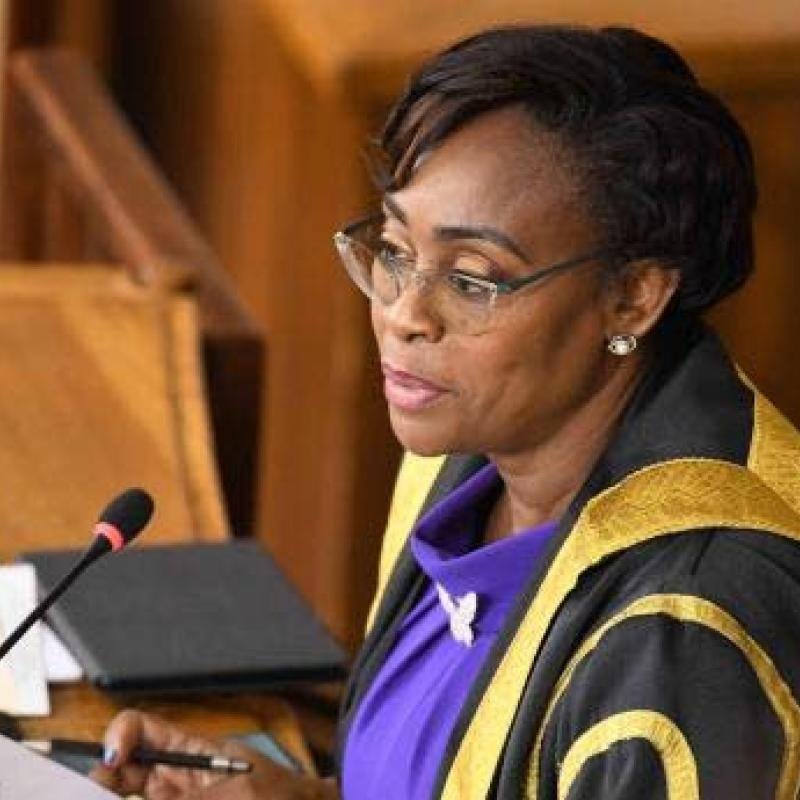
The latest question by the parliamentary Opposition about Juliet Holness’ fairness as Speaker of Jamaica’s House of Representatives is an opportunity to reconsider who can be appointed to the job and how it is done.
And given that the election of the Speaker is not a deeply entrenched provision in the Constitution, the amendment could be done quickly and easily, requiring only the majority of both Houses of Parliament to assent. This need not be delayed as part of a broader constitutional review.
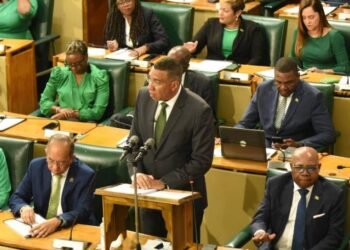
The Gleaner, at this time, offers no opinion on Speaker Holness’ action in last week’s abrupt termination of a debate, after it had barely started, on an Opposition motion to censure the government for abstaining on a vote at the United Nations calling on the United States to end its more than six-decade-old economic embargo on Cuba. People’s National Party (PNP) members insist that, given the absence of a clear signal by the administration of a policy shift on a related parliamentary debate the previous day, Parliament was misled into believing that the government would maintain its traditional support for the UN resolution.
This matter, and the Opposition’s general concern about her perceived partisanship during sensitive debates, is to be the subject of a discussion this week between Speaker Holness, the wife of Prime Minister Andrew Holness, and the Leader of Opposition business in the House, Phillip Paulwell.
MORE SUSTAINED
The complaints from the minority side of the legislature, on the face of it, seem more sustained against Mrs Holness than against her predecessors. She, however, is not the only parliamentary Speaker, from either side, who has been accused of favouring her own party, especially during difficult debates.
The Speaker’s job is not easy. It requires upholding parliamentary rules, in accordance with the standing orders, while at the same time ensuring fairness and protecting the rights of the minority in the legislature. The role demands that the Speaker transcend party loyalty and sit above the partisan fray. The best speakers also know how to enforce the standing orders without operating like an officious and surly primary school principal.
It is against this backdrop that The Gleaner proposes amending Section 43(1) of the Constitution, which makes it mandatory for Parliament, at its first sitting after a general election, to “elect one of its members, not being a minister or parliamentary secretary, to be Speaker”. The current formulation could be replaced by a clause that allows the election of a speaker who is not a member of the legislature, and not necessarily affiliated with a political party. Indeed, eligibility criteria for a speaker could be spelled out in the amendment.
While the constitutions of several Westminster-type parliamentary democracies, like Jamaica, mandate that the Speaker comes from the legislature, that approach is not universal. Indeed, in the English-speaking Caribbean it is decidedly in the minority. The constitutions of Antigua and Barbuda, Barbados, Belize, Grenada, Guyana, St Lucia, St Kitts and Nevis, and Trinidad and Tobago allow for the election of speakers either from among sitting legislators or from outside the House.
SOME INSULATION
In all of these jurisdictions, the current speakers of Parliament are not members of the legislature, even if they are known, or believed, to have affiliations to the government or governing party. But their direct removal from the partisan fray is considered, for the most part, to provide them with some insulation against narrow partisanship in conducting the affairs of the legislature.
There are many highly qualified Jamaicans, including those perceived to be supportive of one or the other political parties, who have demonstrated the kind of integrity that would likely make them excellent speakers. Moreover, they would start with greater confidence from the Opposition benches that they would fairly do the job, rather than facing the assumption that negative rulings start from a base of partisanship.