
The regression of Catalan it would be a bit of a metaphor for the Trojan horse: the threat is also inside the house. It is the Catalan speakers themselves who, often without being aware of it, undervalue the language. According to the last Survey of linguistic uses of the population of Andorra 2026one 80.6% of those who speak Catalan switch to Spanish when addressed in that language. In fact, it is a common situation on the street, as the philologist and president of Cultura Activa explains, Maria Cucurull “When you go to a restaurant and are served by a Latin American person who you assume only speaks Spanish and you address them in this way, you are contributing to the decline of Catalan, not the other person“, he affirms.
Cucurull considers that it is often taken for granted that the other person will not understand Catalan and that, therefore, it is better to address them directly in Spanish. An attitude that is counterproductive to integrating a newcomer to the country. “When you don’t give in, what you’re doing is helping the other person learn“, he defends.
This tendency is also related to a series of prejudices that a part of society has with the Catalan language. “There is a certain inferiority complex with Catalan. As if it were a second language“, he emphasizes. He also attributes this feeling to Franco’s repression, which to some extent affected the Principality, and to the perception that Catalan is less useful than Spanish or English in terms of job prospects.
The responsibility of this setback cannot fall only on Catalan speakers. One of the aspects that worries philology the most and that is currently being debated the most is the loss of the presence of Catalan among the youngest. “They are particularly worrying because they completely bypass the language, and have almost no contact with it“, he explains. Cucurull attributes this fact to the content consumed by teenagers, which are mostly in Spanish. “Before you watched television in Catalan and the cartoons were in that language“. The proliferation of streaming platforms, social networks and content creators who express themselves exclusively in Spanish have reduced audiovisual references in Catalan. Although she maintains hope in recent years that more creators who bet on the language have appeared, the philologist believes that the offer is still insufficient and is another barrier to brand sponsorship. “The majority (of content creators in Catalan) admit that they do it out of conviction, because they lose brands that do not hire them or pay them less“, he warns.
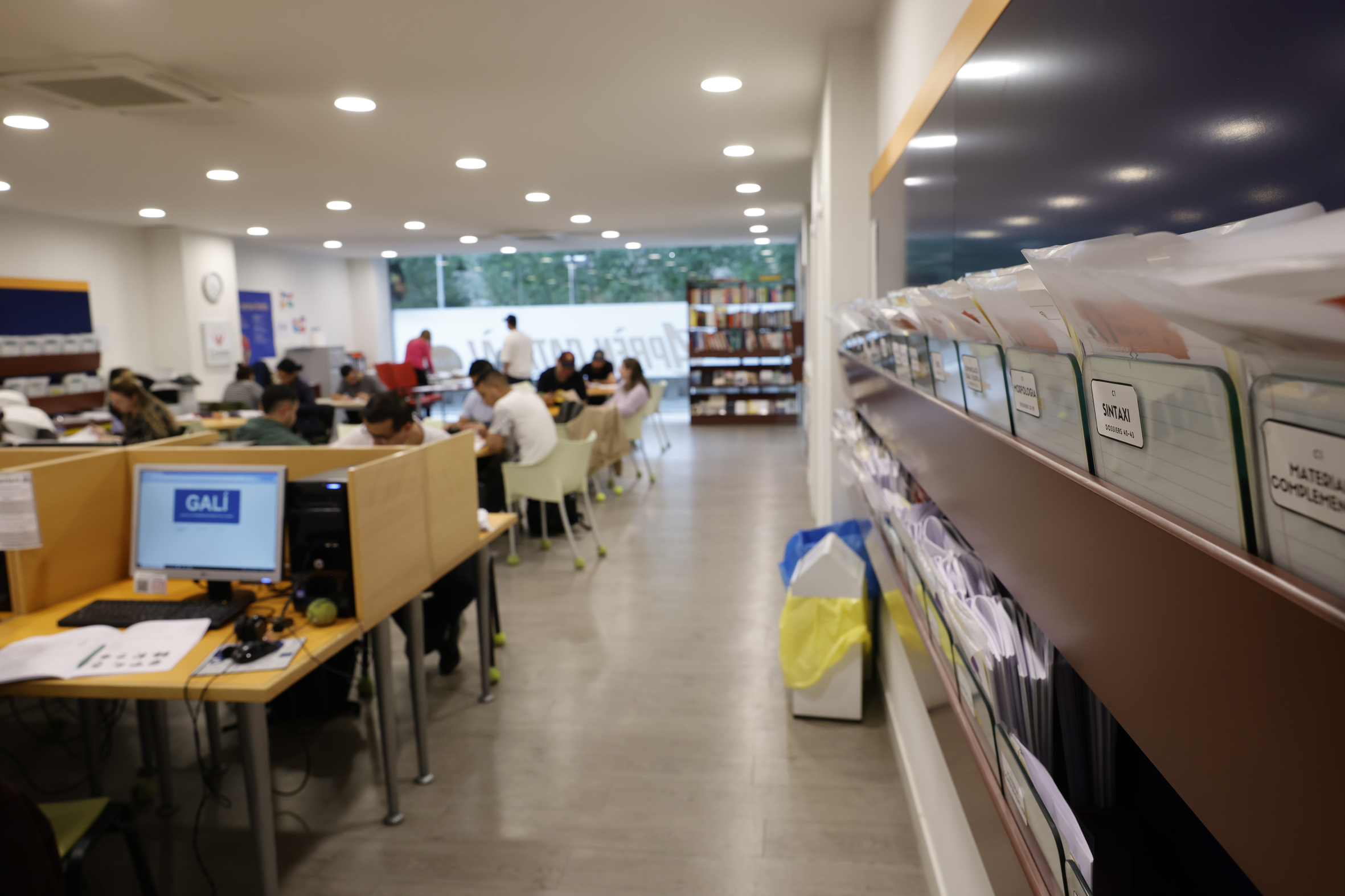
The transmission of the language between generations keeps it alive and lasts over time. According to the survey, the 56.7% of parents speak Catalan with their children. The question, however, allowed more than one language to be selected and did not refer to Catalan as the only language used in the family unit. Cucurull, who is starting a doctoral thesis on the use of the language in families where one of the parents is Catalan-speaking and the other Spanish-speaking, warns of the difference between the desire to transmit the language and the actual use at home. La philologist believes that there is a will on the part of parents to teach their children the language but that does not always translate into facts, since, in many cases, Catalan is not included in the usual conversations between the family.
Cucurull also thinks it’s missing a stronger language policy and a firmer application of Catalan regulationsin the face of non-compliance. “The key to all this is to make people believe that languages are useful. In this case, you can’t be lax”, he says. This lack of global action is, according to him, one of the reasons why the initiatives have not completely reversed the situation. “It’s like we plug holes but don’t look for where the leak is… And it’s systemic“, he compares. Preserving the language requires a daily commitment from the speakers. “You have to be militant. It’s not easy and it’s not normal, sadly”, he concludes.
Minister Mònica Bonell, opening the event.
JUSTICE IN CATALAN IS LOOKING FOR GUARANTEES BEYOND ANDORRA
The president of Cultura Activa, Maria Cucurull, he emphasized that Catalan enjoys good health in the Andorran judicial sphere, a situation that contrasts with the difficulties it faces in other territories. “We would like Andorra in some way to be the referent of Catalan to justice for the rest of the linguistic domain“, he affirmed.
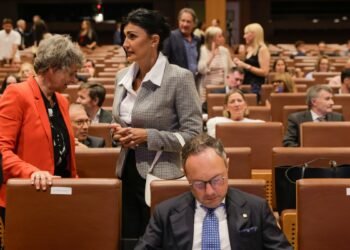
The meeting, inaugurated by the minister Mònica Bonell, brought together Xavier Antich, president of Omnium Cultural, and magistrate Guillem Solerwhich addressed the difficulties of Catalan in the courts and the obstacles that prevent normalizing its use in certain legal proceedings.
The situation was also analyzed a France and legal resources were presented in Catalan. A panel discussion with legal professionals preceded the closing of the bar Gonzalo Boyededicated to the right to be understood.