DISCAIMER: All views and claims expressed in this article belong solely to the author.
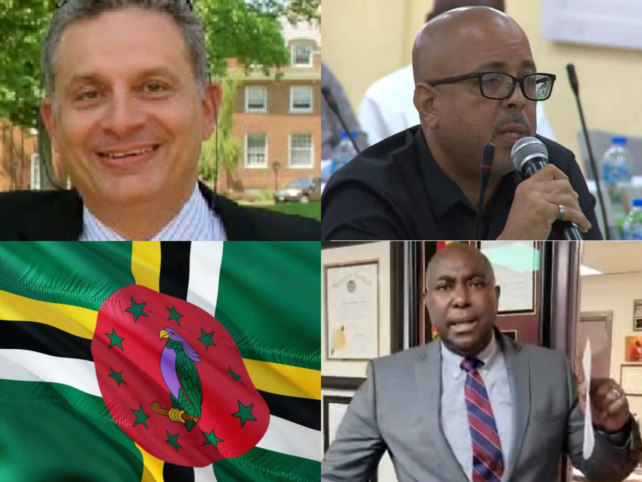
A Response to Yvor Nassief and Kenny Green
By Gabriel J. Christian, Esquire
I commend Yvor Nassief for his willingness to speak publicly about Dominica’s governance, economy, and democratic future. I welcome Kenny Green’s participation in that discussion but challenge him to address the serious questions raised rather than retreat into political defensiveness. The issue is not loyalty to any political party. It is whether we remain faithful to the rule of law, honest government, economic independence, and the democratic ideals for which our generation struggled.
As Dominica approaches the fiftieth anniversary of its independence in 2028, we must ask whether we have honored the promise of nationhood or permitted the erosion of the very institutions that independence was intended to strengthen.
Public Procurement and the Rule of Law
Kenny Green must confront what I consider one of the gravest failures of contemporary Dominican governance: the weakening of public financial accountability and the apparent disregard for the principles of transparent and competitive procurement.
What has become of the safeguards intended to protect our public treasury? Why should public contracts involving enormous sums of money escape meaningful public scrutiny?
Consider Montreal Management Consultants (MMC) and its involvement in major government development projects. Was the international airport project subjected to an open and competitive public tender? If so, where are the tender documents, competing bids, evaluation reports, and records explaining the award?
What of the much-publicized housing “revolution”? Were its contracts competitively tendered? What are the financial arrangements governing these projects, and why do beneficiaries reportedly occupy homes without receiving registered legal title?
A housing revolution that leaves citizens uncertain about their ownership rights deserves serious examination. So does any development arrangement that places enormous public resources beyond effective parliamentary and public scrutiny.
If the government maintains that these arrangements comply with our laws, let it publish the documents and explain the legal basis for its procurement decisions. Public accountability is not a favor bestowed by government; it is an obligation owed to the people.
The Nassief Legacy and Our Proud Industrial Heritage
Yvor Nassief belongs to a family whose contribution to Dominican economic development deserves recognition. His grandfather, Elias Nassief, helped establish a tradition of entrepreneurship, while his father, Phillip Nassief, a chemical engineer educated at McGill University in Canada, was the driving force behind Dominica Coconut Products, among the most successful agro-industrial enterprises in our modern history.
Dominica Coconut Products manufactured goods, employed Dominicans, supported agriculture, developed technical skills, and demonstrated what disciplined management and investment in our people could accomplish.
But the Nassiefs were not alone. We salute legendary Dominican entrepreneurs such as John Baptiste “JB” Charles, Robert “RBD” Douglas, Sheridan Gregoire, and Norris “Buy Trinee” Prevost, whose contributions to local enterprise, including textile manufacturing, helped establish a respected indigenous industrial tradition.
We remember Sunstyle of the Moreau family, Ma Baba textiles, and Bello Products of the Bellot family. Who among our generation can forget the locally manufactured soft drinks of the 1960s and 1970s, including Try-Hill, KB Cola, Ju-C, and Josephine Gabriel?
I remember these enterprises personally. They were not imaginary achievements or political promises. They were evidence of a Dominican people capable of manufacturing, processing, bottling, trading, employing workers, and creating wealth through their own initiative.
Our industrial pioneers faced limited markets, inadequate capital, high transportation costs, and the difficulties inherent in a small island economy. Yet they built businesses and demonstrated confidence in Dominican ingenuity.
Where are their successors today? Where are our new industrialists, textile manufacturers, agro-processors, beverage producers, and export-oriented entrepreneurs?
Why has our agro-processing and industrial sector been permitted to deteriorate rather than being modernized through technology, investment, training, and access to international markets?
With the resources generated by the Citizenship by Investment Programme, Dominica should have established a stronger foundation for indigenous enterprise. Instead, we must question whether too much of our development model has become dependent upon foreign contractors, passport marketing, and externally controlled projects.
We should welcome foreign investment, but it must strengthen Dominican ownership and productive capacity rather than displace them.
Our industrial heritage should have been the foundation of a modern, competitive economy, not merely a collection of nostalgic memories.
Ross University: The Loss of Academic Tourism
The departure of Ross University School of Medicine illustrates another troubling dimension of our economic experience.
For decades, Ross sustained an important academic tourism economy, particularly in Portsmouth. International students, faculty, and their families supported landlords, restaurants, supermarkets, transportation providers, contractors, retailers, and professional services.
Following Hurricane Maria in 2017, Ross announced its relocation to Barbados in August 2018, with operations commencing there in 2019. The devastation caused by the hurricane was undeniable, but the loss of such an important institution raises legitimate questions about economic resilience, strategic planning, and the protection of major investments.
What effective measures were undertaken to retain Ross or replace its economic contribution? Where is the comprehensive strategy to attract international medical schools, technical institutes, research centers, and university partnerships?
A country with Dominica’s international relationships and educated diaspora should be building an expanding knowledge-based economy. We cannot afford to watch major productive institutions disappear without a credible strategy for renewal.
The Nassiefs, CBI, and the Right to Change One’s Mind
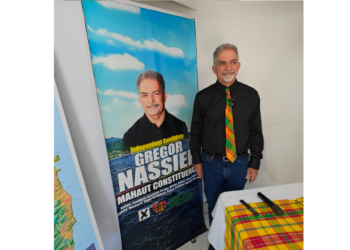
I readily acknowledge that Yvor Nassief and his brother Gregor Nassief have been associated with business interests connected to Dominica’s Citizenship by Investment Programme. They may still be involved, for all I know. I do not claim current knowledge of the full extent of their participation.
But does that history disqualify them from criticizing the system or questioning its consequences?
Certainly not. Every citizen possesses the right to reconsider a position, acknowledge mistakes, and change his or her mind. Intellectual honesty requires that we examine evidence and revise our conclusions when circumstances demand it.
To remain in ignorance, or continue supporting what one has come to recognize as misrule, merely because of past associations or benefits, is no virtue.
If Yvor Nassief now questions the direction of our economy and governance, his arguments deserve examination on their merits. His family’s commercial history does not place him beyond scrutiny, but neither does it extinguish his right to criticize government policy.
The same standards of accountability should apply to the Nassiefs, Kenny Green, government officials, CBI developers, and every other participant in public life.
The proper response to criticism is not to disqualify the critic because of his past associations. It is to answer the criticism.
A New Plantation Economy or a Dominican Middle Class?
I have long warned against replacing the old plantation economy with a new form of dependency in which the commanding heights of economic activity are increasingly controlled by foreign interests while ordinary Dominicans depend upon political patronage.
Where is the new Dominican middle class that should have emerged from the substantial revenues associated with our Citizenship by Investment Programme? Where are the manufacturing enterprises, agricultural processing plants, technology companies, and Dominican-owned businesses that should be creating skilled employment and national wealth?
What opportunities exist for our young engineers, scientists, farmers, technicians, accountants, and university graduates? Why should so many feel compelled to seek their futures abroad?
Economic development cannot be measured merely by buildings, ceremonies, or political publicity. Its true measure is whether our people own productive assets, acquire skills, create businesses, enjoy economic security, and participate meaningfully in national prosperity.
An economy in which Dominicans increasingly become spectators rather than owners raises fundamental questions about the direction of national development.
The DAIC, Electoral Reform, and Democratic Responsibility
I therefore invite Kenny Green to engage Yvor Nassief in an honest, open public debate on the role of the Dominica Association of Industry and Commerce (DAIC), the condition of our economy, and the maintenance of democratic governance.
The DAIC must be more than an organization that welcomes government announcements. It should vigorously defend transparent procurement, fair competition, property rights, independent institutions, and policies that encourage indigenous enterprise.
Our discussion must also encompass electoral reform. Democracy requires more than periodic elections. It demands credible electoral administration, transparency in political financing, safeguards against the misuse of state resources, and a fair opportunity for competing political ideas to reach the electorate.
No political party owns the machinery of the state. Electoral victory does not confer a license to disregard the law or evade accountability.
Kenny Green should summon the moral courage to debate these questions openly. Let us examine the management of CBI revenues, the role of MMC, public procurement, housing ownership, electoral laws, the deterioration of indigenous industry, and the responsibilities of the DAIC.
Let the government produce the relevant documents, its defenders present their evidence, and its critics be heard. The Dominican people are entitled to judge the competing arguments.
The Courage to Speak Openly
I also address those who hide behind anonymity to launch personal attacks against citizens who participate openly in our national discourse.
There is a legitimate place for anonymity where individuals fear retaliation, but anonymity should never become a license for cowardly abuse, falsehoods, and character assassination.
Those who disagree with Yvor Nassief, Kenny Green, or me should engage our arguments with evidence and reason. Democracy is strengthened by disagreement conducted with intellectual honesty, mutual respect, and civic courage.
Our nation desperately needs more serious discussion about public policy and fewer personal attacks that distract from the issues affecting ordinary Dominican families.
Fifty Years of Independence: We Must Demand Better
As we approach fifty years of Dominican independence in 2028, I reflect upon the ideals that inspired us as teenagers during the independence movement of the 1970s. We believed that political independence would usher in an era of national dignity, responsible government, economic self-reliance, and opportunity for our people.
We did not champion independence merely to replace colonial administrators with local rulers who might disregard our laws, weaken our institutions, or place the national patrimony beyond meaningful public accountability.
Our generation believed in the capacity of Dominicans to govern themselves honorably, build industries, educate their children, and create a prosperous society grounded in justice and democratic responsibility.
That promise remains unfinished.
It is a rebuke to our intelligence, our history, and the sacrifices of those who championed independence in our teenage years to continue electing governments that, in our considered judgment, break our laws, undermine public accountability, and make a mockery of the independence cause we once embraced with such conviction.
We must demand higher standards from those who seek public office, regardless of party affiliation. We must insist upon transparent government, lawful procurement, electoral integrity, productive investment, and renewed opportunities for Dominican entrepreneurs and young people.
Dominica belongs neither to a political party, a government contractor, a passport marketer, nor a privileged economic interest. Dominica belongs to the Dominican people.
Kenny Green, I invite you to engage Yvor Nassief in an open debate, without fear or favor, on the future of our beloved country. Our industrial pioneers demonstrated what Dominican enterprise could accomplish. Our independence generation demonstrated what courage, patriotism, and national purpose could achieve.
As we approach our golden jubilee of independence, we must recover that spirit and demand better governance, greater economic opportunity, and renewed fidelity to the rule of law.
Otherwise, we shall continue to witness the decline of our nation into misrule, economic dependency, and institutional decay, all concealed beneath the noise of endless bacchanalia—what we Dominicans call “sewo.”
Our forebears struggled for something nobler. Our children deserve something better.
Gabriel J. Christian, Esquire
Dominican Attorney, Author, and Advocate for Democratic Governance and Sustainable National Development