On the shores of Majuro, the capital of the Marshall Islands in the North Pacific, families were preparing to welcome the New Year.
But Jane Matanaicake was preparing for something very different. She was about to embark on a voyage to investigate the unusual and unexplained deaths of chickens and pigs on a remote island called Rongrong.
Most parents would agree that keeping curious children from exploring is not easy, especially with festivities around the corner.
Children touching dead (and potentially sick) animals could be hard to avoid so she knew she had to act fast.
The alert had arrived around 8:30pm the previous evening. By 10pm Jane, as the senior epidemiologist from the Ministry of Health and Human Services (MHHS) was advising health officials on how to respond.
By 10am the following morning, a multisectoral team was on its way to Rongrong to examine whether this was the beginnings of a new health threat – for animals, humans, or the environment.
Preparedness began months before
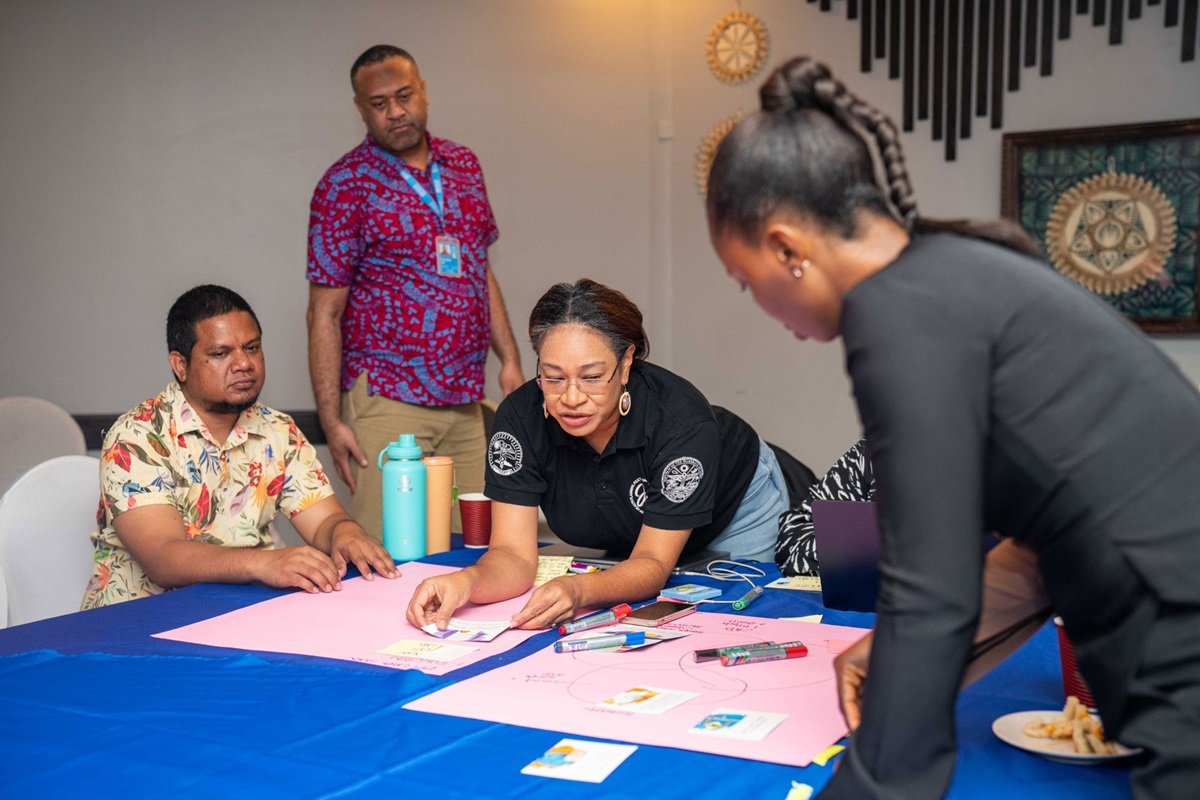
A WHO-supported workshop only months earlier meant that Jane knew who needed to be at the table and what her own role was because agencies’ roles and responsibilities had already been mapped.
Staff had familiarized themselves with coordination and response mechanisms, including field investigation steps and reporting lines for health threats involving multiple sectors.
Establishing this groundwork was done through joint planning and preparedness involving the human health, animal health, and the environment sectors to coordinate responses to emerging health threats – coined as the One Health approach.
“Honestly, my first thought was how fortunate we were to have gone through that One Health workshop just months before,” recalled Jane.
This training gave Jane the confidence and readiness to respond with a ready-made coordination plan, from the role of MHHS versus other agencies, a plan for cross-sector preparedness and response, to the equipment and protective gear needed for field visits and investigating such events.
Jane also drew in experts from MHMS’ surveillance, environmental health, and preparedness teams working with the national disaster management teams, as well as other agencies including the Department of Customs and the Marshall Islands Marine Resource Authority.
Besides coordination processes and having pre-defined roles and responsibilities, Jane explained it was also helpful to have a pre-identified list of trained personnel rather than having to request surge workforce to learn on the fly.
From theory to the field
Within hours of the notification, Jane was briefing leadership and exercising the muscle memory established a few months prior. That’s when she knew the training shifted from theory to real-time decision making.
For Jane, the experience showed why the relationships and responsibilities established before an emergency matter when a threat or alert arrives.
“I learned that One Health is about working across sectors, regardless of whether the event falls under one agency – it’s still teamwork.”
While the response was led by the Ministry of Natural Resources and Commerce, it was clear that it was essential to understand if there were any risks to people – which was made possible by involving the Ministry of Health and Human Services, Environmental Protection Agency, and the National Disaster Management Office.
Jane takes comfort in “not being alone when it comes to response and planning.”
Vision for the future
Jane’s vision for the Marshall Islands is to have animal health, human health and the environment sectors routinely monitoring health risks together.
Having partners share resources, data, and expertise in peacetime, so sectors work together; not activated solely when there is an emerging health threat.
To get there, she explained that more training and exposure across agencies is needed.
“We need repeated drills and real activations, so that more people get hands-on experience.”
From the human health perspective, she also identified the need to train health assistants on neighbouring islands, because they are trusted members of the community. Building knowledge on how to respond to potential health threats involving animals and the environment would strengthen systems at the community level.
With this experience, Jane continues to build awareness of spotting sick or dead animals in one spot, and to report them to the local authorities to launch an investigation.
Fortunately, the investigation found that there was no threat to human health. But next time, the teams recognize the importance of being ready.
The One Health workshop was made possible through generous funding from the Korea Disease Control and Prevention Agency. WHO continues to strengthen capacities of Pacific health agencies across the human health, animal health, and environment sectors to socialize the One Health approach.