
Senior Reporter
dareece.polo@guardian.co.tt
Trade unions have called out Prime Minister Kamla Persad-Bissessar for urging them to work with the Government to settle outstanding negotiations, saying they have consistently called for a collective meeting with her to address unresolved labour matters.
The response follows Persad-Bissessar’s statement on Saturday, a day after 12 trade unions demonstrated in Port-of-Spain.
Persad-Bissessar criticised the protest in a social media post and urged unions to set aside what she described as personal interests and work with the Government.
She pointed to a $66.1 million settlement between PowerGen and the Oilfields Workers’ Trade Union (OWTU), which will see approximately 150 workers receive outstanding payments by December 15.
The agreement ends an industrial dispute dating back to 2015 and provides for a nine per cent wage increase over five years, covering the 2016–2017 and 2018–2020 bargaining periods.
Contacted yesterday, National Trade Union Centre (NATUC) president general Michael Annisette said the labour movement was not seeking to undermine the prime minister or her administration, but wanted meaningful engagement on issues affecting workers and the wider country.
“And I’m telling the Prime Minister, all right, that we are prepared to meet in the morning in the best interest of the workers that we represent, and not only the workers. It’s not about wages only, but a better Trinidad and Tobago. How can we work together in order for us to move this country forward, to realise the true potential of our society?” Annisette said.
“We have to be big enough to be able to put aside whatever differences that we may have, real or perceived, in the best interest of Trinidad and Tobago,” he added.
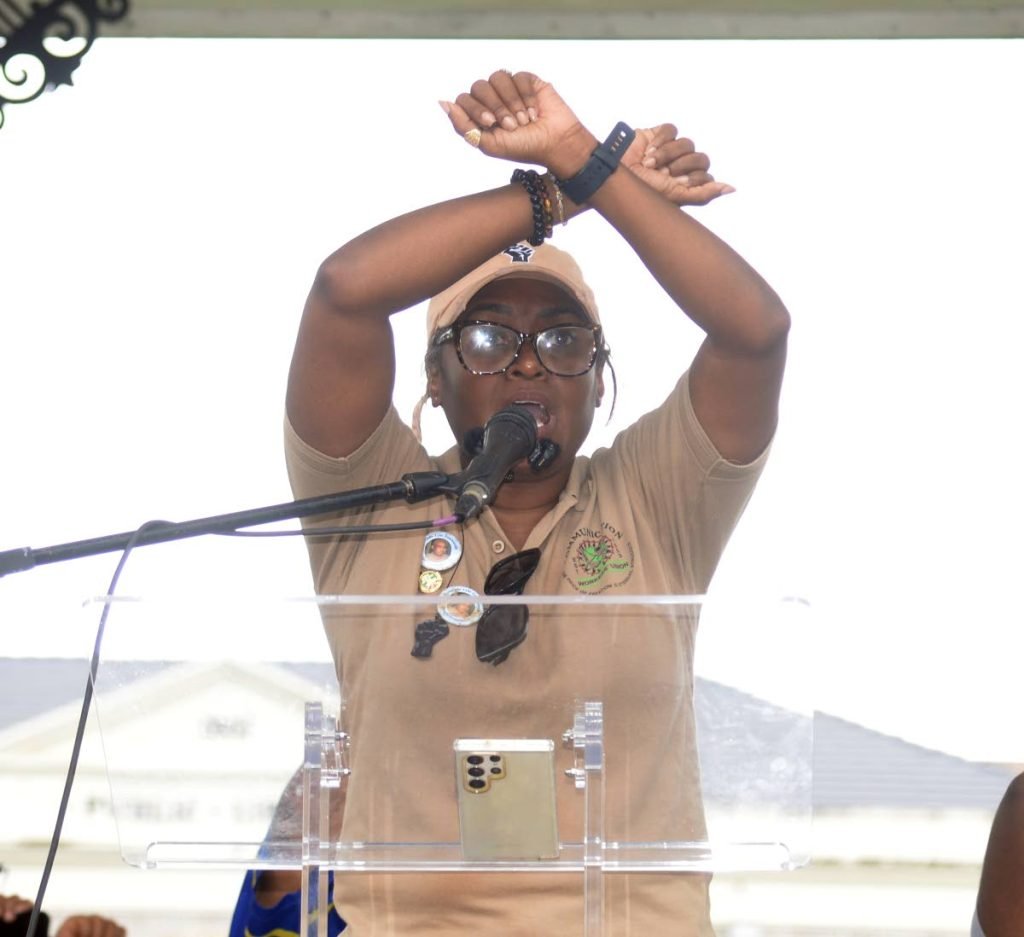
The Communication Workers’ Union (CWU) also reaffirmed its willingness to meet with Persad-Bissessar and the relevant line minister to discuss matters affecting its members and the wider working class.
In a statement to Guardian Media, CWU secretary general Joanne Ogeer said tripartite engagement between the Government, employers and trade unions remained essential to industrial peace, economic stability and national development.
Ogeer stressed, however, that any engagement must allow for frank and open discussion between the parties.
“Meaningful dialogue cannot flourish in an environment where parties feel intimidated, dismissed or constrained from freely expressing their positions,” she said.
“Should the Government genuinely favour such discourse, founded upon mutual respect, openness and the willingness to listen, the CWU remains confident that constructive engagement can produce meaningful outcomes in the national interest,” she added.
The union also rejected any suggestion that trade unions were adversaries of the State or political leaders, reaffirming their role in representing workers.
“We are an independent democratic institution whose fundamental responsibility is to represent, defend and advance the rights and interests of workers we represent,” Ogeer said.
Meanwhile, Annisette warned that unions would continue to exercise their right to protest if they concluded that meaningful dialogue with the Government was absent.
“As long as we believe that there isn’t any, what I would want to call meaningful changes, as long as we conclude there isn’t any meaningful dialogue, and/or engagement, or, as the ILO says, social dialogue with the labour movement and by extension stakeholders, we reserve the right to express a contrary view and to do what the labour movement does. But it doesn’t mean, necessarily, that we are not open to dialogue with this government and the Honourable Prime Minister,” he said.
His comments come amid repeated claims by Persad-Bissessar that the unions’ protest was driven by hatred and racism.
The post Unions open to dialogue with PM, but insist on collective talks first appeared on CNC3.